Chicken noodle soup earns its place in the rotation when the broth tastes deep and clean, the vegetables still have a little bite, and every spoonful feels like it was built with care. This version leans into that balance. Bone-in chicken gives the pot a richer base, ginger and garlic bring warmth without turning the soup sharp, and a small hit of cayenne wakes everything up without making it spicy.
The trick is letting the chicken simmer long enough to flavor the broth, then pulling it out before the noodles go in. That keeps the meat tender and the broth clear instead of cloudy and overworked. Lemon juice, apple cider vinegar, and a touch of honey go in at the end, where they brighten the pot without flattening the ginger or thyme.
Below, I’ve included the parts that matter most: how to keep the broth balanced, which ingredient swaps still work, and how to store the leftovers without ending up with mushy noodles.
The broth had that real homemade depth, and the ginger-garlic-cayenne combo made it taste comforting without being bland. My noodles stayed perfect because I didn’t overcook them in the pot.
Save this flu-fighting chicken noodle soup for the days when you want a deeply savory broth, tender chicken, and ginger-lemon warmth in one pot.
The Broth Fails When You Rush the Finish
Most chicken noodle soups go flat at the end because the acid, sweetener, and seasoning are thrown in too early or not measured at all. In this soup, the broth gets built in layers. The chicken and aromatics simmer first, which gives you the savory base, then the lemon juice and apple cider vinegar go in after the noodles are tender so the brightness stays fresh instead of disappearing into the pot.
Cayenne is another small ingredient that matters more than it looks. It doesn’t make the soup hot; it keeps the broth from tasting sleepy. If the soup tastes thin, the fix isn’t more salt right away. It’s a little more lemon, a little more thyme, and enough time for the pot to simmer uncovered for a few minutes so the broth concentrates.
What Each Ingredient Is Actually Doing in This Pot

- Bone-in chicken — This is what gives the broth its body. Boneless chicken works in a pinch, but it won’t give you the same depth. If you only have boneless pieces, add an extra cup of broth and expect a lighter soup.
- Fresh ginger and garlic — These are the backbone of the “flu-fighting” part of the soup. Fresh is worth it here. Powdered ginger won’t give the same clean heat, and jarred garlic can taste dull after simmering.
- Turmeric and cayenne — Turmeric brings color and a warm earthiness, while cayenne keeps the broth from tasting flat. Don’t overdo the cayenne unless you want actual heat; this recipe works best when it feels warming, not fiery.
- Honey, lemon juice, and apple cider vinegar — These are the finish. The honey rounds out the sharp edges, the lemon lifts the whole pot, and the vinegar adds a quiet tang that makes the broth taste brighter. Add them at the end so they stay clean and noticeable.
- Egg noodles — These soak up flavor fast, which is great if you’re serving the soup right away. If you know you’ll have leftovers, cook them just until tender and plan to store them separately if possible.
How to Build the Soup Without Losing the Bright Broth
Start with a Cold Enough Pot to Let the Chicken Work
Combine the chicken, vegetables, garlic, ginger, broth, turmeric, cayenne, and thyme in a large pot, then bring it up to a boil before dropping to a steady simmer. That first boil helps the pot come together quickly, but the real work happens once the heat comes down. If the soup boils hard the whole time, the broth can turn murky and the chicken can tighten instead of shredding softly.
Shred the Chicken Before the Noodles Go In
Pull the chicken out when it’s cooked through and easy to separate, then shred it while the noodles cook. That keeps the chicken from overcooking and lets you check for any stray bones if you used bone-in pieces. If the meat fights you, it needs a few more minutes in the broth; if it falls apart too easily and looks dry, it stayed in the pot too long.
Cook the Noodles Last and Stop at Tender
Add the egg noodles only after the chicken goes back in. They need just 6 to 8 minutes, and the broth should stay at a gentle simmer, not a rolling boil. If the noodles sit in the soup too long, they drink up broth and go soft fast, which is the main reason leftovers can turn heavy.
Finish with Acid and Adjust the Salt
Stir in the honey, lemon juice, and apple cider vinegar at the end, then taste before adding salt and pepper. Acid wakes up the broth; salt sharpens it. If the soup tastes dull, the answer is often another squeeze of lemon, not just more salt.
How to Adapt This Soup for Different Needs
Use Rotisserie Chicken for a Faster Version
Skip the bone-in simmer and start with 8 cups of broth plus the vegetables, garlic, ginger, and seasonings. Stir in shredded rotisserie chicken near the end so it stays tender. You’ll lose a little depth from the bones, but the soup still comes together fast and tastes bright and comforting.
Make It Gluten-Free
Swap the egg noodles for gluten-free noodles or cooked rice. Rice holds up better in leftovers than many gluten-free pastas, which can turn fragile after reheating. If you use gluten-free noodles, cook them separately and add them to each bowl.
Make It Dairy-Free as Written
This soup already stays dairy-free as long as your broth doesn’t contain any added cream or butter. That makes it easy to serve when you want something light on the stomach but still full of flavor. The ginger, lemon, and vinegar do all the brightening work here.
Store the Noodles Separately for Better Leftovers
If you know you’ll be reheating the soup, cook the noodles separately and add them to each bowl. That keeps them from soaking up all the broth overnight. The soup base itself tastes even better the next day.
Storage and Reheating
- Refrigerator: Store for up to 4 days. The noodles will keep absorbing broth, so expect the soup to thicken.
- Freezer: The broth and chicken freeze well for up to 3 months, but the noodles don’t. Freeze the soup without noodles if you can, then cook fresh noodles when reheating.
- Reheating: Warm gently on the stove over medium-low heat until steamy. If the soup has thickened, add a splash of broth or water before heating so the noodles don’t turn soft and swollen.
Questions I Get Asked About This Recipe
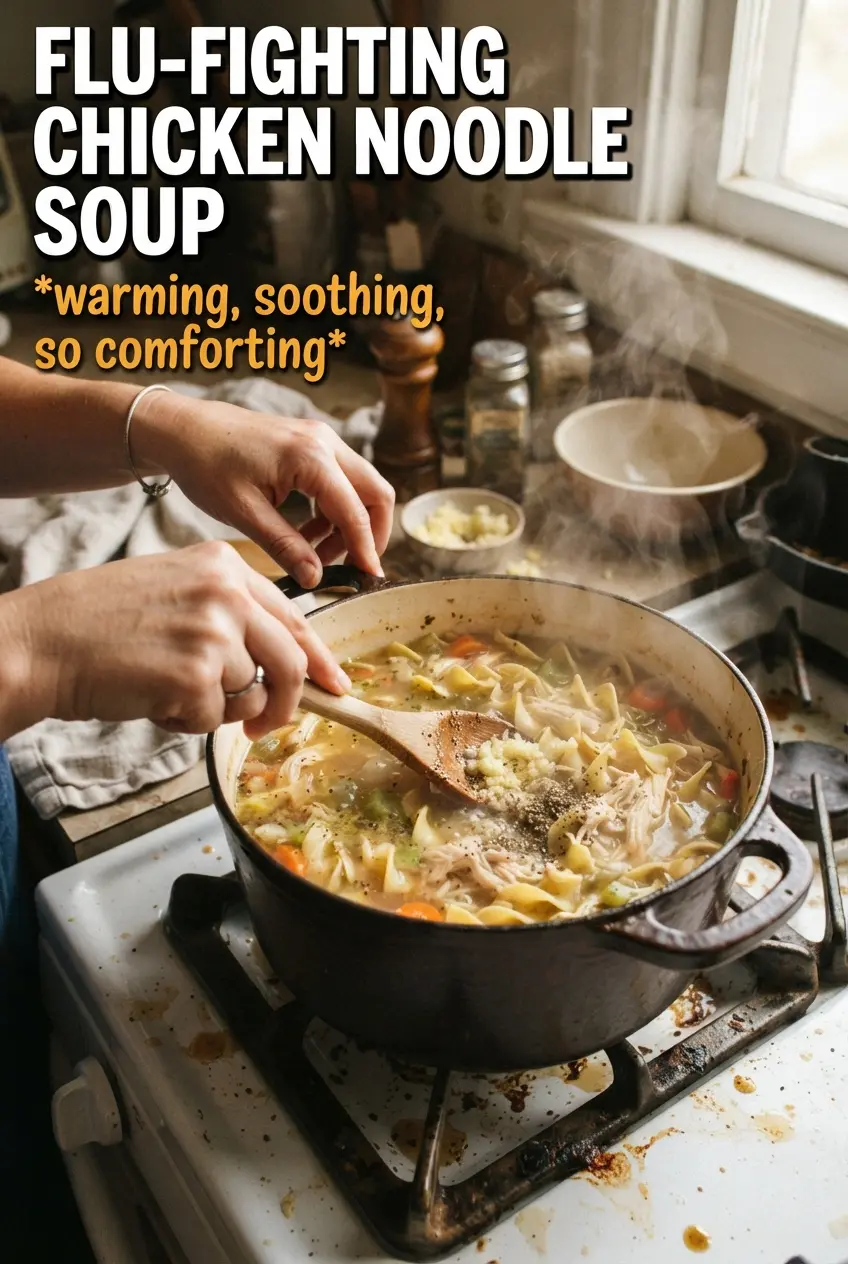
Flu-Fighting Chicken Noodle Soup
Ingredients
Equipment
Method
- Combine chicken, carrots, celery, onion, garlic, ginger, chicken broth, turmeric, cayenne pepper, and dried thyme in a large pot.
- Bring to a boil, then reduce heat and simmer for 25-30 minutes until the chicken is cooked and tender.
- Remove the chicken from the pot, shred it, and return the shredded chicken to the broth.
- Add egg noodles and cook for 6-8 minutes until tender, stirring occasionally to prevent sticking.
- Stir in honey, lemon juice, and apple cider vinegar, then season with salt and pepper to taste.
- Serve hot with fresh parsley and extra lemon wedges for squeezing over the top.


