Fresh cranberry orange sauce has a bright, glossy finish and that perfect sweet-tart bite that cuts right through rich holiday food. The cranberries soften into a spoonable sauce, but they still keep enough shape to look lively on the table instead of turning into a flat, jammy smear. The orange brings the whole thing into focus with fresh juice, zest, and juicy segments folded in at the end.
What makes this version work is the order. Sugar and orange juice go on the heat first, so the cranberries hit a simmering base and start bursting evenly instead of toughening up in a lukewarm pan. The zest goes in off the heat, where it stays fragrant instead of tasting bitter, and the orange segments get folded in after the sauce cools a bit so they hold their shape.
Below, I’ve included the small details that matter most: how to avoid overcooking the fruit, what to do if you want it thicker, and how to make it a day or two ahead without losing that fresh citrus lift.
The cranberries burst just enough and the orange segments stayed bright instead of turning mushy. I made it the night before, and it thickened up beautifully in the fridge.
This fresh cranberry orange sauce is the bright, tart side dish that wakes up the whole plate.
The Trick to Keeping the Berries Bright Instead of Mushy
Cranberry sauce can go wrong fast when it cooks too long. Once the berries burst, they need only enough time to thicken the juices and lose their raw edge. Push it much past that and the sauce gets dull, overly thick, and a little jam-like instead of loose and glossy.
The other mistake is adding the orange segments too early. Citrus membranes soften fast in hot syrup, and the pieces can collapse before the sauce ever cools. Stir them in after the pan comes off the heat, when the sauce is still warm but not boiling, and they’ll keep their shape better.
- Fresh cranberries — Fresh berries give the sharp pop and clean tartness that dried cranberries can’t match here. Frozen cranberries also work; don’t thaw them first, just add them straight to the simmering liquid.
- Fresh orange juice — This does more than sweeten. It gives the sauce its citrus backbone, and bottled juice tastes flatter and less fragrant.
- Orange zest — The zest carries the top-note orange aroma. Add it off the heat so the oils stay bright instead of turning bitter.
- Orange segments — These are more about texture and freshness than sweetness. Peel them cleanly and remove the membranes if you want the sauce to look polished and feel softer on the spoon.
- Sugar — The sugar balances the cranberries’ sharpness and helps the sauce thicken as it cools. Cutting it too far will make the sauce taste thin and aggressively tart.
Building the Sauce So It Sets Without Going Stiff
Starting the syrup base
Bring the orange juice and sugar to a full boil first, and let the sugar dissolve completely before the cranberries go in. You want the liquid to look clear and active, not cloudy or grainy. This gives the berries an even cooking base and keeps the sauce from tasting under-sweet in one bite and sharp in the next.
Cooking until the berries burst
Add the cranberries and a pinch of salt, then simmer until most of the berries have popped open and the liquid turns thick and jewel-like. Stir occasionally, but don’t mash the berries unless you want a smoother texture. If the pan boils too hard, the sauce can splatter and reduce too fast before the berries fully break down.
Finishing with zest and orange segments
Take the pan off the heat before stirring in the zest. That keeps the orange oil fresh and fragrant. Let the sauce cool slightly, then fold in the orange segments with a light hand so they stay intact. It will still look a little loose when warm; it thickens as it cools, so don’t cook it down until it seems finished in the pan.
How to Adjust This Sauce for Different Tables
Less Sweet, More Tart
Drop the sugar slightly if you like a sharper sauce, but don’t cut it too far or the cranberries will taste aggressive instead of balanced. The sauce will also set a little looser, which works well if you’re serving it alongside rich dishes.
Maple-Sweetened Version
Swap part or all of the sugar for maple syrup if you want a deeper, rounder sweetness. The sauce will taste warmer and a little less sharp, but it may take a minute or two longer to reduce because liquid sweeteners don’t behave exactly like granulated sugar.
Cranberry Sauce Without Orange Segments
If you want a smoother, more classic sauce, skip the orange segments and keep the zest and juice. You’ll lose the fresh juicy bites, but the texture will be more uniform and easier to spoon over turkey, biscuits, or yogurt.
Make-Ahead Storage
- Refrigerator: Store covered for up to 5 days. It will thicken as it chills, so don’t judge the final texture while it’s still warm.
- Freezer: Freeze for up to 2 months in an airtight container. The orange segments soften a bit after thawing, but the flavor holds up well.
- Reheating: Serve it cold or let it sit at room temperature for 20 to 30 minutes. If you warm it, do it gently over low heat. High heat can make the fruit break down too far and turn the sauce watery around the edges.
Questions I Get Asked About This Recipe
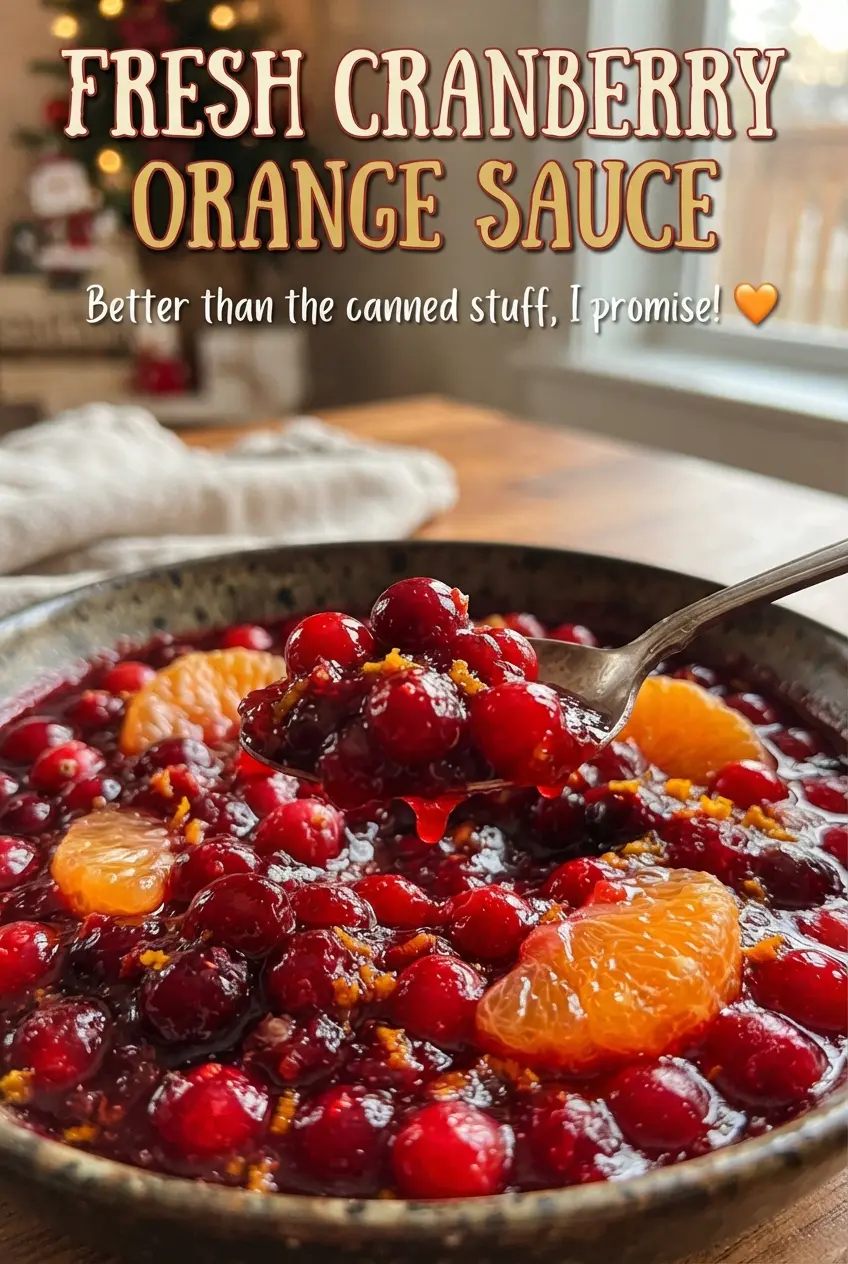
Fresh Cranberry Orange Sauce
Ingredients
Equipment
Method
- Bring sugar and fresh orange juice to a boil in a saucepan over medium-high heat. The mixture should actively bubble across the surface.
- Add fresh cranberries and salt, then return to a gentle boil. Reduce to a simmer and cook for 10 minutes, stirring occasionally, until most berries have burst and the sauce looks thickened.
- Remove the saucepan from the heat and stir in orange zest. The zest should be evenly distributed through the warm sauce.
- Cool slightly for about 5 minutes, then gently fold in the orange segments. Stop mixing once the segments are just combined so they stay intact.
- Chill the cranberry orange sauce until serving. Serve cold from the refrigerator for the best spoonable texture.


