Garlic Bread Deviled Eggs take everything people love about classic deviled eggs and give it that unmistakable garlic bread finish: creamy, salty filling under a crunchy layer of buttery panko, Parmesan, and parsley. The contrast is the whole point. You get the smooth yolk mixture first, then the toasted crumbs snap a little when you bite down, and that makes the eggs feel fuller and more satisfying than the usual picnic version.
The trick is treating the topping like garlic bread, not just a garnish. The garlic gets cooked briefly in butter before the panko goes in, which softens the raw edge and gives the crumbs a toasted, savory base instead of a sharp bite. Grating the garlic into the yolk filling keeps the flavor even without leaving little chunks behind, and the Parmesan helps the filling taste richer without making it heavy.
Below, I’ve included the timing that keeps the yolks tender, plus the one step that keeps the breadcrumb topping crisp right up to serving. If you’ve ever had deviled eggs sit out and turn a little flat, this version fixes that.
The garlic breadcrumb topping stayed crisp and the filling was extra creamy with the Parmesan mixed in. I served them at room temperature and the whole tray disappeared in minutes.
Save these Garlic Bread Deviled Eggs for the appetizer platter with the crunchy Parmesan-garlic topping.
The One Mistake That Makes Deviled Eggs Taste Flat
Most deviled eggs miss the mark because the filling gets all the attention and the topping gets rushed. Here, the garlic bread crumbs do more than add texture. They bring the salt, the toasted fat, and the savory finish that makes each bite taste complete.
The other place people lose control is with the yolks. Overcooked eggs give you a dry, slightly chalky center with a gray ring around the yolk, and that flavor carries straight into the filling. The boil-and-rest method here keeps the yolks tender and yellow, which matters because the filling is mashed smooth instead of masked with extra mayo.
- Boiling and resting the eggs — Bringing the eggs to a boil, then covering the pot and taking it off the heat, gives you set whites and creamy yolks without that sulfur edge that comes from boiling too hard.
- Toasting the panko in butter — Butter carries the garlic and browns the crumbs. Dry breadcrumbs won’t give you the same rich, bakery-style finish.
- Adding the topping at the end — Assemble the eggs ahead, but wait to add the crumbs until just before serving. If they sit too long, they soften and lose the garlic bread effect.
What Each Ingredient Is Actually Doing in These Eggs
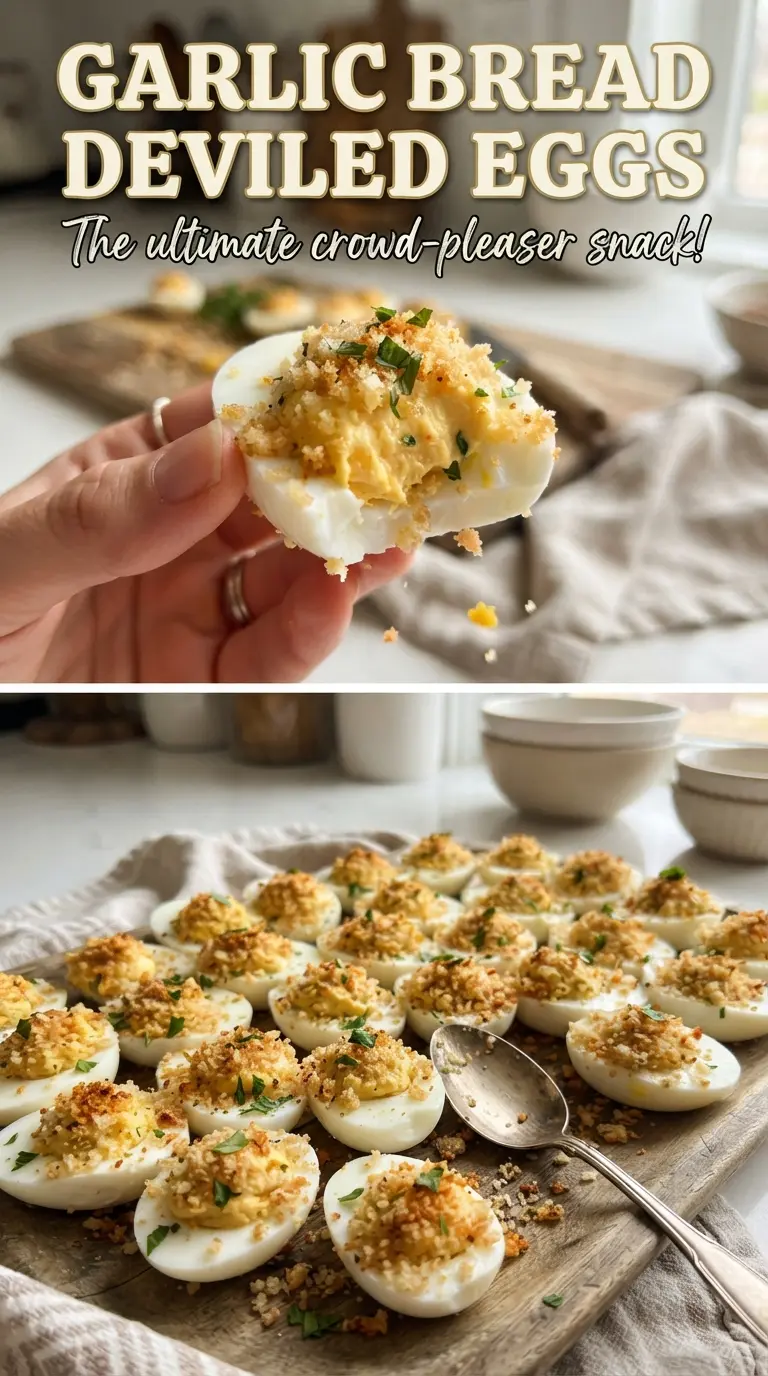
The filling needs just enough support to taste rich without turning heavy. Mayonnaise gives the classic deviled egg texture, but the Parmesan adds a little body and a salty, nutty edge that keeps the filling from tasting one-note. Dijon wakes everything up; you don’t taste mustard, you just notice the filling tastes more alive.
- Eggs — Use large eggs if you can. Smaller eggs work, but the filling-to-white ratio changes and the eggs look less generous on the platter.
- Mayonnaise — This is the texture builder. If you swap in yogurt, the filling turns looser and tangier, which works in a pinch but loses the silky deviled egg feel.
- Parmesan — Finely grated Parmesan blends cleanly into the yolks and gives the filling a savory backbone. Pre-grated is fine here, but the finer the grate, the smoother the filling.
- Garlic — Grating one clove into the filling gives steady garlic flavor without a raw bite. The minced garlic in the buttered crumbs is there for aroma and crunch, so don’t combine the two jobs into one clove.
- Panko — Panko stays lighter and crunchier than fine breadcrumbs. If you use regular breadcrumbs, the topping will be denser and a little sandier.
- Butter — This is what turns the topping into garlic bread instead of dry seasoned crumbs. Olive oil can work, but the finished flavor is flatter.
Building the Filling and Topping So They Stay Separate
Start With the Eggs
Set the eggs in a saucepan, cover them with cold water, and bring the pot to a boil over medium-high heat. As soon as it boils, cover the pan and pull it off the heat for 12 minutes. That off-heat rest is what keeps the yolks tender and avoids the rubbery ring that shows up when eggs sit in a hard boil.
Make the Garlic Breadcrumbs First
Melt the butter in a skillet, add the minced garlic, and cook just until fragrant, about 30 seconds. The garlic should smell sweet, not browned or bitter. Add the panko and stir until the crumbs turn golden and smell toasted, then take the pan off the heat and stir in the parsley. Let the mixture cool while you prep the eggs so it stays crisp instead of steaming itself soft.
Blend the Filling Until It’s Smooth
Split the eggs, pop the yolks into a bowl, and mash them with mayonnaise, Parmesan, Dijon, grated garlic, and salt. Keep mixing until the filling looks creamy and uniform, with no yellow lumps hiding in the corners. If it looks stiff, add another teaspoon of mayonnaise; if it looks loose, the Parmesan was probably packed too heavily, so give it a minute to sit and thicken.
Finish Right Before Serving
Pipe or spoon the filling into the whites, then pile the garlic breadcrumbs on top just before the platter hits the table. This is the step that protects the crunch. Finish with a little extra Parmesan so the tops look sharp and the garlic bread flavor lands immediately.
How to Adapt These Garlic Bread Deviled Eggs for Different Crowds
Dairy-Free Version
Use a good dairy-free mayonnaise and swap the butter for olive oil or vegan butter. You’ll lose a little of the classic garlic bread richness, but the toasted crumbs still give you the same crunchy top and the garlic still comes through.
Gluten-Free Crunchy Topping
Use gluten-free panko in place of standard breadcrumbs. It browns almost the same way and keeps the light, crisp texture, though you may need an extra minute in the skillet for full color.
Bolder Garlic Flavor
Add a tiny pinch of garlic powder to the filling if you want the garlic note to hit harder. Keep it light; too much powder muddies the clean egg-and-Parmesan balance.
Storage and Reheating
- Refrigerator: Store the filled egg whites and garlic crumbs separately for up to 2 days. The eggs will hold fine, but the topping softens fast once it touches the filling.
- Freezer: Don’t freeze assembled deviled eggs. The whites turn watery and the filling gets grainy after thawing.
- Reheating: These aren’t meant to be reheated. If the crumbs were made ahead, warm them in a dry skillet for a minute to bring the crunch back before topping the eggs.
Answers to the Questions Worth Asking
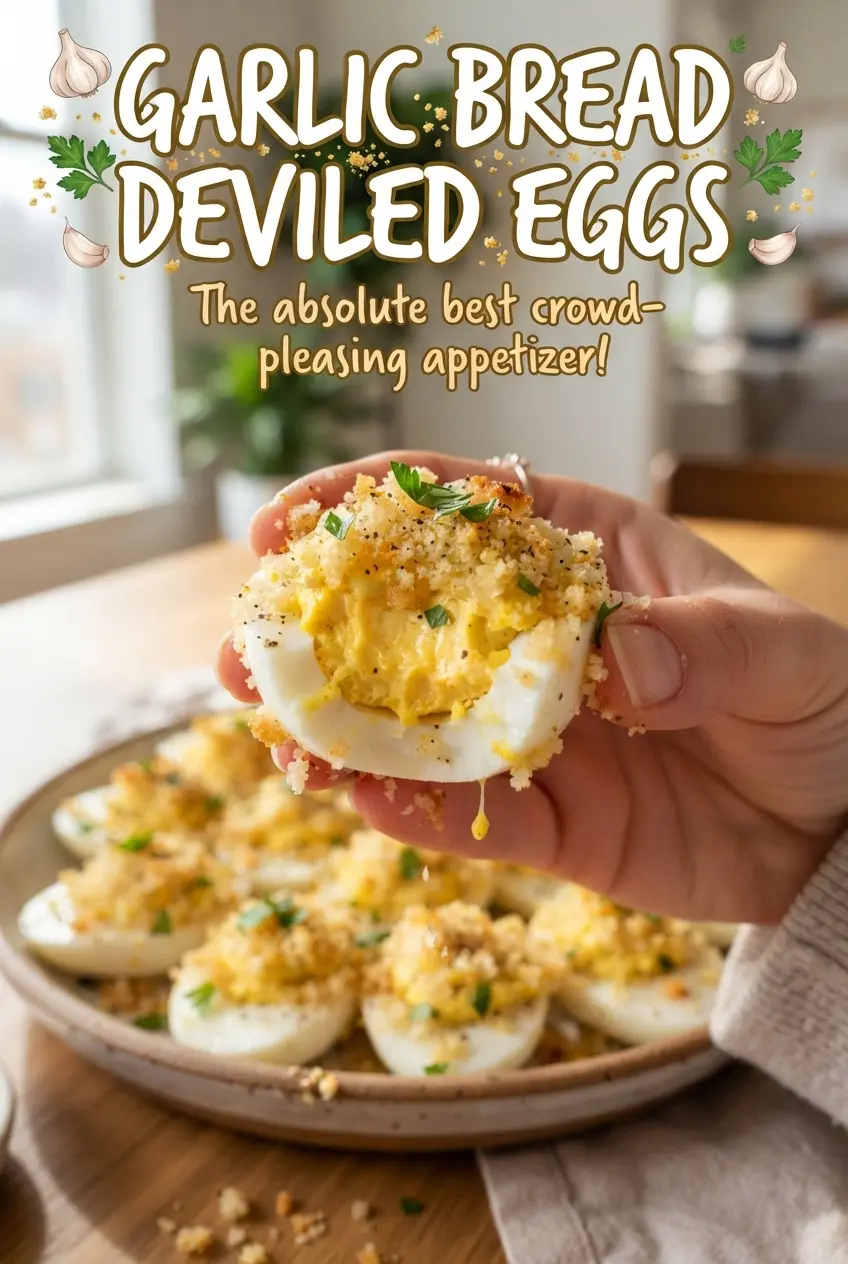
Garlic Bread Deviled Eggs
Ingredients
Equipment
Method
- Melt the butter in a cast iron skillet, then add the minced garlic and cook for 30 seconds until fragrant (no browning). Stir in the panko and toast for 3-4 minutes until golden, watching closely so the crumbs color evenly.
- Turn off the heat and stir in the chopped parsley so the topping stays fragrant and lightly coated.
- Place the eggs in a pot and cover with cold water. Bring to a boil, cover the pot, remove from heat, and let stand for 12 minutes.
- Chill the eggs, peel them, and halve them lengthwise.
- Mash the yolks with the mayonnaise, Parmesan, Dijon mustard, grated garlic, and salt until smooth.
- Pipe the filling into the egg white halves, filling each one to the top.
- Sprinkle generously with the garlic breadcrumbs just before serving so they stay crunchy. Finish with extra Parmesan for a final layer of flavor.


