Hungarian goulash turns humble beef chuck into a deep red, paprika-rich stew with tender potatoes, soft onions, and just enough broth to keep every spoonful silky instead of heavy. The best versions don’t taste rushed. They taste like the onions were given time to melt, the paprika was treated gently, and the beef had hours to relax into the pot.
This version keeps the technique simple, but the order matters. Paprika goes in off the heat so it blooms without turning bitter, and the onions cook until they’re golden before anything else joins the pot. That gives the stew its rounded base flavor, the kind that makes the broth taste fuller without needing a long ingredient list.
Below, I’ve included the small details that keep the paprika from scorching, the beef from turning tough, and the potatoes from collapsing before the stew is ready. If you’ve ever had goulash that tasted flat or dusty, the fix is usually in the timing, not the seasoning.
The paprika stayed bright and the broth turned rich without getting greasy. I added a little extra sour cream at the table and the beef was fall-apart tender after the full simmer.
Save this paprika-rich Hungarian goulash for a cozy pot of tender beef, potatoes, and sour cream.
The Secret to Keeping the Paprika Sweet, Not Bitter
Hungarian paprika can go from fragrant to harsh fast if it hits direct heat for too long. That’s why the onions and garlic build the base first, then the pot comes off the burner before the paprika and caraway go in. The residual heat is enough to wake up the spice without scorching it, which keeps the stew red, rounded, and smooth-tasting instead of dusty.
The other quiet safeguard is the liquid and simmer time. Beef chuck needs a long, gentle cook to loosen up, and goulash is at its best when the broth barely burbles. A hard boil tightens the meat and clouds the broth; a lazy simmer gives you tender cubes and a clean, full-flavored sauce.
What Each Ingredient Is Actually Doing in This Pot
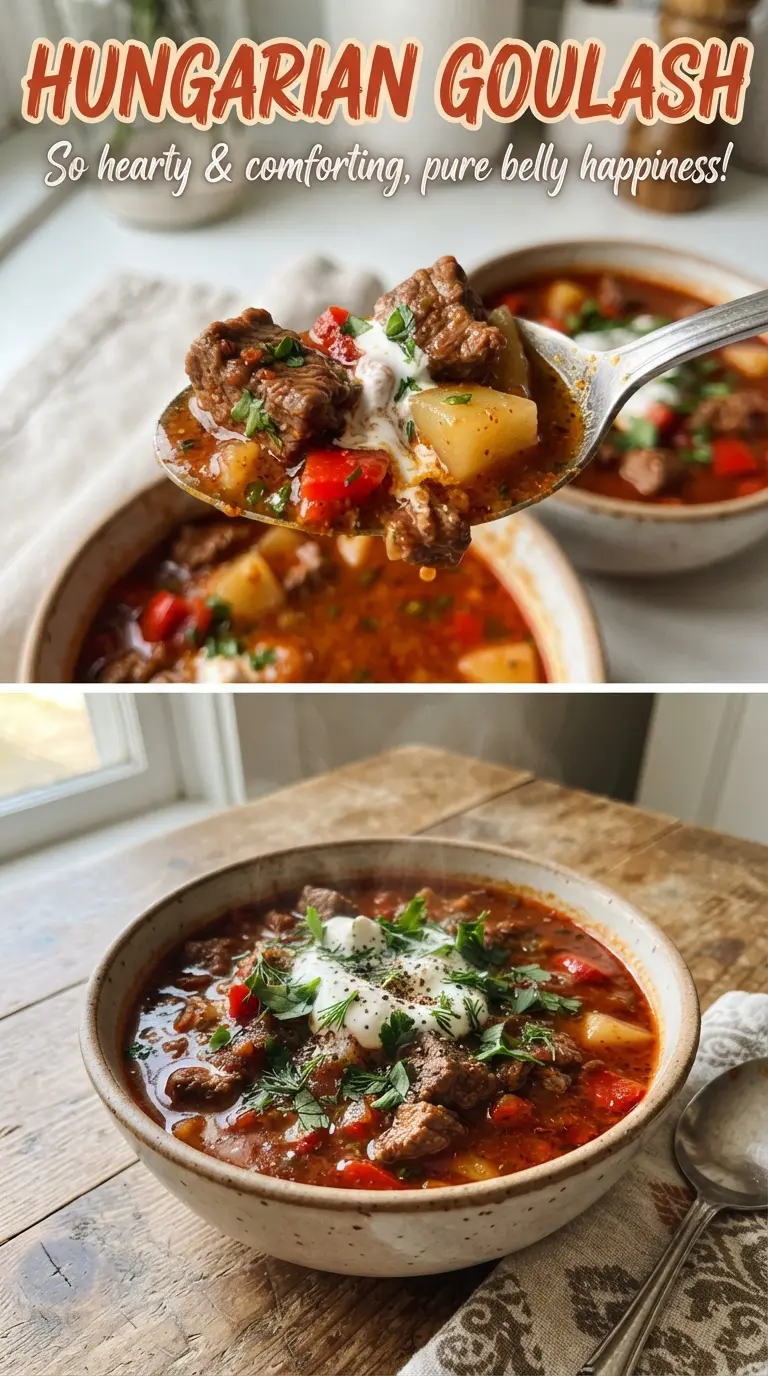
- Beef chuck — This is the cut that turns silky after a long simmer. Leaner beef stays stringy here, so chuck is worth buying.
- Sweet Hungarian paprika — This is the signature flavor, and quality matters. Use fresh paprika if you can; old paprika loses its color and tastes flat.
- Onions — They’re not just background. Cooked until golden, they thicken the broth and add the gentle sweetness that balances the paprika.
- Caraway seeds — They give the stew its classic Hungarian edge. Lightly crushed seeds release more aroma, but whole seeds work fine if that’s what you have.
- Tomato paste — It deepens the color and adds a little body without turning the stew into tomato sauce. A tablespoon is enough.
- Potatoes and carrots — They go in later so they hold their shape. If you add them at the start, they’ll go chalky and fall apart before the beef is ready.
Building the Pot So the Beef Turns Tender Instead of Tough
Cooking the onions until they melt
Start with the onions in lard or oil and give them the full 10 minutes until they’re soft and golden at the edges. That slow cook pulls sweetness from the onions and gives the stew a richer base than a quick sauté ever will. If they’re still pale, the broth will taste thin later. Add the garlic for just a minute so it stays fragrant, not browned.
Blooming the paprika off the heat
Pull the pot off the burner before you stir in the paprika and caraway. This is the step that protects the whole dish, because paprika burns fast and turns bitter if it sits on a hot pan dry for too long. Stir until the onions look rust-red and smell warm and sweet. That’s your signal to move on immediately.
Letting the beef simmer low and slow
Add the beef and stir until every piece is coated in the paprika mixture, then return the pot to medium heat briefly before adding the broth. Once it’s covered, bring it to a gentle simmer, not a rolling boil. The surface should barely move. If it bubbles hard, the beef tightens instead of softening, and the broth can turn cloudy.
Adding the vegetables at the right moment
Potatoes and carrots go in only after the beef has had time to start tenderizing. This keeps them from turning mushy and gives you pieces that still hold their shape in the bowl. The stew is done when the beef yields easily to a fork and the potatoes are tender all the way through, with no chalky center.
How to Adapt This Goulash Without Losing Its Character
Dairy-Free Serving
Skip the sour cream and serve the goulash plain or with a spoonful of dairy-free yogurt on top. The stew itself is naturally dairy-free, so you’re only changing the finish, not the body of the dish.
A Thicker, More Spoonable Stew
Let the pot simmer uncovered for the last 15 to 20 minutes if you want a deeper, thicker broth. That reduction concentrates the paprika and gives the stew a more rustic texture, but go slowly so the bottom doesn’t catch.
Using Different Potatoes
Yukon Golds hold their shape better than russets and give you a creamier bite. Russets will break down more and thicken the stew, which can be nice, but the texture will be softer and less defined.
Storage and Reheating
- Refrigerator: Keep covered for up to 4 days. The flavor gets even better the next day, and the broth thickens as it chills.
- Freezer: It freezes well for up to 3 months. Cool it completely first, then pack it in airtight containers and leave a little space for expansion.
- Reheating: Warm it gently on the stovetop over low heat until heated through. A hard boil can make the beef dry and the potatoes crumbly, so keep the heat low and add a splash of broth if it looks too thick.
Answers to the Questions Worth Asking

Hungarian Goulash
Ingredients
Equipment
Method
- Heat lard or vegetable oil in a Dutch oven and cook the onions for 10 minutes, stirring often, until golden. Keep the heat at medium so the onions soften and brown without scorching.
- Add the garlic and cook for 1 minute, stirring constantly, until fragrant. The aroma should bloom quickly without browning the garlic.
- Remove the pot from the heat and stir in sweet Hungarian paprika and caraway seeds so the paprika doesn’t burn. The mixture should look like a thick reddish paste.
- Add the beef and stir to coat all the cubes in the paprika mixture. Return to medium heat and cook for 5 minutes to lightly brown the beef.
- Stir in tomato paste, red and green bell peppers, beef broth, salt, black pepper, and bay leaf. Bring it to a simmer, then cover and simmer for 1 hour, stirring occasionally.
- Add the potatoes and carrots, then cover and simmer for 45 minutes until the beef and potatoes are tender. The stew should thicken and the potatoes should break easily with a fork.
- Remove the bay leaf and serve the goulash with sour cream. Add the sour cream on top so it melts into the hot paprika sauce.


