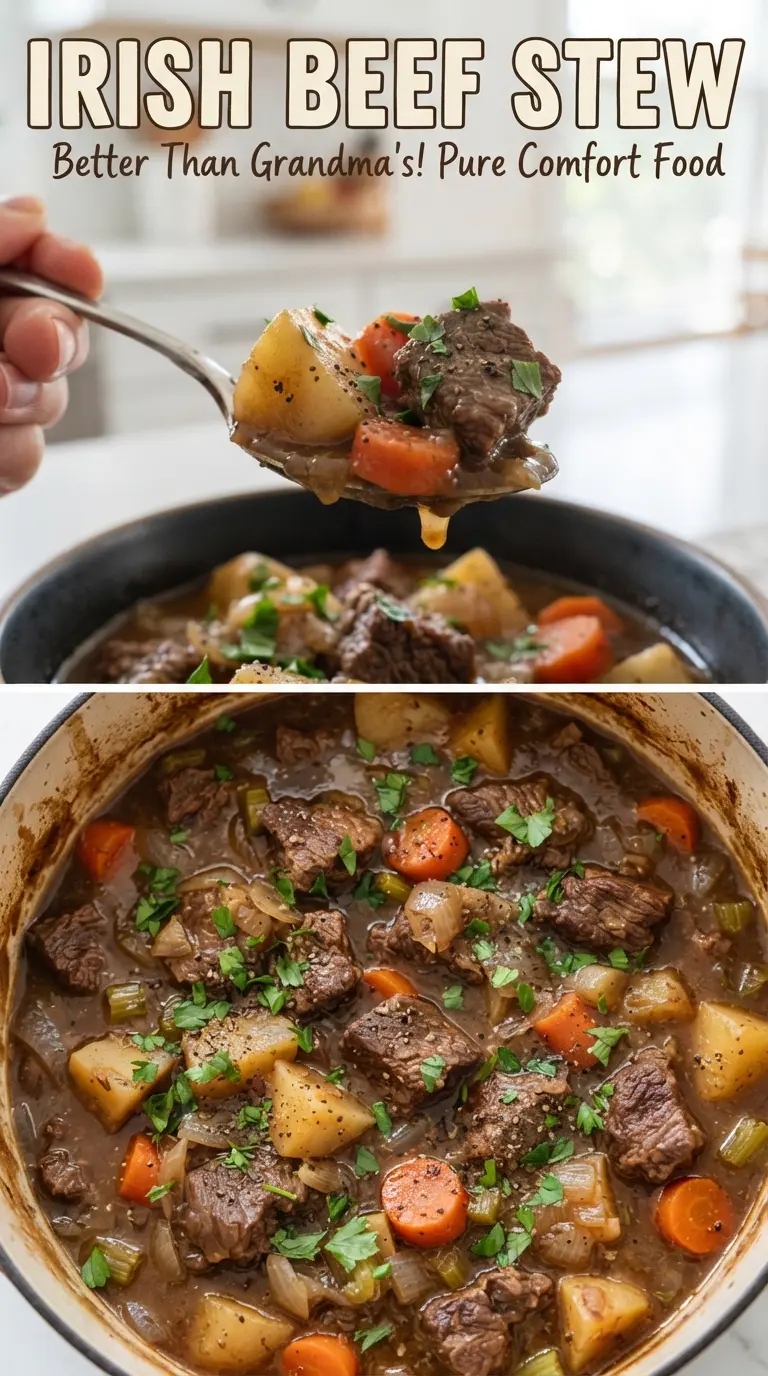
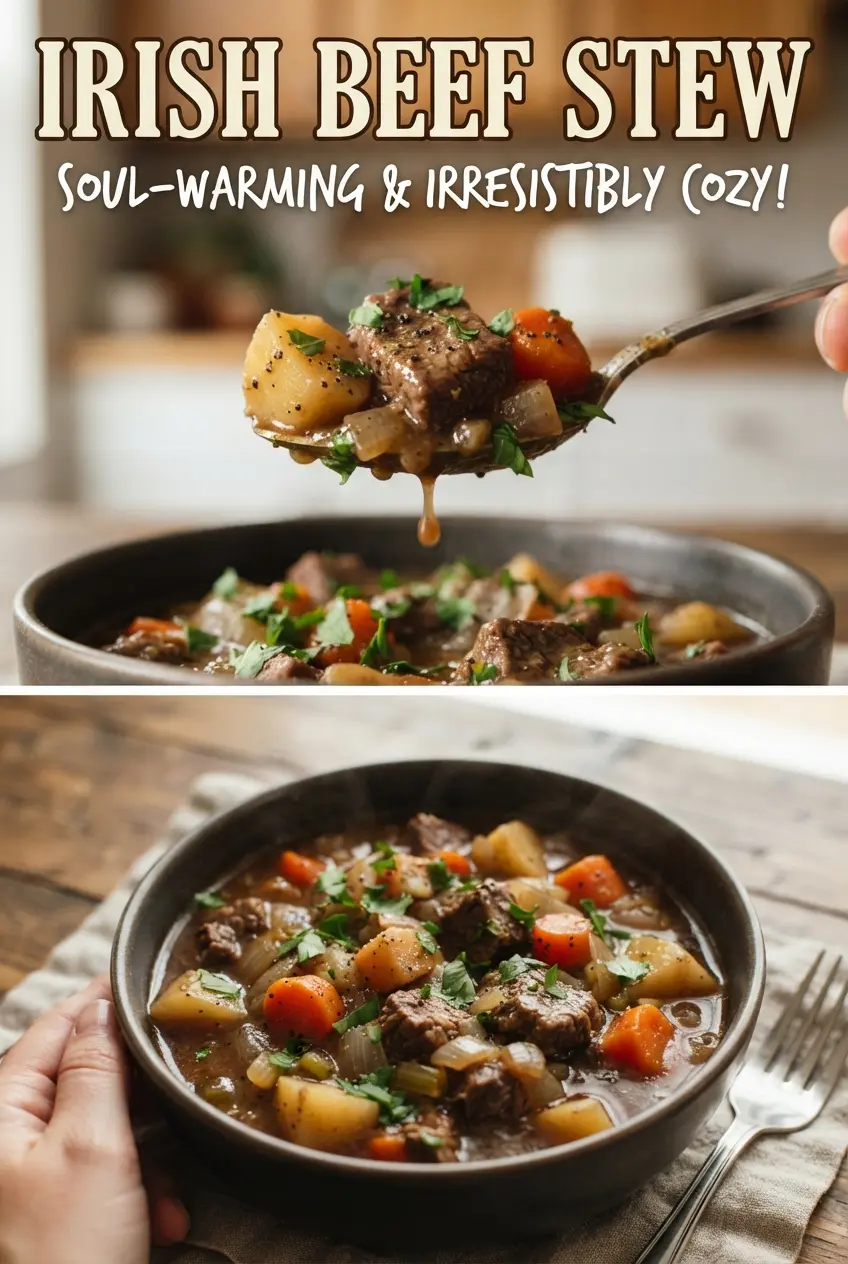
Irish beef stew earns its place on the table when the broth turns deep and glossy, the beef gives way without falling apart, and the potatoes soak up just enough of the gravy to taste like they were made for it. This version leans into those old-fashioned, slow-simmered flavors without turning muddy or thin. You get a spoonable stew with distinct chunks of carrot, celery, and potato, plus beef that stays juicy instead of shredding into strings.
The difference is in the order of the work. Browning the beef first gives the stew its backbone, and the tomato paste cooks long enough to lose that raw edge before the stout goes in. Scraping the bottom after the stout hits the pan matters, because that’s where the best flavor is hiding. The flour on the beef helps the stew thicken naturally as it simmers, so the broth finishes rich without needing any extra tricks.
Below, I’ve included the small details that keep the gravy from going flat and the vegetables from turning to mush. If you’ve ever ended up with beef that was tender but a watery broth, this method fixes that.
The gravy thickened up beautifully and the beef was tender after the full simmer. I liked that the potatoes went in later and held their shape instead of turning mealy.
Save this Irish Beef Stew for a deeply savory dinner with tender beef, stout-rich gravy, and potatoes that hold their shape.
The Browning Step That Keeps This Stew From Tasting Flat
The first real layer of flavor happens before any liquid goes in. If the beef goes into the pot pale, the stew will taste cooked, not braised. Browning in batches gives you those dark, sticky bits on the bottom, and those bits dissolve later into the broth instead of staying behind in the pan.
The other place people lose flavor is the tomato paste. Let it cook for a full minute with the onion and garlic so it darkens slightly and loses the tinny taste raw paste can bring. Then the stout loosens everything up and lifts the browned bits cleanly, which is what gives the gravy its depth.
- Beef chuck — This cut has enough fat and connective tissue to turn tender during a long simmer. Lean beef will dry out before the stew gets the texture you want.
- Irish stout — This adds bitterness, roast, and a malty edge that water or extra broth can’t replace. If you need a substitute, use a dark beer with body; keep it to one cup so the stew doesn’t turn harsh.
- Tomato paste — It deepens the broth and gives the gravy a rounder color and flavor. Cook it briefly so it blends in instead of reading as tomato sauce.
- Flour on the beef — This is the quiet thickener here. It helps the meat brown and gives the stew body as it simmers, so the broth finishes silky instead of thin.
What Each Ingredient Is Actually Doing in the Pot
- Beef broth — This is the base of the gravy, so use one that tastes good on its own. A weak broth makes the whole pot taste thin, even after hours on the stove.
- Potatoes — Add them later so they stay intact and release just enough starch to help thicken the stew. Waxy potatoes hold their shape best; if you use russets, expect a softer, more broken-down texture.
- Carrots and celery — These add sweetness and a clean savory note. Cut them chunky so they survive the last simmer and don’t disappear into the sauce.
- Fresh parsley — Stir it in at the end for a bright finish. It doesn’t season the stew in a big way, but it wakes up everything underneath it.
Building the Stew in Layers, Not Just Letting It Simmer
Seasoning and Browning the Beef
Pat the beef dry enough that the flour clings in a thin coat, then season and brown it in batches. If you crowd the pan, the meat steams and gives off liquid before it can color, and that means you lose both crust and flavor. You want a dark brown exterior, not gray edges.
Softening the Onion and Cooking Off the Paste
Once the beef comes out, cook the onion until it turns translucent and picks up some color from the pan. Add the garlic and tomato paste next and stir until the paste darkens slightly and smells sweeter than sharp. If the garlic starts browning hard, the heat is too high and the pot will taste bitter later.
Deglazing and Starting the Braise
Pour in the stout and scrape the bottom of the pot with a wooden spoon until all the browned bits dissolve. Add the broth, thyme, rosemary, bay leaves, and beef, then bring it just to a simmer. A hard boil will tighten the meat and make the broth cloudy, so keep the heat low and steady.
Adding the Vegetables at the Right Time
After the beef has simmered long enough to start turning tender, add the potatoes, carrots, and celery. This timing matters more than almost anything else in the pot. Put them in too early and they collapse; put them in too late and the stew tastes split between soft meat and undercooked vegetables. Keep simmering until the potatoes are tender at the center and the broth coats a spoon.
Finishing for a Clean, Bright Bowl
Fish out the bay leaves before serving, then stir in the parsley off the heat. That last step keeps the herbs fresh instead of dull. If the stew seems a little loose at first, give it five to ten minutes to settle; it thickens as it cools slightly.
How to Adapt This Irish Beef Stew Without Losing Its Character
Gluten-Free Version
Skip the all-purpose flour and brown the beef plain, then thicken the stew at the end with a small cornstarch slurry if needed. You’ll lose a little of the built-in body from the flour coating, but the flavor stays the same and the gravy still turns plush.
Alcohol-Free Stew
Use extra beef broth plus a teaspoon of balsamic vinegar or a splash of red wine vinegar for a little lift. You won’t get the same roasted stout note, but the vinegar helps replace the brightness the beer would have brought.
Extra-Hearty Vegetable Finish
Add parsnips or mushrooms with the potatoes if you want a deeper, earthier bowl. Mushrooms especially play well with the stout and add another layer of savory flavor without changing the structure of the stew.
Storage and Reheating
- Refrigerator: Store for up to 4 days. The stew thickens as it sits, and the potatoes will absorb some broth.
- Freezer: It freezes well for up to 3 months, though the potatoes soften a bit after thawing. Cool it completely before packing it into airtight containers.
- Reheating: Warm it gently over low heat on the stove with a splash of broth if needed. Don’t boil it hard or the beef can tighten up and the potatoes can break down too far.
Answers to the Questions Worth Asking
Irish Beef Stew
Ingredients
Equipment
Method
- Season the beef with salt and black pepper, then toss it with the all-purpose flour until coated.
- Heat the vegetable oil in a Dutch oven over medium-high heat, then brown the beef in batches until deeply browned on all sides (do not crowd).
- Add the chopped onion to the Dutch oven and cook for 5 minutes until softened.
- Stir in the minced garlic and tomato paste and cook for 1 minute to mellow the sharpness.
- Pour in the Irish stout and scrape up the browned bits from the bottom of the pot.
- Add the beef broth, dried thyme, dried rosemary, and bay leaves, then return the mixture to a simmer.
- Cover and simmer at a steady simmer for 1 1/2 hours, until the beef is starting to become tender.
- Add the potatoes, carrots, and celery, then bring back to a simmer.
- Cover and simmer for 45-60 minutes until the vegetables are tender and the gravy has thickened.
- Remove the bay leaves and finish with the chopped fresh parsley before serving.


