Golden, pan-seared chicken gets even better when it’s finished in a maple bourbon sauce that turns glossy and sticky in the skillet, then gets a little crunch from toasted pecans on top. The combination hits that sweet-savory spot without tasting heavy, and the sauce clings to the chicken instead of pooling around it.
What makes this version work is the order of operations. The chicken browns first, then the garlic cooks just long enough to take the edge off, and the bourbon gets a brief simmer so the sharp alcohol note fades before the maple syrup and Dijon go in. That gives you a sauce with depth, not just sweetness, and the toasted pecans stay crisp instead of getting soggy.
Below, I’ve included the little details that matter most: how to keep the sauce from getting thin, what to do if you don’t want to cook with bourbon, and the best way to serve it so the pecans keep their crunch.
The sauce tightened up beautifully in the pan and the pecans stayed crunchy on top. I loved how the bourbon cooked down and didn’t taste harsh at all.
Save this Maple Bourbon Pecan Chicken for a skillet dinner with a glossy pan sauce and toasted pecans.
The Reason the Sauce Stays Glossy Instead of Turning Thin
The biggest mistake with pan sauces like this is rushing the simmer. Bourbon needs a minute in the pan to lose its harsh edge, but the real body comes from reducing the maple, broth, and Dijon together until the sauce looks slightly syrupy and coats the back of a spoon. If it’s still watery, it hasn’t reduced enough yet.
The other thing that matters is heat control after the chicken comes back in. If the sauce is boiling hard, it can tighten too quickly and start looking sticky instead of silky. Keep it at a gentle simmer, spoon it over the chicken, and let the sauce cling naturally as it finishes.
What Each Ingredient Is Actually Doing in This Dish
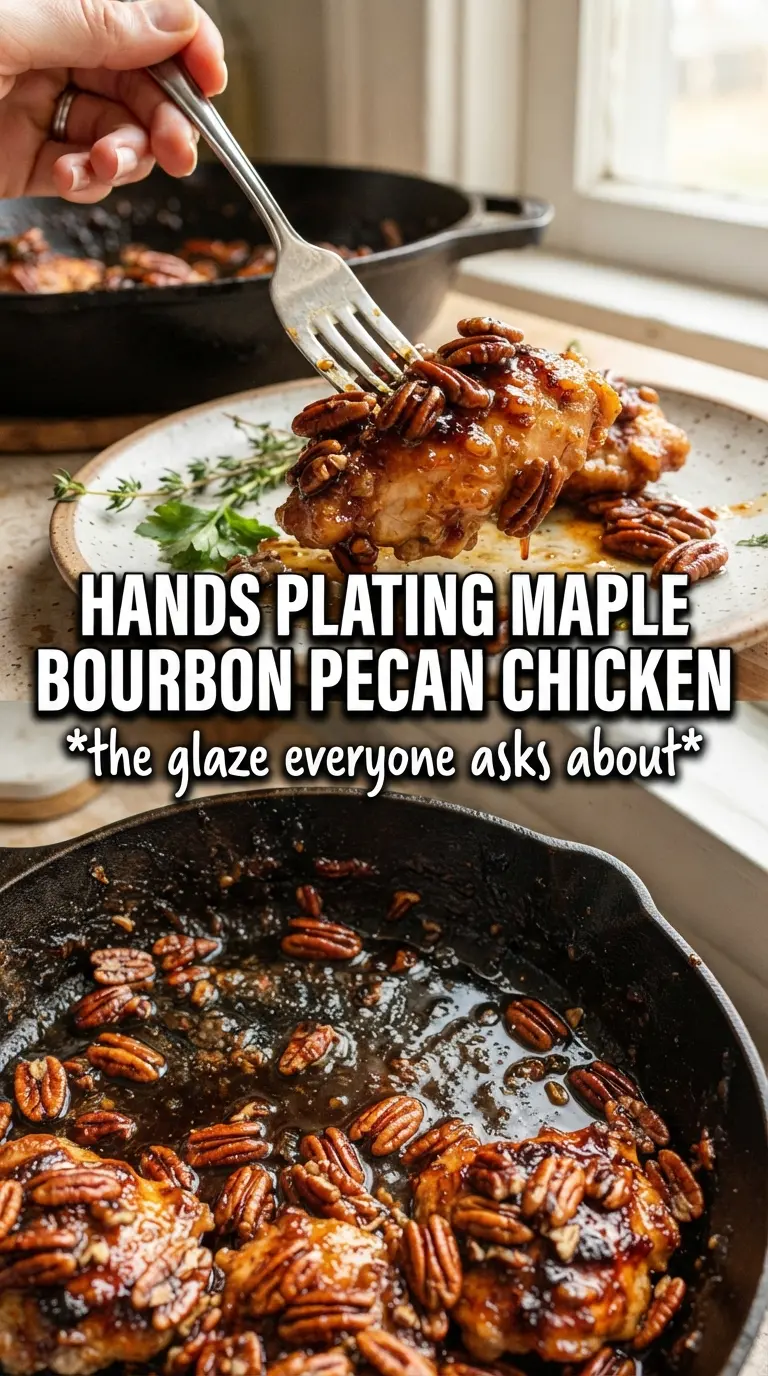
- Chicken breasts — Boneless breasts cook quickly and give you a wide surface for browning. If yours are thick in the center, pound them to an even thickness so they finish at the same time the sauce is reducing.
- Bourbon — This adds warmth and depth that you can’t get from broth alone. You don’t need an expensive bottle, but don’t use a harsh bottom-shelf bourbon you’d never sip, because the flavor concentrates as it cooks.
- Pure maple syrup — Real maple syrup gives the sauce its body and that rounded sweetness. Pancake syrup won’t behave the same way and usually tastes flat after it reduces.
- Dijon mustard — Dijon keeps the sauce from tasting one-note sweet and helps it emulsify. Grainy mustard works too, but the sauce will be a little looser and more textured.
- Toasted pecans — Toasting matters here. Raw pecans taste dull beside the sauce, while toasted pecans bring a deep nutty crunch that stays noticeable even after they hit the glaze.
- Butter and olive oil — The oil helps with browning, and the butter adds flavor. Using both gives you a better sear than butter alone, which can brown too fast and burn before the chicken is cooked through.
Building the Sauce in the Same Skillet Without Breaking It
Get the chicken browned first
Season the chicken with salt and pepper, then sear it in the hot oil and butter until it has a deep golden crust on both sides and the center is cooked through. If the pan is crowded, the chicken will steam instead of brown, and you’ll miss the flavor base that makes the sauce worth making. Pull the chicken out when it’s done and let it rest on a plate.
Cook the garlic without scorching it
Add the garlic to the hot skillet and stir it for about a minute, just until it smells fragrant. If it turns dark brown, the sauce will taste bitter, and there’s no fixing that later. Keep it moving in the pan so it softens instead of burning.
Reduce the bourbon before the sweet ingredients go in
Pour in the bourbon carefully and let it bubble for about 2 minutes so the sharp alcohol edge cooks off. If you’re cooking over an open flame, take the pan off the burner before adding it. Once the bourbon has reduced a little, stir in the maple syrup, Dijon, broth, and thyme, then simmer until the sauce thickens enough to coat a spoon.
Finish with the chicken and pecans
Return the chicken to the skillet and spoon the sauce over the top until every piece looks lacquered. The chicken only needs a minute or two in the sauce to warm through, and that short finish keeps it juicy. Scatter the toasted pecans over the top right before serving so they stay crunchy.
How to Adapt This for Different Tables and Diets
Use chicken thighs for a richer, juicier result
Boneless thighs stay juicier than breasts and are a little more forgiving if you’re nervous about overcooking. They may take a few extra minutes in the skillet, but the sauce clings to them just as well and the finished dish tastes a bit richer.
Make it dairy-free by swapping the butter
Use all olive oil or a plant-based butter substitute if you need to skip dairy. You’ll lose a little of the round, buttery finish, but the maple, bourbon, and Dijon still carry the sauce well.
Skip the bourbon without losing the sauce
Replace the bourbon with extra chicken broth plus 1 teaspoon apple cider vinegar or lemon juice. The sauce will be a little cleaner and less warm-tasting, but the maple and Dijon still build a balanced glaze.
Toast the pecans ahead of time for better crunch
Toast the pecans in a dry skillet or low oven, then cool them completely before adding them to the chicken. Warm pecans can soften faster in the sauce, while cooled toasted nuts keep their snap on top.
Storage and Reheating
- Refrigerator: Store leftovers in an airtight container for up to 3 days. The sauce will thicken as it chills.
- Freezer: You can freeze the chicken and sauce for up to 2 months, though the pecans are best added after thawing so they don’t lose their texture.
- Reheating: Reheat gently in a covered skillet over low heat with a splash of broth to loosen the sauce. High heat can make the chicken dry and can push the maple sauce from glossy to sticky.
Answers to the Questions Worth Asking
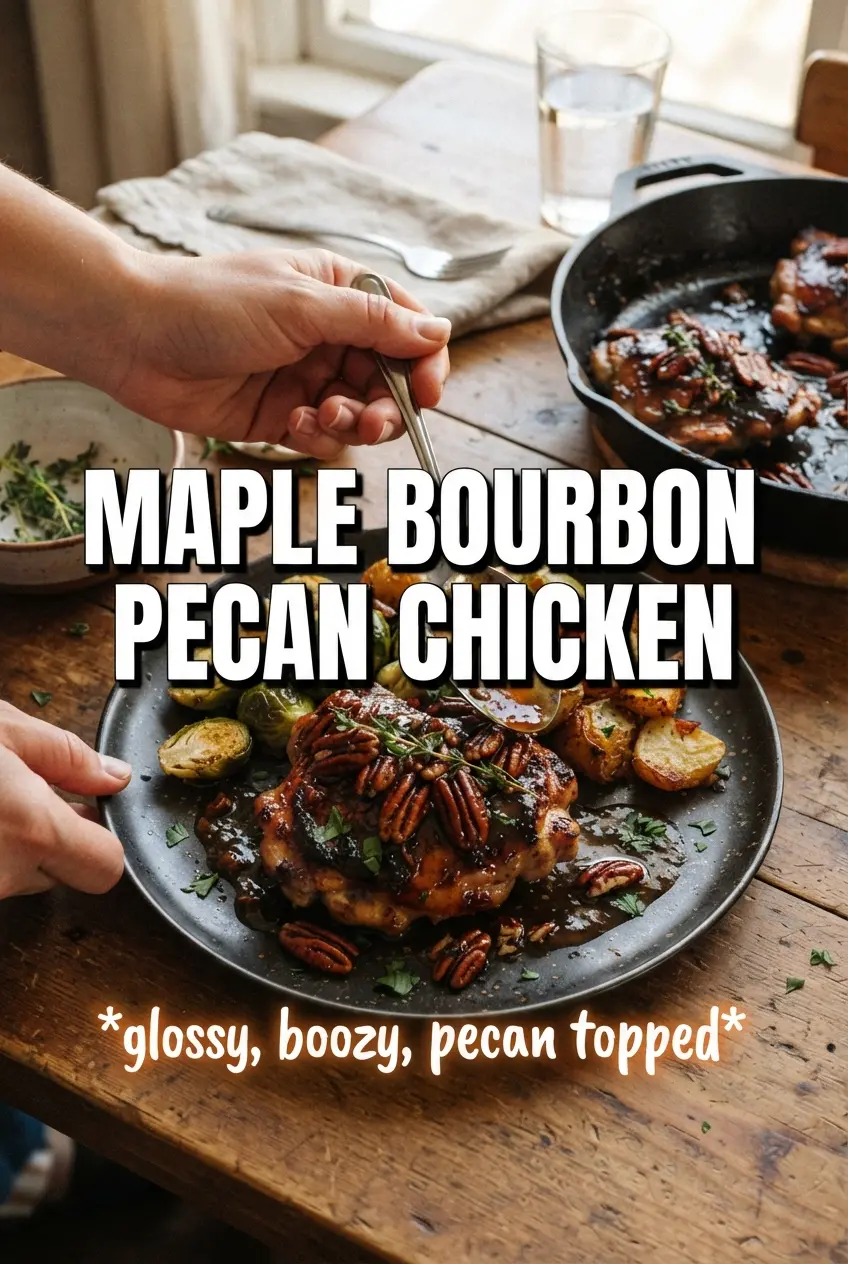
Maple Bourbon Pecan Chicken
Ingredients
Equipment
Method
- Season the boneless chicken breasts with salt and pepper, then sear in olive oil and butter in a hot cast iron skillet for 5-6 minutes per side until cooked through. Visual cue: a deep golden crust forms on both sides.
- Remove the chicken from the skillet, then add the minced garlic and cook for 1 minute. Visual cue: garlic becomes fragrant without browning too much.
- Carefully add the bourbon and cook for 2 minutes, off heat if using open flame. Visual cue: bubbling reduces slightly and the alcohol smell cooks off.
- Add the pure maple syrup, Dijon mustard, chicken broth, and fresh thyme, then simmer for 4-5 minutes until the sauce thickens. Visual cue: the sauce coats the back of a spoon and looks glossy.
- Return the chicken to the skillet, coat it in the sauce, and top with the toasted pecan halves. Visual cue: pecans sit on top and cling to the thickened glaze.


