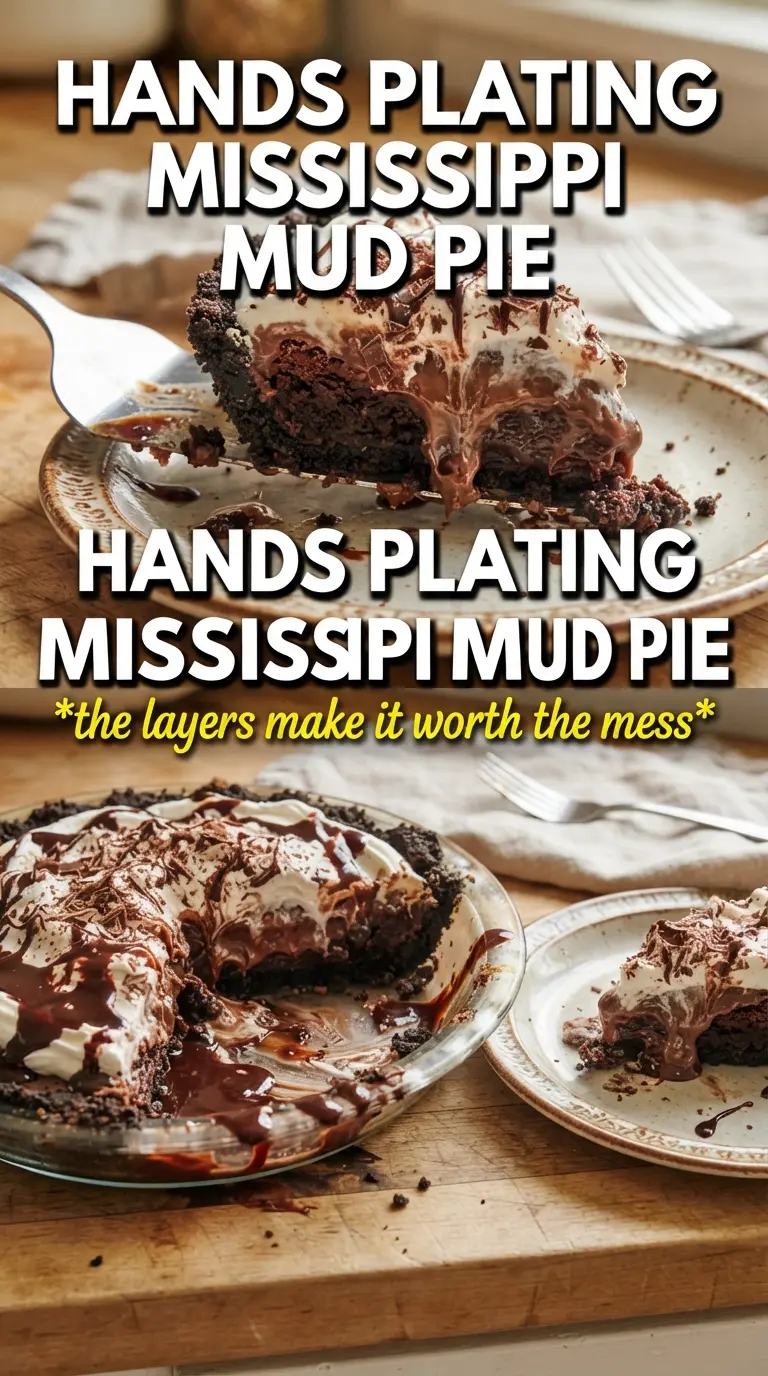
Mississippi mud pie earns its keep with layers that hit every texture at once: a dense fudgy brownie base, a soft marshmallow middle, and a glossy chocolate topping that settles into the cracks instead of sitting flat and sweet. When it’s chilled and sliced, the whole thing eats like a cross between a brownie, a candy bar, and a proper dessert for people who like chocolate without apology.
The trick is timing. The marshmallows go on while the brownies are still hot so they soften and melt just enough to fuse with the surface, and the frosting is poured on while it’s still warm so it spreads without tearing the layer underneath. A pan with straight sides helps the slices hold together, and the chill time matters more than people think — that’s when the layers set up into clean, sturdy squares instead of a gooey panful.
Below you’ll find the little details that keep the brownie layer tender, the frosting smooth, and the cut pieces neat. If you’ve ever had mud pie turn into a sticky mess, the fix is in the timing.
The brownie layer stayed fudgy after chilling, and the marshmallows melted into that perfect sticky middle without turning the top soggy. I chopped the walnuts a little finer and the slices held together beautifully.
Save this Mississippi Mud Pie for the kind of chocolate dessert that cuts clean, chills beautifully, and brings that fudgy-marshmallow-ganache stack every time.
The Part That Keeps the Layers Distinct Instead of Collapsing Together
The biggest mistake with Mississippi mud pie is treating it like a dump-and-go pan dessert. The brownie base needs to be baked until the center is set but still soft, because it keeps cooking a little after it comes out of the oven. If you wait until it feels fully firm in the middle, it bakes up dry once it chills.
The marshmallows and frosting depend on heat that’s already in the pan. Scatter the marshmallows immediately after baking, not after a pause, so they melt on contact and form that signature sticky layer. Then pour on the frosting while it’s warm enough to spread, but not boiling, or it can slide around and soak through the top instead of sitting in a smooth cap.
- Butter — This is doing more than adding richness. It gives the brownie base its dense, moist texture and keeps the frosting glossy instead of chalky.
- Cocoa powder — Use a good unsweetened cocoa here. It’s the main chocolate flavor in both the brownie and the frosting, so a flat cocoa makes the whole dessert taste muted.
- Mini marshmallows — Mini marshmallows melt evenly over the hot brownies. Large marshmallows leave gaps and take longer to soften, which makes the layer uneven.
- Walnuts or pecans — Either one works, but walnuts bring a sharper bite and pecans lean sweeter and softer. Chop them roughly so they press into the frosting without disappearing.
What Each Ingredient Is Actually Doing in This Recipe
- Primary ingredient (the star) — Quality matters most. Choose the best you can find.
- Cooking medium (oil, butter, or broth) — This carries flavors and prevents dryness.
- Seasonings (salt, pepper, spices, herbs) — Layer flavors so nothing overpowers. Build depth gradually.
- Aromatics (garlic, onion, herbs) — Cook with fat to bloom flavors. Become the foundation.
- Supporting ingredients — Complement the main ingredient without overpowering it.
- Sauce or liquid (if applicable) — Brings flavors together. Balance richness with acid.
- Acid (lemon, vinegar, wine, or other) — Brightens and prevents flat-tasting results.
- Final finish (garnish, glaze, or sauce) — Prevents one-dimensional taste and adds visual appeal.
Building the Brownie, Marshmallow, and Ganache Layers in the Right Order
Mixing the Brownie Base
Melt the butter first, then whisk in the sugar before adding the eggs and vanilla. That warm butter helps the sugar start dissolving, which gives the brownie a smoother crumb and keeps it from tasting grainy. Fold in the flour, cocoa, and salt just until the batter turns dark and thick; if you beat it hard at the end, the brownies set up tighter than they should.
Baking Until Just Set
Spread the batter into a greased 9×13 pan and bake at 350°F until the edges look set and the center no longer sloshes when you move the pan. For this recipe, that usually takes 25 to 28 minutes. The toothpick doesn’t need to come out clean — a few moist crumbs are the goal, because the residual heat and chilling time finish the structure.
Melting the Marshmallow Layer
As soon as the pan comes out of the oven, scatter the mini marshmallows evenly over the hot surface and return it to the oven just long enough for them to puff. Watch for the tops to soften and turn glossy; that’s the cue to pull the pan. Leave them too long and they’ll melt into puddles instead of forming that chewy, pillowy middle.
Finishing with Warm Chocolate Frosting
Melt the butter for the frosting, whisk in the cocoa and milk, then take the pan off the heat before adding powdered sugar and vanilla. That keeps the frosting smooth instead of gritty. Pour it over the marshmallow layer while it’s still warm and spread it gently to the edges; once the top starts to set, stop working it or you’ll drag marshmallows up into the frosting.
Make It More Nutty
Use the full cup of pecans if you want a softer, sweeter finish, or toast the walnuts first for a deeper, more pronounced crunch. Toasting takes the edge off raw nuttiness and helps the topping taste more like a candy bar.
Gluten-Free Mississippi Mud Pie
Swap the flour for a cup-for-cup gluten-free blend that includes xanthan gum. The base will still be fudgy, but it may be a touch more delicate when warm, so chill it fully before slicing.
Dairy-Free Version
Use a plant-based butter that’s meant for baking and a dairy-free milk with some body, like oat milk. The texture stays close, but the frosting won’t set quite as firmly, so give it the full chill time before cutting.
Storage and Reheating
- Refrigerator: Keep covered for up to 5 days. The topping stays firm and the brownie layer gets a little denser after the first day.
- Freezer: It freezes well in slices. Wrap each piece tightly and thaw in the refrigerator so the marshmallow layer doesn’t weep.
- Reheating: This dessert is best served cold or at cool room temperature. If you warm it, do it for just a few seconds on a plate, or the frosting softens and the layers lose their clean lines.
Answers to the Questions Worth Asking
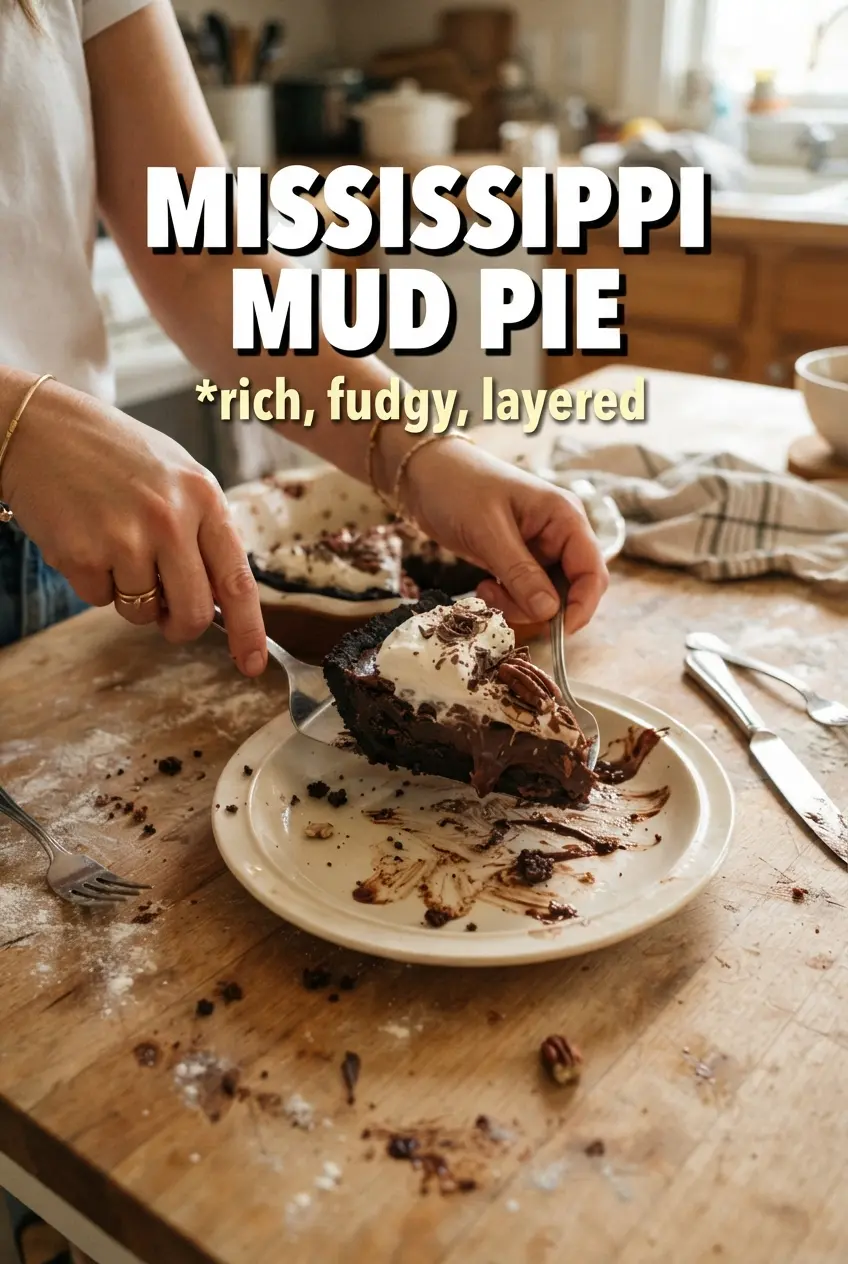
Mississippi Mud Pie
Ingredients
Equipment
Method
- Preheat the oven to 350F and grease a 9x13 pan with a thin, even coating so the brownie layer releases cleanly.
- Melt the unsalted butter, then whisk in the sugar, eggs, and vanilla until smooth and glossy.
- Fold in the flour, cocoa, and salt just until no dry streaks remain.
- Bake at 350F for 25-28 minutes, until the center looks set rather than wet, with a fudgy surface.
- Immediately scatter the mini marshmallows over the hot brownies so they start melting on contact.
- Return to the oven for 3-4 minutes at 350F, until the marshmallows are puffed and lightly golden.
- Melt the unsalted butter, whisk in the cocoa powder and whole milk, and remove from heat once smooth and steaming.
- Whisk in the powdered sugar and vanilla until thick, smooth, and pourable.
- Pour the warm chocolate frosting over the marshmallow layer and spread to cover the surface.
- Scatter the walnuts or pecans over the frosting so they press slightly into the top as it sets.
- Refrigerate for 2 hours to chill and firm for clean slices.


