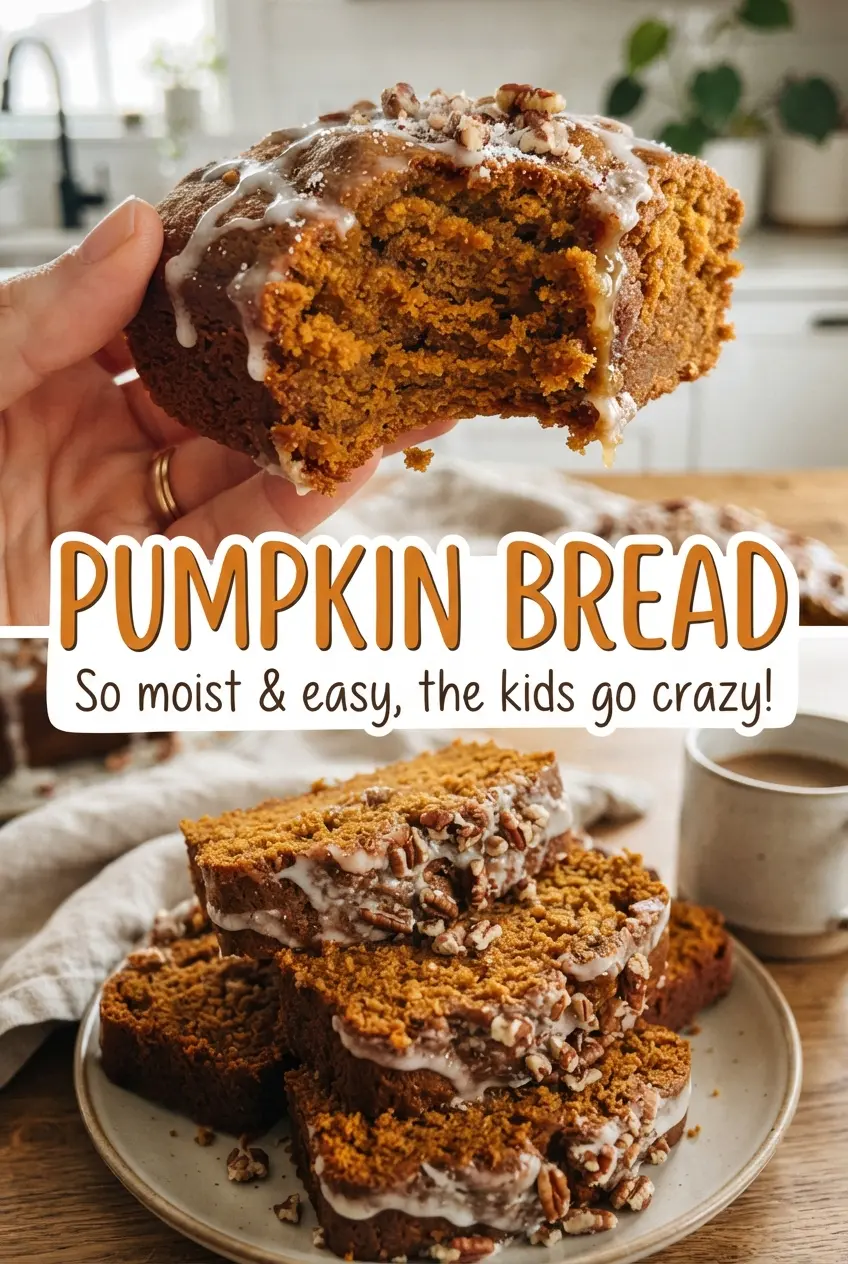
Pumpkin bread earns its place because it stays moist for days, slices cleanly, and carries that warm spice-and-pumpkin flavor without turning heavy. The top bakes up crackly from the sugar sprinkle, while the center stays tender and soft instead of cakey or dry. It’s the kind of loaf that disappears one slice at a time, usually while it’s still warm enough to leave a little crumb on the knife.
The texture depends on a gentle hand. Pumpkin puree brings moisture, oil keeps the crumb plush, and the mix of brown sugar and granulated sugar gives both depth and that lightly crisp top. The batter comes together fast, but the key is stopping as soon as the flour disappears. Overmix it and the loaf tightens up. Bake it until the center is just set, and let it cool long enough for the structure to settle before you cut in.
Below you’ll find the details that matter most: how to keep the loaf soft without making it dense, which ingredient swaps actually work, and what to watch for if your pumpkin bread tends to sink in the middle.
The loaf came out so moist and the cinnamon sugar top turned into the perfect little crust. Mine sliced cleanly after cooling, and it stayed soft through the next morning.
Pumpkin Bread with that crackly sugar top is the loaf to save for easy fall baking and soft, moist slices all week.
The Trick to Keeping Pumpkin Bread Tender Instead of Heavy
Pumpkin bread goes wrong when the batter gets worked like cake batter or quick bread gets treated like muffin batter. Once the flour goes in, you’re only trying to erase the dry streaks, not whip air into it. That small difference keeps the crumb tender instead of rubbery.
The other place people lose the loaf is the bake time. Pumpkin puree holds a lot of moisture, so the middle can look done before it actually is. A toothpick should come out clean or with a few moist crumbs, but not wet batter. If the top is getting dark before the center sets, tent the loaf loosely with foil for the last 10 to 15 minutes.
- Pumpkin puree — Use plain pumpkin puree, not pumpkin pie filling. Pie filling already has sugar and spices added, and it throws off both the flavor and the texture.
- Vegetable oil — Oil keeps the loaf soft even after it cools. Melted butter can work, but the bread will be a little firmer and less plush the next day.
- Brown sugar — This brings moisture and a deeper caramel note that suits pumpkin bread better than white sugar alone.
- Milk — Just enough to loosen the batter so it bakes up evenly. Whole milk is best, but 2% works fine. Non-dairy milk works too if you keep it unsweetened.
Building the Batter Without Losing the Loft
Mixing the Wet Ingredients Until Smooth
Start by whisking the pumpkin, oil, eggs, sugars, milk, and vanilla until the mixture looks glossy and uniform. The sugar won’t fully dissolve, and that’s fine. You’re looking for an even base with no streaks of egg white or clumps of brown sugar. If the mixture still looks grainy in spots, keep whisking for another 20 to 30 seconds so the loaf bakes evenly.
Adding the Dry Ingredients Only at the End
Whisk the flour with the baking soda, salt, pumpkin pie spice, and cinnamon first so the leavening and spices are distributed evenly. Then fold the dry mixture into the wet just until the flour disappears. A few tiny lumps are better than overmixing, because too much stirring develops the gluten and makes the bread tough. Stop as soon as you no longer see dry flour at the bottom of the bowl.
Getting That Crackly Sugar Top
Pour the batter into the prepared loaf pan and sprinkle the tablespoon of sugar over the top before baking. That little finish gives the loaf a thin, crisp shell that breaks under the knife. Use granulated sugar here, not brown sugar, because brown sugar melts more deeply and won’t give the same crackly effect. Bake until the center springs back lightly and a toothpick comes out clean from the middle.
Make It Dairy-Free
Swap the milk for unsweetened almond, oat, or soy milk. The loaf stays just as moist because the oil does the heavy lifting, and the flavor stays balanced as long as the milk isn’t sweetened or flavored.
Cut the Sugar Slightly
You can reduce the brown sugar to 1/2 cup and the granulated sugar to 1/3 cup if you want a less sweet loaf, but the top won’t brown quite as deeply and the crumb will be a touch less tender. I wouldn’t cut much more than that unless you’re changing the whole recipe.
Add Nuts or Chocolate Chips
Fold in up to 3/4 cup chopped pecans, walnuts, or chocolate chips after the dry ingredients go in. Toss them with a spoonful of flour first so they don’t sink to the bottom of the loaf.
Storage and Reheating
- Refrigerator: Store sliced or unsliced pumpkin bread in an airtight container for up to 5 days. It actually stays pleasantly moist, though the sugar top softens a little.
- Freezer: It freezes well. Wrap the cooled loaf or individual slices tightly in plastic, then in foil, and freeze for up to 3 months.
- Reheating: Warm slices in the microwave for 10 to 15 seconds or in a 300°F oven for a few minutes. Don’t overheat it or the crumb will dry out fast.
Answers to the Questions Worth Asking
Pumpkin Bread
Ingredients
Equipment
Method
- Preheat the oven to 350F, then grease and line a 9x5-inch loaf pan.
- Grease and line the pan so the loaf lifts out cleanly after baking.
- Whisk all-purpose flour, baking soda, salt, pumpkin pie spice, and ground cinnamon until evenly combined.
- Whisk pumpkin puree, vegetable oil, eggs, brown sugar, granulated sugar, milk, and vanilla extract until smooth.
- Fold the dry ingredients into the wet just until no flour streaks remain.
- Pour the batter into the loaf pan and sprinkle 1 tablespoon of granulated sugar over the top.
- Bake for 55-65 minutes, until a toothpick comes out clean.
- Cool the loaf in the pan for 15 minutes.
- Turn it out onto a rack to cool before slicing.


