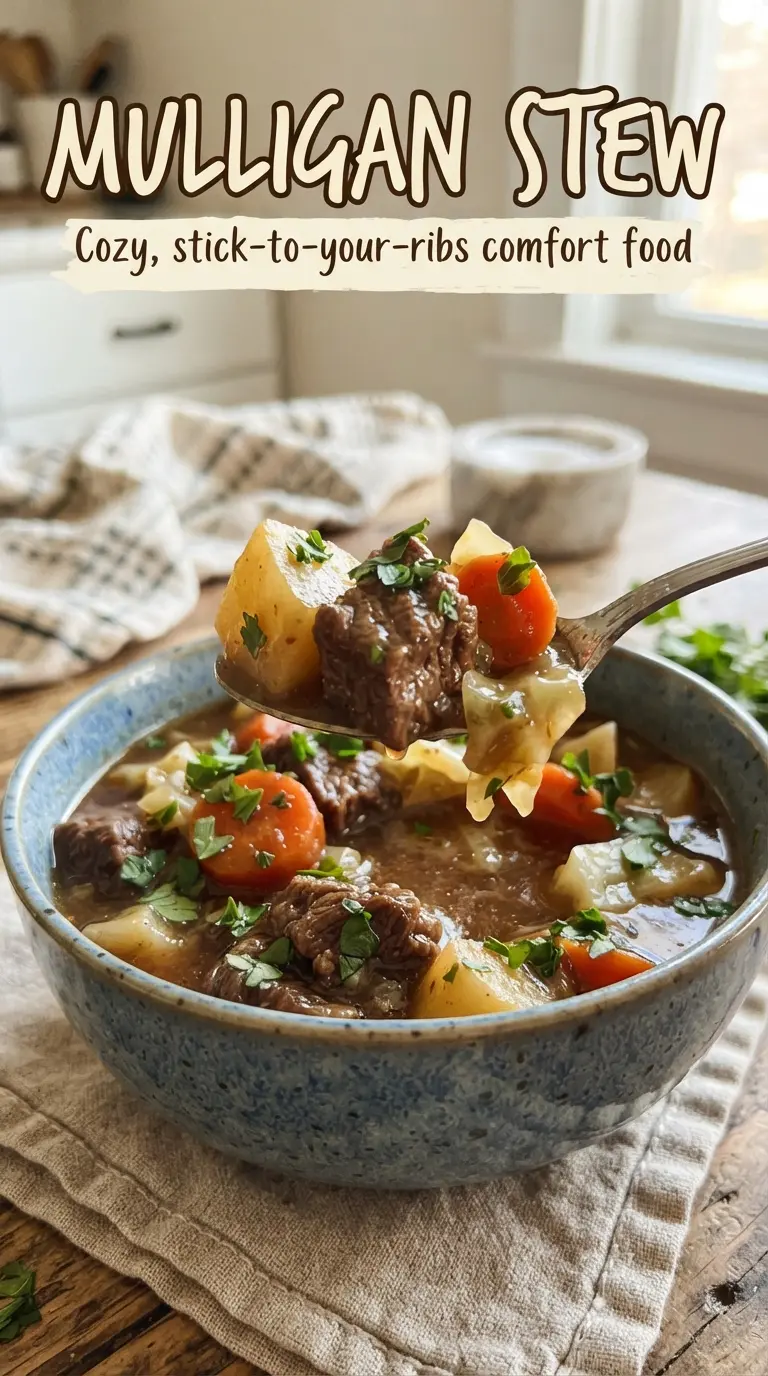
Mulligan stew is the kind of hearty pot that gets better as it sits, with tender beef, smoky sausage, and vegetables simmered in a broth that turns rich and deeply savory without any fuss. It’s the sort of meal that tastes like it cooked all day because the ingredients take turns building the flavor for you: first the browned meat, then the onions and garlic, then the broth and tomatoes working down into something substantial and comforting.
The key here is patience at two points. Browning the beef and sausage creates the base flavor, and giving the stew time before adding the potatoes and cabbage keeps those vegetables from disappearing into softness. The Worcestershire sauce adds depth without making the broth taste sharp, and the kidney beans and corn go in near the end so they stay intact and keep the stew from feeling muddy.
Below, you’ll find the small timing details that keep the broth balanced and the vegetables in good shape, plus a few useful swaps if you need to work with what’s already in your kitchen.
The beef got tender, the sausage flavored the whole pot, and adding the potatoes later kept them from turning grainy. We had leftovers for lunch and the broth was even better the next day.
Pin this hearty Mulligan stew for the nights when you want a big rustic pot of beef, sausage, potatoes, and beans that tastes like it simmered all afternoon.
The Browned Meat Is What Keeps This Stew From Tasting Flat
A lot of stew recipes lean on the simmer to do all the work, but Mulligan stew needs a proper sear first. When the beef and sausage hit the hot oil, they leave behind browned bits that dissolve into the broth later and give the whole pot a deeper, meatier finish. If you crowd the pan, the meat steams instead of browns, and that’s when the stew starts tasting one-note.
The other trap is adding the vegetables too early. Potatoes, carrots, and cabbage need time, but not the full simmer, or they break down and turn soft in a way that blurs the texture of the stew. Staggering the additions keeps the broth rich and the spoonfuls distinct.
- Brown the beef in batches if needed — A full pan drops temperature fast. If the meat starts releasing liquid, stop and let it brown before stirring again.
- Keep the sausage in the searing stage — It brings smoke and salt to the base, but it also renders fat that helps the onions cook without sticking.
- Add the sturdy vegetables later — Potatoes and carrots hold their shape better when they only simmer for the last 30 minutes.
- Finish the cabbage near the end of the long simmer — It softens quickly and gives the stew body without dissolving into the broth.
What Each Ingredient Is Actually Doing In This Pot
- Beef chuck — This cut has enough fat and connective tissue to turn tender over a long simmer. Lean stew meat can work, but it won’t give you the same silky texture or broth.
- Smoked sausage — This is where the stew gets its smoky backbone. Use a sausage you’d actually eat on its own, because the flavor carries through the whole pot.
- Diced tomatoes — They add acidity and a little brightness so the broth doesn’t taste heavy. Crushed tomatoes make the stew thicker, while diced tomatoes keep a looser, more brothy finish.
- Beef broth — This is the base the whole stew lives in, so use one that tastes good on its own. If yours is low-sodium, the seasoning stays easier to control.
- Worcestershire sauce — It adds savory depth and a little tang. There isn’t a true substitute that gives the same effect, but soy sauce plus a tiny splash of vinegar can get close in a pinch.
- Cabbage, potatoes, carrots, corn, and kidney beans — Each one adds a different kind of bulk and texture. The beans and corn go in last so they stay intact, while the potatoes and carrots need enough time to turn tender without falling apart.
How to Layer the Simmer So Nothing Turns Mushy
Build the base before the broth goes in
Season the beef, then brown it with the sausage until you see a good crust on the meat and browned bits on the bottom of the pot. Pull the meat out before cooking the onion so the pan doesn’t cool down too much. When the onion goes in, it should soften and pick up those browned bits; that’s where the stew starts tasting layered instead of just salty.
Let the long simmer do the tenderizing
After the broth, tomatoes, Worcestershire, thyme, beef, and sausage go back in, bring the pot to a gentle simmer and cover it. You want small bubbles, not a hard boil. Boiling makes the beef tighten up and can cause the broth to look greasy instead of rich, while a steady simmer slowly turns the chuck tender.
Add the vegetables in two stages
Potatoes, carrots, and cabbage go in after the beef has had time to soften because they need less total cooking. If they go in from the start, the potatoes can break and thicken the broth in a gluey way, and the cabbage loses its shape completely. Add the corn and kidney beans at the end so they heat through without losing their texture.
Season once the pot has settled
After the final simmer, taste the broth before serving. The saltiness can change depending on your broth, sausage, and beans, and this is the point where the stew should taste full, not flat. If it needs lift, add salt in small pinches and give it a minute to dissolve before tasting again.
How to Adapt Mulligan Stew Without Losing Its Character
Make It Gluten-Free
The stew is naturally close, but the Worcestershire sauce can be the catch. Use a gluten-free Worcestershire and check your broth label, since some brands use wheat-based seasoning. The texture and flavor stay the same, and you won’t lose anything in the pot.
Swap the Sausage for Extra Beef
If you don’t have smoked sausage, add another half pound of beef chuck and a little smoked paprika. You’ll lose some of the sausage’s smoky salt, but the stew will still have plenty of body and the paprika brings back some of that campfire note.
Turn It Into a Vegetable-Forward Pot
Use less beef and sausage, then increase the potatoes, carrots, cabbage, corn, and beans. The broth will be lighter on meat flavor, so lean harder on browning the onion and seasoning the simmer well. This version feels a little less rustic and a little more brothy, but it still eats like a full meal.
Storage and Reheating
- Refrigerator: Store covered for up to 4 days. The broth thickens a little as it chills, and the flavor gets deeper.
- Freezer: It freezes well for up to 3 months. Cool it completely first, then freeze in portions so the vegetables don’t overcook during reheating.
- Reheating: Reheat gently on the stove over medium-low until hot. If it looks thick, add a splash of broth or water. Don’t boil it hard or the potatoes can start breaking apart.
Questions I Get Asked About This Recipe

Mulligan Stew
Ingredients
Equipment
Method
- Season the beef chuck cubes with salt and black pepper. Heat vegetable oil in a Dutch oven over medium-high heat until shimmering, then brown the beef and the sliced smoked sausage until well-colored, about 6-8 minutes, and set aside.
- Add the diced onion to the pot and cook for 4 minutes, stirring until softened. Add the minced garlic and cook for 30 seconds, stirring so it stays fragrant and doesn’t brown.
- Stir in the diced tomatoes, beef broth, Worcestershire sauce, and dried thyme, then return the beef and sausage to the pot. Cover and simmer at a steady low simmer for 1 1/4 hours, keeping the pot at a gentle bubble.
- Add the cubed potatoes, sliced carrots, and chopped cabbage to the pot. Cover and simmer at a low simmer for 30 minutes, until the vegetables are tender when pierced.
- Stir in the corn kernels and drained kidney beans. Cover and simmer for 10 minutes more until hot throughout and the stew is nicely thickened.
- Taste the stew and season to taste with additional salt and black pepper if needed. Serve hot.


