Deep orange-red Nigerian chicken stew earns its place on the table because the sauce cooks down until it loses that raw tomato sharpness and turns rich, glossy, and deeply savory. The chicken soaks up all that peppery tomato flavor, and when you spoon it over steamed rice, you get the kind of meal that tastes even better on day two.
The part that makes this version work is patience in the pot. The blended tomatoes, red peppers, and Scotch bonnet need enough time to fry in oil until the sauce darkens and the oil starts floating on top; that’s the point where the flavor turns from bright and thin to concentrated and rounded. Frying the chicken first helps too, because the browned surface holds up in the stew instead of turning soft and bland.
Below, I’ve included the small details that matter most: how to know when the pepper base has cooked long enough, what to do if your stew is still tasting acidic, and a few smart swaps if you want to adjust the heat without losing the character of the dish.
I let the pepper sauce cook until the oil rose to the top like you said, and that was the game changer. The stew turned out thick, smoky, and the chicken stayed tender without falling apart.
Save this Nigerian chicken stew for the nights when you want a deeply cooked pepper sauce and tender chicken over rice.
The Part Most People Rush: Cooking the Pepper Base Until It Changes Color
Nigerian chicken stew lives or dies by the pepper sauce. If you stop when the tomatoes still smell sharp, the whole pot tastes thin and unfinished. The goal is to cook the blended tomatoes, peppers, and onion long enough that the raw edge disappears, the color deepens, and the oil begins separating on the surface.
That separation is the cue that the stew has crossed from blended puree into cooked sauce. Stir often enough to prevent scorching, but not so timidly that the mixture just steams. If the pot is bubbling hard and the sauce is splattering, lower the heat a little; burnt tomato at the bottom will give the whole dish a bitter taste.
What the Chicken, Oil, and Peppers Each Bring to the Pot
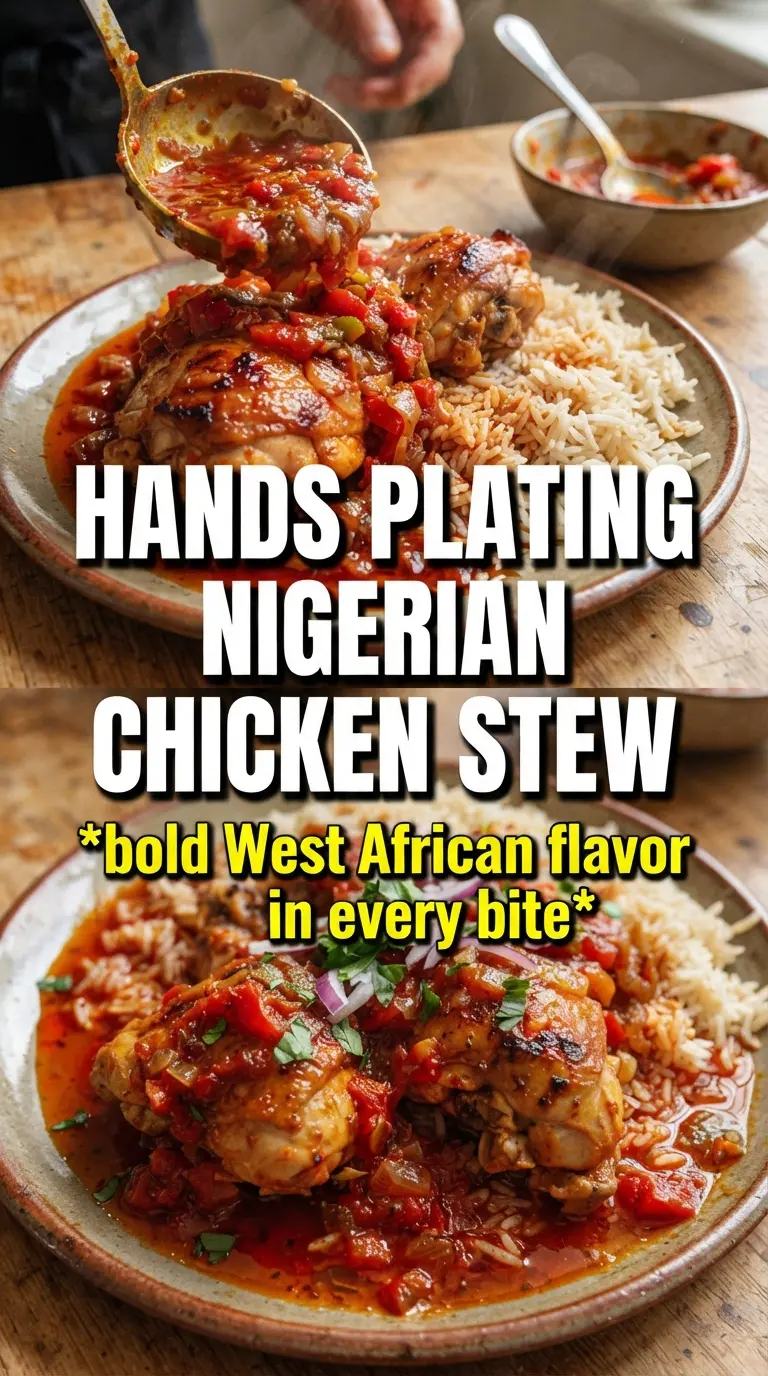
- Chicken pieces with bone in — Bone-in chicken gives the stew more body and keeps the meat juicy while it simmers in the sauce. Thighs and drumsticks are the safest choice because they stay tender even if the sauce cooks a little longer than planned.
- Plum tomatoes — These cook down into a thicker base than watery salad tomatoes. If your tomatoes are especially acidic, the long fry in oil is what softens that edge; skipping that step leaves the stew bright in the wrong way.
- Red bell peppers — They add sweetness and give the stew its deep red color without making it taste sugary. Don’t swap them for green peppers here; green peppers change the flavor balance and make the sauce taste harsher.
- Scotch bonnet or habanero — These bring the heat and that familiar peppery aroma. Start with less if you’re heat-sensitive, but don’t leave them out entirely unless you’re making a mild version for kids or guests who can’t handle spice.
- Vegetable oil — This is not just for cooking; it carries the flavor and helps the sauce fry properly. You need enough oil for the sauce to move around in the pan, and cheap neutral oil works fine here because the rest of the ingredients do the heavy lifting.
Building the Stew So It Tastes Cooked, Not Just Mixed
Seasoning the Chicken First
Grate the onion into the chicken and mix it with thyme, curry powder, bouillon, salt, and pepper. The grated onion melts into the meat better than chopped onion and gives you more flavor in the pieces themselves, not just in the sauce. Let it sit for at least 30 minutes so the seasoning has time to cling to the chicken instead of washing off in the pot.
Frying Until the Surface Sets
Fry or oven-bake the chicken until it’s golden and mostly cooked through. You’re not trying to finish it here; you’re building texture and giving the stew something sturdy to simmer in later. If the chicken goes into the sauce raw, it can release too much liquid and dilute all the work you put into the pepper base.
Cooking Down the Blended Sauce
Pour the blended tomato-pepper mixture into hot oil and fry it over medium-high heat for 30 to 40 minutes, stirring frequently. The sauce should go from bright and loose to darker, thicker, and slightly glossy, with oil floating on top and the smell turning from sharp to sweet and savory. If it starts sticking badly, lower the heat; if it stays pale and watery, keep cooking.
Finishing the Stew
Add the fried chicken and simmer long enough for the meat to absorb the sauce, about 15 to 20 minutes. Taste at the end and adjust salt before serving. The finished stew should coat the chicken without looking greasy or thin, and it should have enough body to cling to rice instead of sliding off it.
How to Adapt This When You Want It Milder, Meatier, or Make-Ahead Friendly
Milder Heat for Sensitive Palates
Use just one Scotch bonnet or habanero, and remove the seeds if you want the heat to sit in the background instead of taking over. You’ll still get the pepper aroma and color that make the stew feel like itself, but the burn stays manageable.
Oven-Baked Chicken Instead of Fried
Bake the seasoned chicken on a rack at high heat until the skin takes on color and the meat is nearly cooked through. You lose a little of the crisp edge from frying, but you also cut down on oil splatter and still get chicken that stands up well in the stew.
Using Thighs Only for Extra Juiciness
If you want the richest, most forgiving version, use all thighs or a thigh-and-drumstick mix. White meat cooks faster and can dry out during the final simmer, while dark meat stays tender and gives the stew a fuller mouthfeel.
Storage and Reheating
- Refrigerator: Store for up to 4 days. The flavor deepens as it sits, and the sauce usually thickens a little overnight.
- Freezer: Freezes well for up to 3 months. Cool it completely first, then pack it in airtight containers with a little room at the top because the sauce will expand.
- Reheating: Warm gently on the stovetop over medium-low heat, stirring often so the tomato sauce doesn’t catch on the bottom. If it looks too thick after chilling, add a splash of water and heat it just until the chicken is hot through.
Answers to the Questions Worth Asking
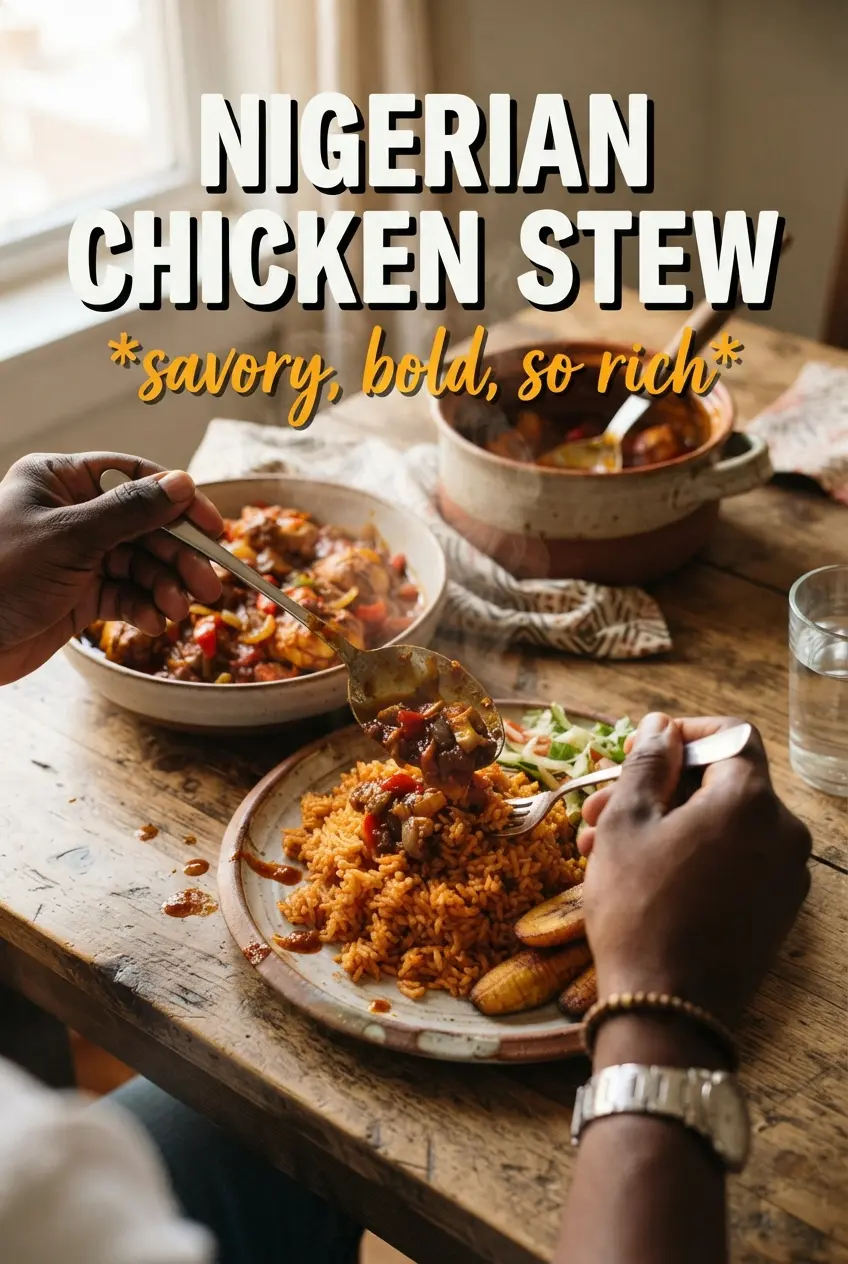
Nigerian Chicken Stew
Ingredients
Equipment
Method
- Season the chicken pieces with half the onion (grated), thyme, curry powder, bouillon, salt, and pepper, then toss to coat evenly. Cover and refrigerate for 30 minutes.
- Fry or oven-bake the marinated chicken at 400°F for 20 minutes, turning once, until golden and mostly cooked through. Set aside on a plate.
- Blend the plum tomatoes, red bell peppers, scotch bonnet, and remaining onion until smooth. Set the blended sauce aside.
- In a large pot, heat 1/2 cup vegetable oil over medium-high heat until shimmering. Carefully add the blended pepper sauce and stir frequently as it cooks.
- Cook the sauce for 30-40 minutes at medium-high heat, stirring often, until it darkens and oil begins to float on top. Keep the heat steady so it thickens without scorching.
- Add the fried chicken to the pot and coat it in the sauce. Simmer at a gentle bubble for 15-20 minutes.
- Taste and adjust seasoning with salt and pepper, then serve hot over steamed rice with fresh parsley on top. Serve immediately while the sauce is thick and clingy.


