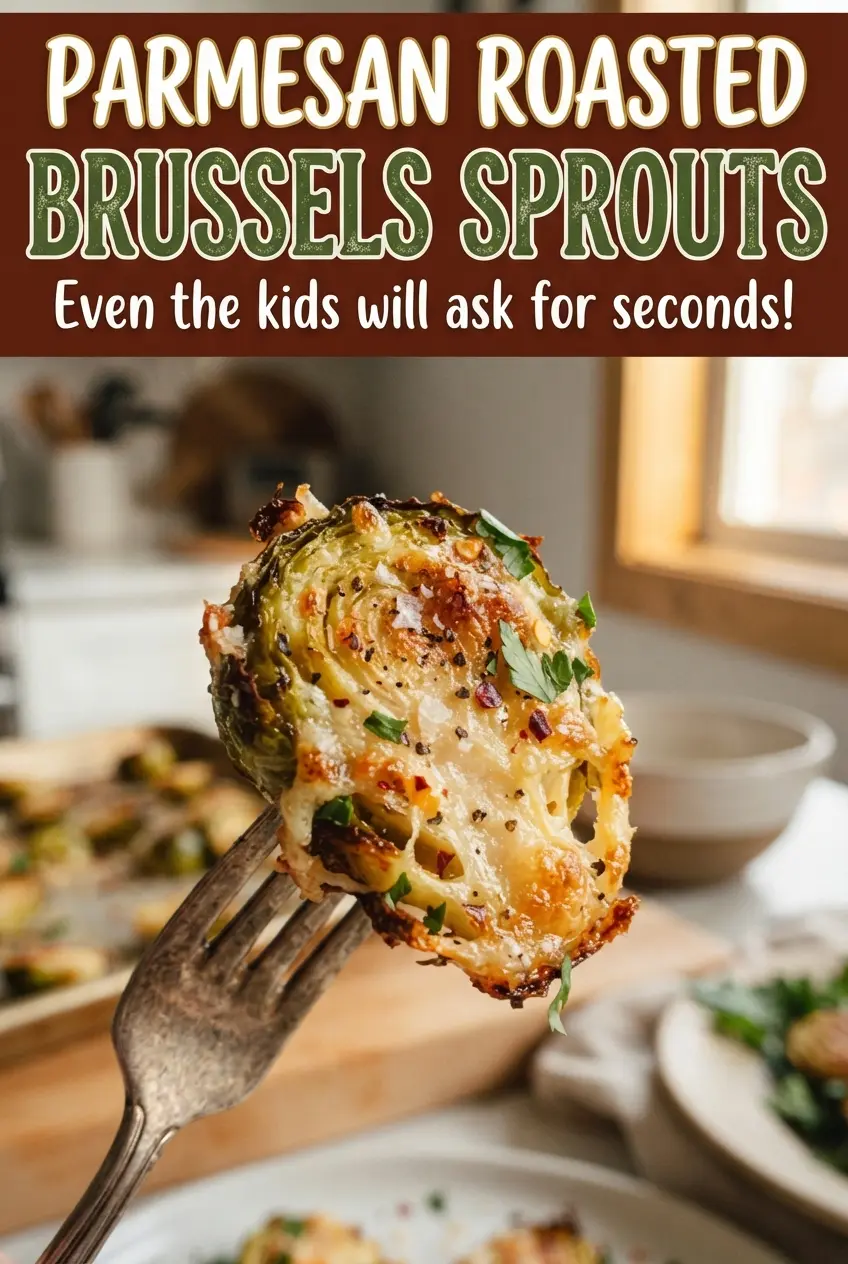
Parmesan roasted Brussels sprouts come out with the kind of contrast that keeps people reaching back into the pan: tender centers, deep caramelized edges, and a salty cheese crust that crackles when you break it apart. The lemon at the end keeps the whole dish from feeling heavy, so the sprouts taste bright instead of just rich.
The trick is putting the sprouts cut-side down over the Parmesan, not tossing the cheese in with everything else. That lets the cheese melt and fry into a lacy layer against the hot pan while the sprouts steam just enough underneath to turn tender. A hot oven and a single, even layer matter here too; crowd the pan and you’ll get soft sprouts instead of those crisped leaves and browned edges that make this recipe worth repeating.
Below, I’ve included the one pan habit that keeps the cheese crust intact, plus a few smart swaps if you need to work with what’s already in the kitchen.
The Parmesan formed a crisp golden crust underneath, and the Brussels stayed tender instead of mushy. I made them once and my husband asked for them again the next night.
Save these Parmesan roasted Brussels sprouts for the nights when you want a crisp cheesy side with almost no fuss.
The Reason the Cheese Crust Actually Clings
The Parmesan works because it melts directly against the hot sheet pan before the sprouts have a chance to move around. That contact creates a crust instead of scattered bits of cheese, and the halved sprouts act like little anchors holding everything in place.
The part people usually miss is moisture. If the sprouts are wet from washing, the cheese steams instead of browning. Pat them dry, use parchment, and keep the cut sides facing down so the flat surface does the work. If you flip them too early, you lose the crust that makes this side dish memorable.
- Brussels sprouts — Fresh sprouts with tight outer leaves roast with the best texture. Trim the stem ends, peel off any tired leaves, and cut them evenly so they finish at the same time.
- Parmesan — Grated Parmesan gives the lacy crust. Use the finely grated kind for the most even melt; a coarser shred can work, but it won’t spread as neatly across the pan.
- Olive oil — This helps the sprouts brown and keeps the garlic from scorching. A basic olive oil is fine here.
- Lemon juice — This is the finish that wakes up the whole dish. Add it at the end, not before roasting, or it disappears in the heat.
- Garlic — Minced garlic perfumes the oil and clings to the sprouts. Keep it mixed in with the oil so it doesn’t burn on top of the pan.
Getting the Pan Hot Enough for Browning, Not Steaming
Coating the Sprouts Evenly
Toss the halved sprouts with olive oil, garlic, salt, and pepper until every cut surface looks lightly glossy. That thin coating is enough; if they’re drenched, the pan turns greasy and the Parmesan won’t crisp cleanly. Spread them out in a single layer with the cut sides ready to meet the cheese below.
Building the Parmesan Base
Sprinkle the Parmesan directly onto the parchment-lined sheet pan, then set the sprouts cut-side down on top. Don’t stir once they’re in place. The cheese needs steady contact with the hot pan to turn golden, and moving them early tears that crust before it sets.
Roasting Until the Edges Fray and Brown
Bake at 425F for 20 to 25 minutes until the sprouts are tender at the stem and the Parmesan underneath has gone deeply golden. You’ll see the outer leaves curling and crisping around the edges. If the cheese is still pale, give it a few more minutes; if it’s darkening too fast, move the pan up one rack.
The Lemon Finish
Squeeze the lemon juice over the sprouts as soon as they come out of the oven. The acid cuts through the cheese and sharpens the roasted flavor. Add it after roasting, not before, or you’ll lose the bright edge that balances the salt.
How to Adapt These Brussels Sprouts Without Losing the Crust
Dairy-Free Version
Skip the Parmesan and roast the sprouts with just olive oil, garlic, salt, and pepper, then finish with extra lemon. You won’t get the cheesy crust, but you’ll still get crisp edges and good browning. If you want more savoriness, add a little nutritional yeast after roasting instead of before.
A Deeper, Saltier Finish
Swap part of the Parmesan for pecorino Romano if you want a sharper, saltier crust. Pecorino browns well, but it tastes more assertive, so use it with a lighter hand if the rest of the meal is already salty.
Adding Bacon or Pancetta
Cook a little bacon or pancetta first, then use a spoonful of the rendered fat in place of some of the olive oil. The sprouts pick up a smoky, savory edge, but keep the layer on the pan thin or the cheese won’t crisp properly.
Storage and Reheating
- Refrigerator: Store leftovers in an airtight container for up to 3 days. The crust softens, but the flavor holds.
- Freezer: I don’t recommend freezing these. Brussels sprouts lose their best texture after thawing, and the Parmesan crust turns leathery.
- Reheating: Reheat on a sheet pan in a 400F oven until hot and the edges crisp back up. The microwave makes them limp and waters down the cheese.
Answers to the Questions Worth Asking
Parmesan Roasted Brussels Sprouts
Ingredients
Equipment
Method
- Preheat the oven to 425F and line a sheet pan with parchment for easy release and cleanup.
- Toss the Brussels sprouts with olive oil, garlic, salt, and black pepper until evenly coated.
- Sprinkle the Parmesan evenly over the pan, then place the Brussels sprouts cut-side down on top of the cheese so the crust forms directly on the cut surface.
- Roast for 20-25 minutes, until the Brussels sprouts are tender and the Parmesan forms a golden crust with browned, charred edges.
- Squeeze the lemon juice over the top and serve hot.


