Golden rye bread, a thin beef patty, melted cheese, and sweet onions make a patty melt worth repeating. The best versions don’t just stack ingredients and hope for the best; they build layers of flavor and texture that hold together from the first bite to the last. You want crisp, buttered bread, beef with a browned crust, and onions that taste deeply cooked instead of merely softened.
The key is treating each part on its own terms. The onions need time to lose their sharp edge and turn jammy. The beef should hit a hot skillet as a loose ball, then get smashed thin so the edges brown fast before the center overcooks. And the bread needs a quick toast in butter before the sandwich goes back into the pan, which keeps everything from turning soggy once the cheese starts melting.
Below you’ll find the small details that matter here, including the best way to keep the rye crisp, how to get the onions properly caramelized, and a few swaps that still keep the sandwich firmly in patty melt territory.
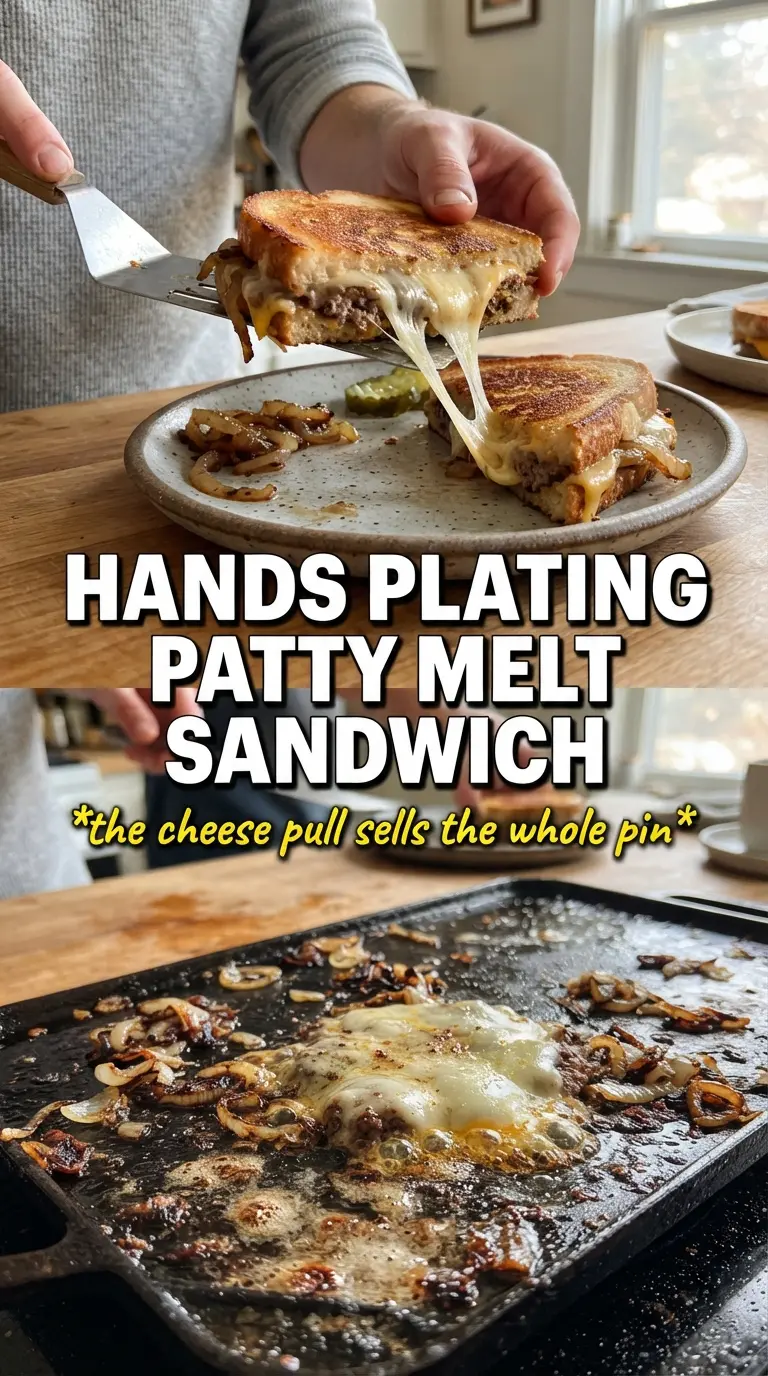
The onions got perfectly sweet and jammy, and pressing the sandwich back in the skillet made the cheese melt all the way through without making the rye soggy.
Save this patty melt for the nights when you want crisp rye, melty cheese, and those caramelized onions in every bite.
The Browning Step You Can’t Rush in a Patty Melt
A patty melt lives or dies by contrast. If the onions are pale, the sandwich tastes flat. If the bread is under-toasted, the filling steams it into submission. If the beef is packed too tightly, it cooks like a meatball instead of a thin, crusty patty. The goal is not just to melt cheese; it’s to layer enough browning into every component that the final sandwich tastes bigger than the sum of its parts.
The most common mistake is moving too fast with the onions. They need medium-low heat and patience until they turn deep gold and lose that sharp raw bite. On the beef side, don’t knead or mash the meat before it hits the pan. Loose balls smash better, brown better, and stay juicier than a pre-shaped thick patty in this sandwich.
- Rye bread — It gives the sandwich its signature tang and sturdy structure. Soft sandwich bread collapses under the filling, while rye holds up to the onions and sauce without turning gummy.
- 80/20 ground beef — The fat keeps the patty juicy in a thin, fast-cooked format. Leaner beef works, but it tastes drier and doesn’t brown as well.
- Swiss and sharp cheddar or American — Swiss brings nuttiness and melt, while the sharper cheese adds depth. The combination gives you the best of both: smooth melt and a little bite.
- Caramelized onions — These are not a topping you rush. Their sweetness balances the salty beef and sharp cheese, and their soft texture helps the sandwich hold together.
- Special sauce — The mayo base adds richness, the ketchup gives a little acidity, and the Dijon keeps it from tasting one-note. Worcestershire ties it back to the beef.
What Each Ingredient Is Actually Doing in This Recipe
- Primary ingredient (the star) — Quality matters most. Choose the best you can find.
- Cooking medium (oil, butter, or broth) — This carries flavors and prevents dryness.
- Seasonings (salt, pepper, spices, herbs) — Layer flavors so nothing overpowers. Build depth gradually.
- Aromatics (garlic, onion, herbs) — Cook with fat to bloom flavors. Become the foundation.
- Supporting ingredients — Complement the main ingredient without overpowering it.
- Sauce or liquid (if applicable) — Brings flavors together. Balance richness with acid.
- Acid (lemon, vinegar, wine, or other) — Brightens and prevents flat-tasting results.
- Final finish (garnish, glaze, or sauce) — Prevents one-dimensional taste and adds visual appeal.
Building the Patty Melt So the Bread Stays Crisp
Caramelizing the Onions Slowly
Start the onions in butter over medium-low heat and let them cook until they’re deeply golden and reduced, not just limp. Stir every few minutes so they don’t scorch at the edges, and if the pan starts looking dry, add a small splash of water to keep them moving. Rushing this stage gives you browned onions on the outside and harsh raw flavor underneath.
Smashing the Beef Thin
Form the beef into loose balls and season them right before they hit the pan. Use a hot cast iron skillet and press each ball firmly so it spreads into a thin round with ragged edges, then leave it alone long enough to brown. If you try to flip too early, the crust tears; wait until it releases cleanly from the skillet.
Toasting and Assembling
Butter the rye and toast it in the same skillet so it picks up a little of the beef flavor. Build the sandwich with sauce first, then onions, then the patty, then both cheeses, then more onions. That order matters because the cheese helps glue the stack together, while the second layer of onions keeps the sandwich from feeling dry.
Pressing for the Final Melt
Return the assembled sandwich to the skillet and press it gently with a spatula or another heavy pan. Cook until the bread is deeply browned and the cheese is fully melted, about 1 to 2 minutes per side. If the outside is getting too dark before the cheese melts, lower the heat and give it a little more time instead of cranking the burner higher.
How to Adapt a Patty Melt Without Losing What Makes It a Patty Melt
Dairy-Free Version
Use a good dairy-free butter for the bread and onions, then swap in a meltable plant-based cheese that softens well under heat. The sandwich will still work, but it won’t have quite the same rich finish as one made with Swiss and cheddar, so keep the onions generous to carry more of the flavor.
Gluten-Free Version
Use a sturdy gluten-free bread that can handle pressing in the skillet. Many gluten-free slices are softer and more fragile than rye, so toast them a little longer before assembling or they’ll split when you flip the sandwich.
Make It Spicier
Add a pinch of cayenne to the beef or swap part of the cheddar for pepper jack. This keeps the sandwich in patty melt territory but gives the sweet onions a hotter edge.
Storage and Reheating
- Refrigerator: Store leftover sandwiches wrapped tightly for up to 2 days. The bread will soften a bit, but the flavor holds up well.
- Freezer: I don’t recommend freezing the assembled sandwich. The onions and cheese change texture after thawing, and the rye loses its crisp edge.
- Reheating: Reheat in a skillet over medium-low heat, pressing lightly and covering for a minute to help the cheese loosen. A microwave makes the bread rubbery and the beef dry.
Questions I Get Asked About This Recipe

Patty Melt
Ingredients
Equipment
Method
- Melt 2 tablespoons unsalted butter in a cast iron skillet over medium-low heat and add the thinly sliced onions. Cook 25-30 minutes, stirring occasionally, until deeply golden and caramelized.
- Divide the 80/20 ground beef into 4 balls. Season each with Worcestershire sauce, garlic powder, salt, and pepper.
- Heat the cast iron skillet over high heat until very hot. Smash each beef ball thin and cook 2-3 minutes per side.
- While the patties cook, toast the rye bread slices in the skillet with the remaining butter. Toast until golden on the surfaces.
- Mix the special sauce: mayo, ketchup, Dijon, and Worcestershire sauce in a bowl. Stir until smooth.
- Assemble sandwiches by layering toasted rye, special sauce, caramelized onions, a smashed patty, Swiss cheese and sharp American/cheddar cheese, more onions, and the remaining toasted rye.
- Return the assembled sandwiches to the cast iron skillet and press gently. Cook 1-2 minutes per side until the cheese is fully melted and the bread is crisp.


