Chicken noodle soup earns its place in the rotation when the broth tastes like it simmered all afternoon, the noodles stay tender without going mushy, and the chicken comes out juicy enough to shred in big soft pieces. This version leans into all of that. The whole chicken builds a broth with body, while a little butter at the end gives it that farmhouse richness people remember from a good bowl at the stove.
The details matter here. Starting with a whole bird gives you flavor that boneless chicken just can’t match, and simmering it gently keeps the meat from turning stringy. Wide egg noodles go in near the end so they hold their shape, and the fresh parsley at the finish keeps the soup from tasting flat after the long simmer.
Below, I’ll walk through the broth-building step that makes the biggest difference, plus the small timing choices that keep the noodles and chicken from overcooking. If you’ve ever had chicken noodle soup taste watery or tired, this version fixes both problems.
The broth came out deep and golden, and the noodles were still perfectly tender after I added the chicken back in. My husband went back for a second bowl before I even sat down.
Save this Pioneer Woman chicken noodle soup for the days when you want a rich broth, tender noodles, and a from-scratch pot with almost no fuss.
The Broth Gets Its Depth Before the Noodles Ever Go In
The biggest mistake with chicken noodle soup is rushing the broth. If the chicken doesn’t simmer long enough, the soup tastes thin and the meat stays tight; if it boils hard, the broth turns cloudy and the chicken dries out. Gentle heat is doing two jobs here: pulling flavor from the whole bird and keeping the texture clean.
That first hour is where the flavor is built. The onion, carrots, celery, garlic, bay leaves, and peppercorns perfume the broth without making it taste busy, and skimming the foam early keeps it tasting fresh instead of muddy. Once the chicken is tender enough to shred easily, the broth has done its job and the rest of the recipe is about protecting that work.
What Each Ingredient Is Actually Doing in the Pot

- Whole chicken — This is the backbone of the soup. A whole bird gives you both meat and a broth with body, and the bones help the liquid taste round instead of watery. Chicken pieces will work, but the broth won’t have the same depth.
- Carrots, celery, onion, and garlic — These aromatics are the flavor base and they matter more than people think. The first carrots and celery simmer with the chicken to perfume the broth, while the second round added later keeps the vegetables tasting bright instead of overcooked. If your carrots are thick, slice them a little thinner so they finish at the same time as the noodles.
- Butter — This is what gives the finished soup that rich, farmhouse feel. Add it after straining the broth and before the second simmer so it melts smoothly into the soup instead of floating on top.
- Wide egg noodles — These hold up better than thin noodles and give the soup that classic chicken noodle texture. They should go in at the very end, because they keep soaking up broth after the heat is off.
- Fresh parsley — Parsley doesn’t just garnish the pot; it wakes everything up. Stir it in at the end so it stays green and fresh instead of disappearing into the broth.
Building the Pot in the Right Order
Starting the Chicken Cold
Put the chicken, water, vegetables, garlic, bay leaves, and peppercorns into the pot before turning on the heat. Starting cold gives the broth time to come up slowly, which helps draw flavor from the chicken without shocking the meat. When it reaches a boil, you’ll see foam rise to the surface; skim that off, then lower the heat right away.
Keeping the Simmer Gentle
The soup should barely bubble once it’s settled into the simmer. If it’s roaring, the broth can turn greasy-looking and the chicken gets stringy before it’s tender. After about an hour, the meat should fall away easily from the bones and the broth should taste savory and full, not sharp or undercooked.
Shredding and Rebuilding the Soup
Pull the chicken out, strain the broth, and return the liquid to the pot with the butter. Shred the chicken while it’s still warm enough to handle; it comes apart cleaner that way. Add the carrots and celery next so they soften without losing all their bite, then stir in the noodles and cook just until they’re tender at the center with no chalky middle.
Finishing Without Overcooking
The chicken and parsley go back in after the noodles are cooked. That keeps the chicken from turning tough and the parsley from fading into the background. Season at the end with salt and pepper, and taste as you go — broth needs more salt than most people expect, especially after the noodles go in.
How to Adjust This Soup Without Losing the Homemade Feel
Use cooked chicken when you’re short on time
Rotisserie chicken works if you need speed, but you’ll lose some of the deep broth flavor that comes from simmering a whole bird. Build the broth from the vegetables, bay leaves, and peppercorns first, then add shredded cooked chicken at the end just long enough to heat through.
Make it gluten-free with the right noodle swap
Use your favorite gluten-free noodle, but cook it separately if possible. Gluten-free noodles can break apart in the soup and cloud the broth if they sit too long, so adding them to each bowl keeps the texture cleaner.
Skip the butter for a lighter bowl
You can leave the butter out, especially if your chicken is very rich. The soup will still work, but it will taste cleaner and leaner instead of plush. If you want some of that roundness back, add a little extra salt and a touch more parsley at the end.
Storage and Reheating
- Refrigerator: Store for up to 4 days. The noodles will keep absorbing broth, so the soup thickens as it sits.
- Freezer: Freeze the broth and chicken without the noodles for the best texture. Noodles get soft and bloated after thawing, so cook fresh noodles when you reheat.
- Reheating: Warm it gently on the stove over medium-low heat until steaming. If the soup seems too thick, add a splash of water or broth before it heats through, not after.
Questions I Get Asked About This Recipe
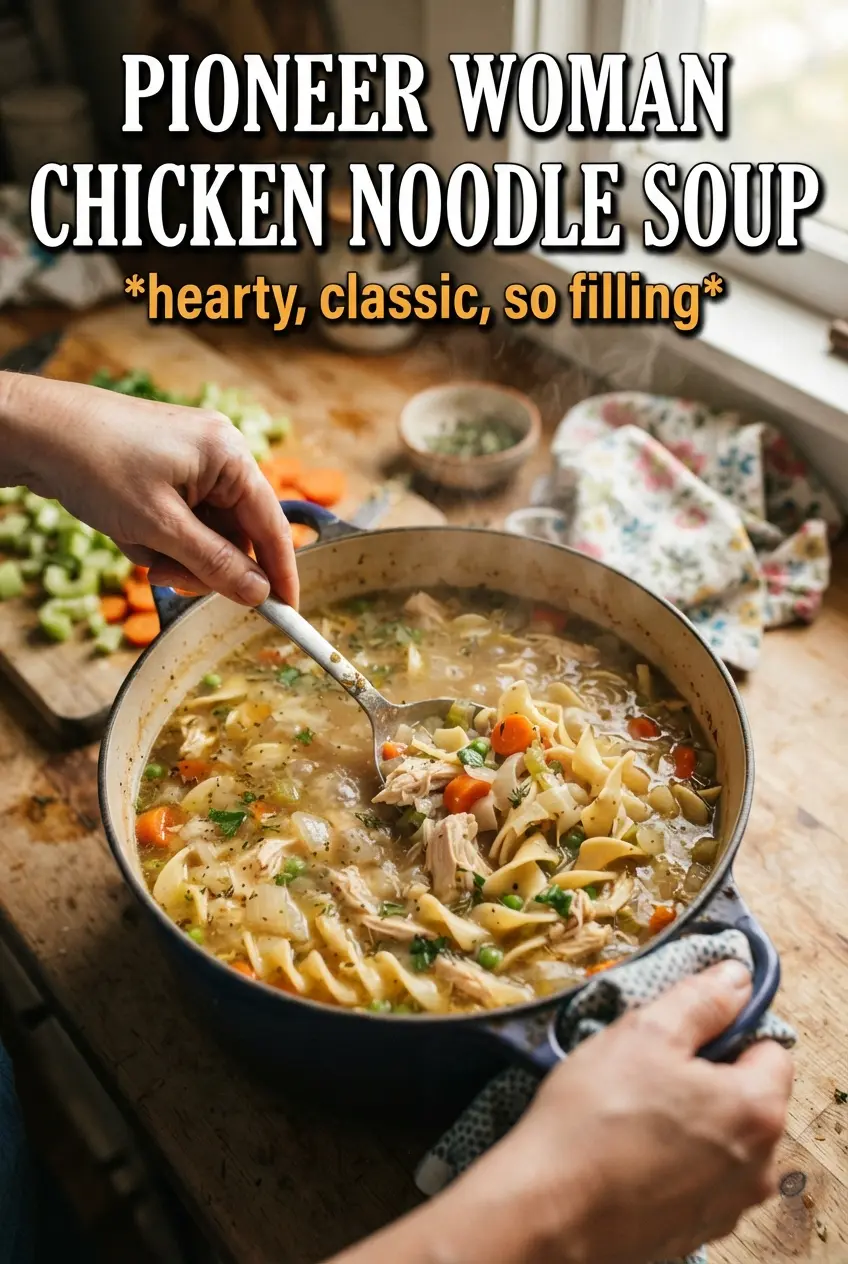
Pioneer Woman Chicken Noodle Soup
Ingredients
Equipment
Method
- Place whole chicken in a large pot with water, onion (quartered), 2 carrots (sliced), 2 celery stalks (sliced), garlic, bay leaves, and peppercorns. Bring to a boil over high heat, then reduce the heat as soon as it reaches a rolling boil.
- Skim foam from the surface. Reduce heat to a gentle simmer and cook for 1 hour, until the chicken is very tender and easily pulls apart when tested with a fork.
- Remove the chicken from the pot and let it rest just until cool enough to handle. Strain and reserve the broth, then shred all chicken meat into bite-size pieces.
- Return the broth to the pot and add butter. Bring to a simmer over medium heat until the butter melts and the broth looks glossy.
- Add the remaining sliced carrots and celery to the simmering broth. Cook for 10 minutes, stirring occasionally, until the vegetables are tender when pierced.
- Add wide egg noodles and cook for 6-8 minutes. Stir as they cook, until the noodles are tender but still have a little bite.
- Return shredded chicken to the pot and stir to distribute evenly. Stir in fresh parsley, then season very generously with salt and pepper to taste.


