Golden pumpkin cornbread lands with the best kind of contrast: a crisp, bronzed edge, a tender middle, and that sweet-savory cornmeal bite that makes it easy to reach for a second square before the pan cools. The pumpkin doesn’t make it taste like pie. It gives the crumb a moist, almost custardy softness and a deeper color that looks beautiful next to the browned top.
This version works because the pumpkin puree and buttermilk bring enough moisture to keep the cornbread tender, while the baking powder gives it lift before the batter can turn heavy. Brown sugar and maple syrup round out the cornmeal without pushing it into cake territory, and the pumpkin pie spice stays in the background instead of taking over. The trick is stopping the mixing as soon as the dry ingredients disappear. Overmixing knocks the bread down and tightens the crumb.
Below you’ll find the little details that matter most, including how to keep the center soft without underbaking the middle, why cast iron gives a better crust, and a few ways to adapt it if you need a dairy-free version.
The pumpkin flavor stayed balanced and the edges turned crisp in my cast iron pan without drying out the middle. I served it with maple butter and the texture was spot-on.
Save this pumpkin cornbread for the kind of side dish that comes out golden, tender, and just sweet enough to serve with butter or chili.
The Reason Pumpkin Cornbread Stays Tender Instead of Turning Heavy
Cornbread gets dense fast when the batter is overworked or the wet ingredients are too thick for the dry mix. Pumpkin puree adds moisture, but it also adds weight, which is why this recipe relies on baking powder and buttermilk to keep the crumb light enough to lift in the oven. The result should be sturdy enough to slice cleanly, not dry or muffin-like.
The other thing that matters is heat. A 400F oven gives the edges enough blast to brown before the center overbakes. If you use a cast iron skillet, you’ll get a darker, crisper crust than you will from a glass or light-colored pan.
- Pumpkin puree — This is what gives the cornbread its color, moisture, and soft crumb. Use plain pumpkin puree, not pumpkin pie filling, or the batter will be too sweet and spiced.
- Buttermilk — It adds tang and helps the baking powder work harder. If you don’t have it, stir 2 teaspoons of lemon juice or vinegar into 3/4 cup milk and let it sit for 5 minutes.
- Brown sugar and maple syrup — These keep the pumpkin flavor rounded and the crumb moist. You can reduce the maple syrup a little, but don’t cut both sweeteners at once or the bread loses balance.
- Melted butter — This gives a rich finish and helps the edges brown. Neutral oil works in a pinch, but you’ll lose some of that buttery flavor and the crust won’t taste as deep.
Building the Batter Without Beating the Crumb Out of It
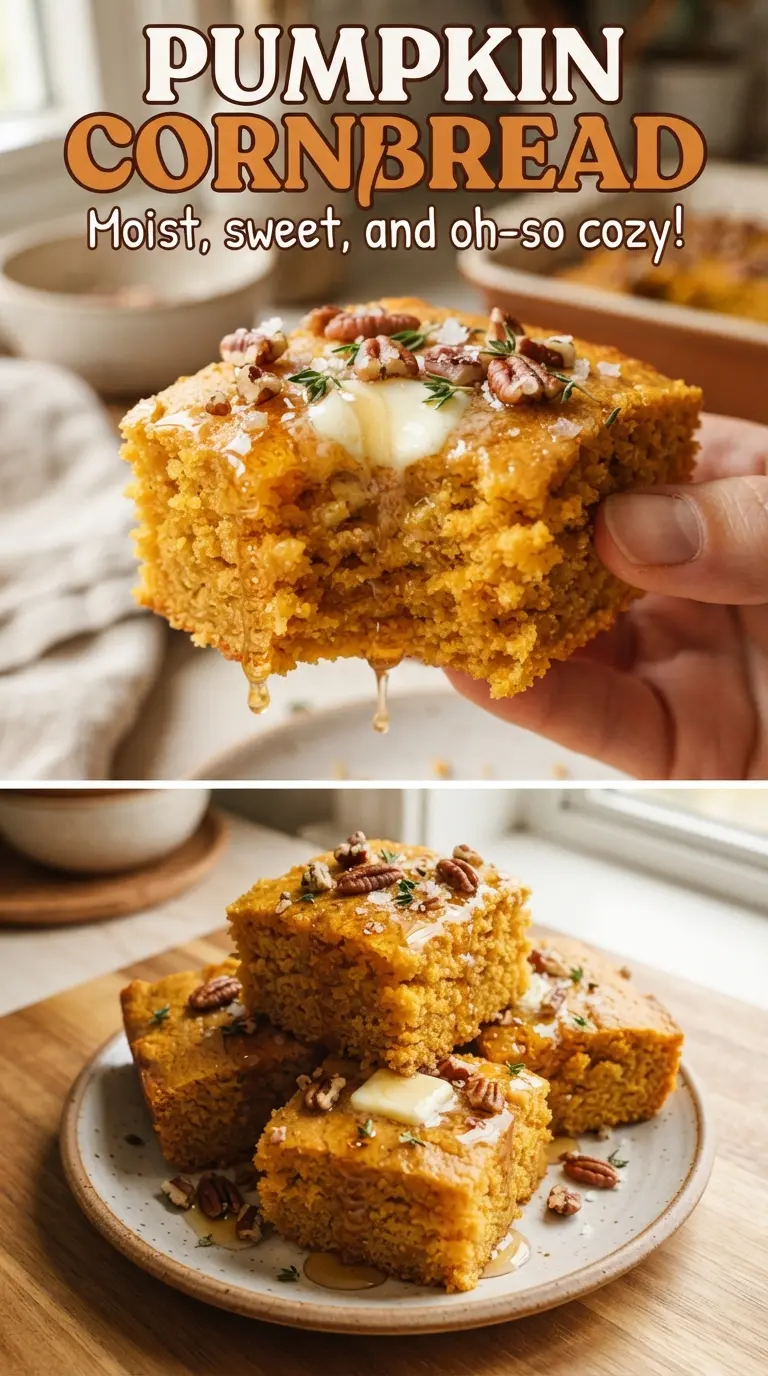
- Cornmeal — Fine or medium cornmeal both work here. Coarser cornmeal gives you a more rustic bite, while finer cornmeal makes the texture softer and more even.
- All-purpose flour — This tempers the graininess of the cornmeal and gives the loaf enough structure to slice neatly. Don’t swap in a heavy hand of whole wheat flour unless you want a denser result.
- Pumpkin pie spice — This is a background note, not the main event. If yours is old, it can taste dusty instead of warm, so replace it if the jar has been sitting around for years.
- Eggs — They bind the batter and add lift. Room-temperature eggs blend more evenly into the melted butter, which helps the batter stay smooth instead of streaky.
The 25 Minutes That Give You a Crisp Edge and a Soft Center
Mix the Dry Ingredients First
Whisk the cornmeal, flour, brown sugar, baking powder, salt, and pumpkin pie spice together until the color looks even. That step matters because baking powder and spice tend to clump, and uneven mixing leaves bitter pockets or random rise. You want the bowl to look uniform before any wet ingredients go in.
Whisk the Wet Ingredients Until They Look Smooth
Combine the pumpkin puree, eggs, buttermilk, melted butter, and maple syrup in a second bowl. The butter should be melted, not hot enough to scramble the eggs, and the mixture should look thick but pourable. If you see streaks of butter pooling on top, whisk a little longer before adding it to the dry ingredients.
Stop Mixing the Moment the Flour Disappears
Pour the wet ingredients into the dry and stir just until you stop seeing dry flour. A few small lumps are fine. If you keep stirring, the cornbread turns tough and the crumb loses that tender, slightly sandy texture that makes cornbread worth making in the first place.
Bake Until the Top Springs Back
Spread the batter into the pan and bake until the top is golden, the edges pull away slightly, and a toothpick comes out clean or with a few moist crumbs. Start checking at 22 minutes because ovens vary, and overbaking is the easiest way to dry out a pumpkin bread like this. Let it rest for a few minutes before slicing so the center finishes setting.
How to Adjust This Recipe for a Different Pan, a Dairy-Free Table, or a Sweeter Finish
Bake It in Cast Iron for a Darker Crust
A 10-inch cast iron skillet gives the strongest browning and the best edges. If you use an 8×8-inch pan instead, the cornbread will bake a little more evenly and stay softer around the sides, but you’ll lose some of that crisp crust.
Dairy-Free Version
Swap the buttermilk for unsweetened dairy-free milk mixed with 2 teaspoons lemon juice or vinegar, and use melted coconut oil or a neutral oil in place of butter. The texture stays tender, but the flavor will be a little less rich and a little cleaner at the finish.
Less Sweet, More Savory
Cut the brown sugar to 2 tablespoons and leave the maple syrup in place. That shift keeps the pumpkin cornbread balanced for serving with chili, beans, or roasted vegetables without pushing it into dessert territory.
Storage and Reheating
- Refrigerator: Store in an airtight container for up to 4 days. The crumb firms up a bit in the fridge, but it stays moist.
- Freezer: It freezes well. Wrap individual squares tightly and freeze for up to 2 months.
- Reheating: Warm slices in a 300F oven for 8 to 10 minutes or toast them lightly in a skillet. The common mistake is microwaving until the edges turn rubbery and the butter separates.
Answers to the Questions Worth Asking
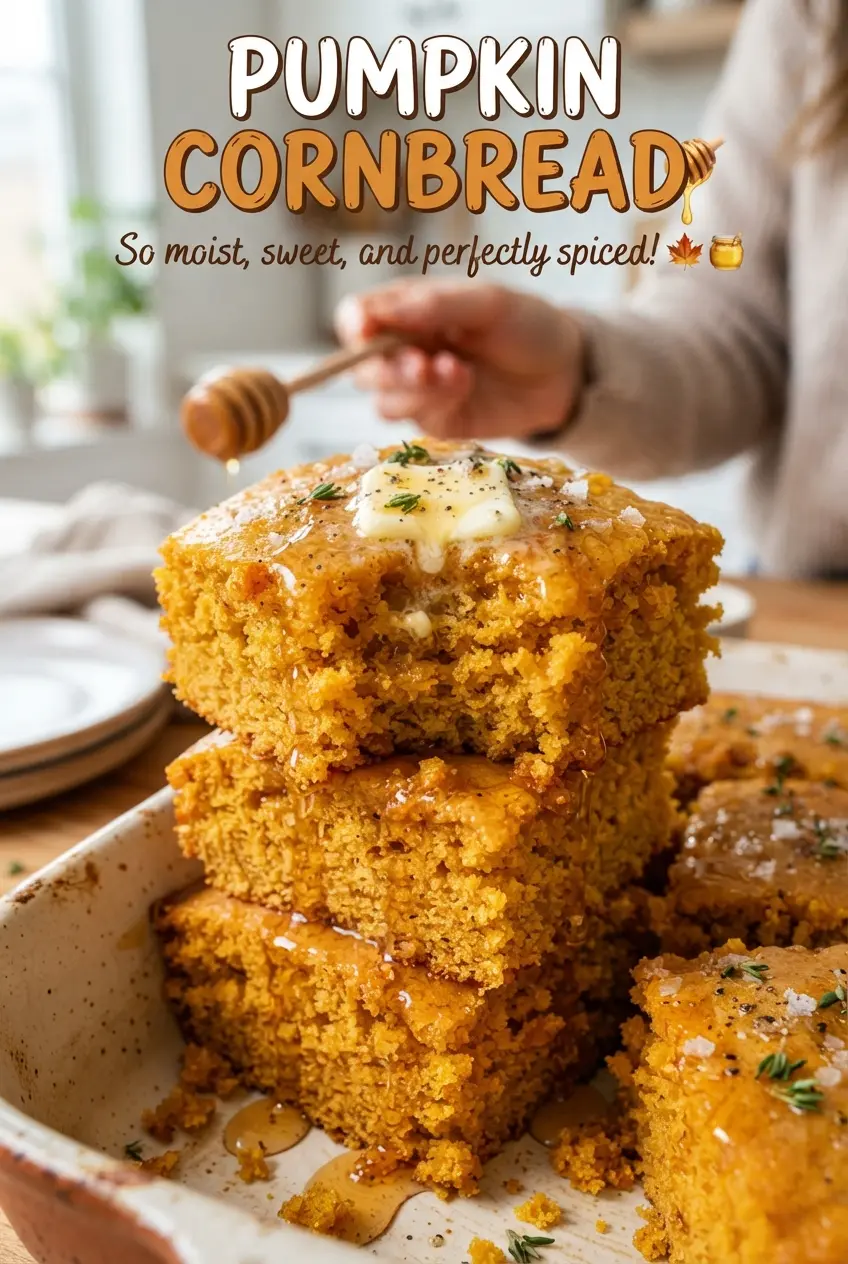
Pumpkin Cornbread
Ingredients
Equipment
Method
- Preheat oven to 400F and grease an 8x8-inch pan or 10-inch cast iron skillet.
- Whisk yellow cornmeal, all-purpose flour, brown sugar, baking powder, salt, and pumpkin pie spice until evenly combined.
- Whisk pumpkin puree, large eggs, buttermilk, melted butter, and maple syrup until smooth and fully blended.
- Stir wet into dry just until combined, stopping as soon as no dry streaks remain.
- Spread the batter into the prepared pan and bake at 400F for 22-25 minutes until golden and a toothpick comes out clean.
- Serve warm with butter as soon as the cornbread is set.


