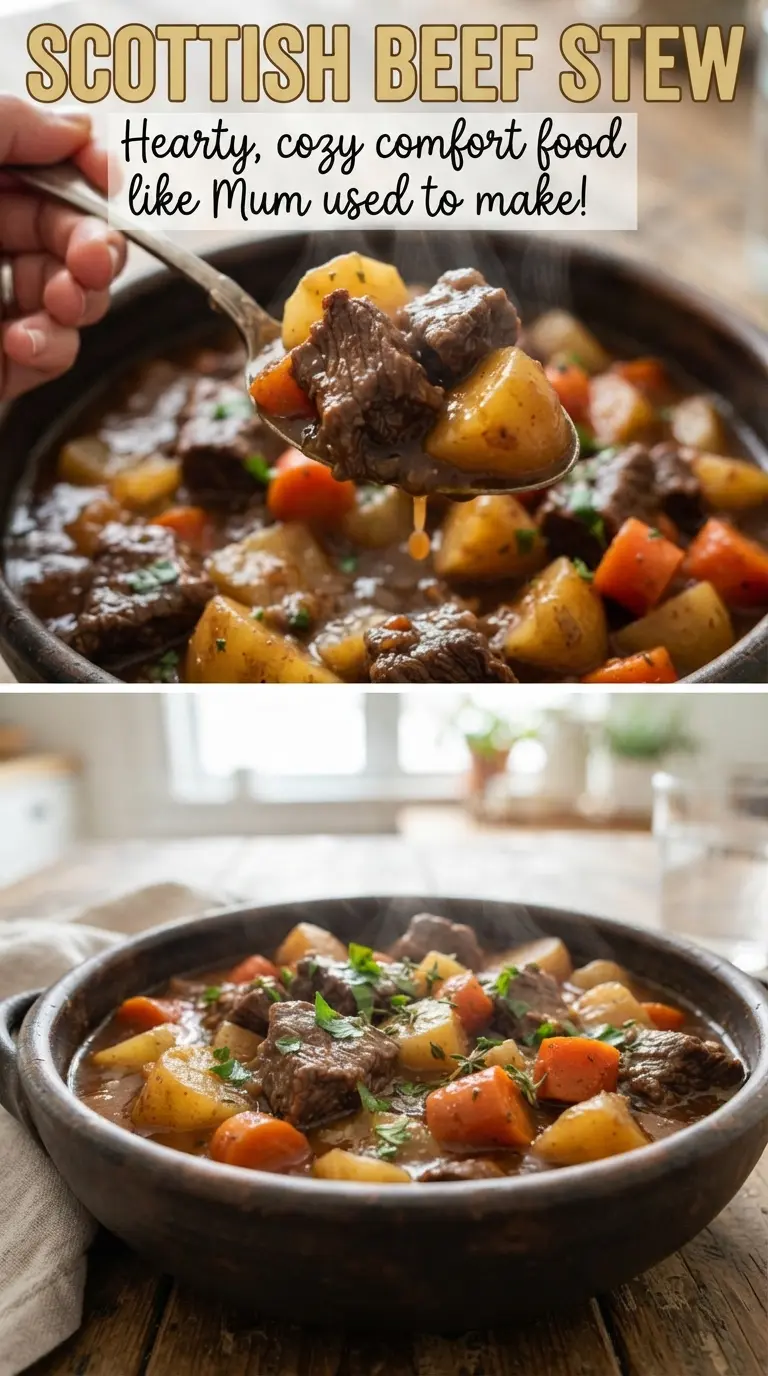
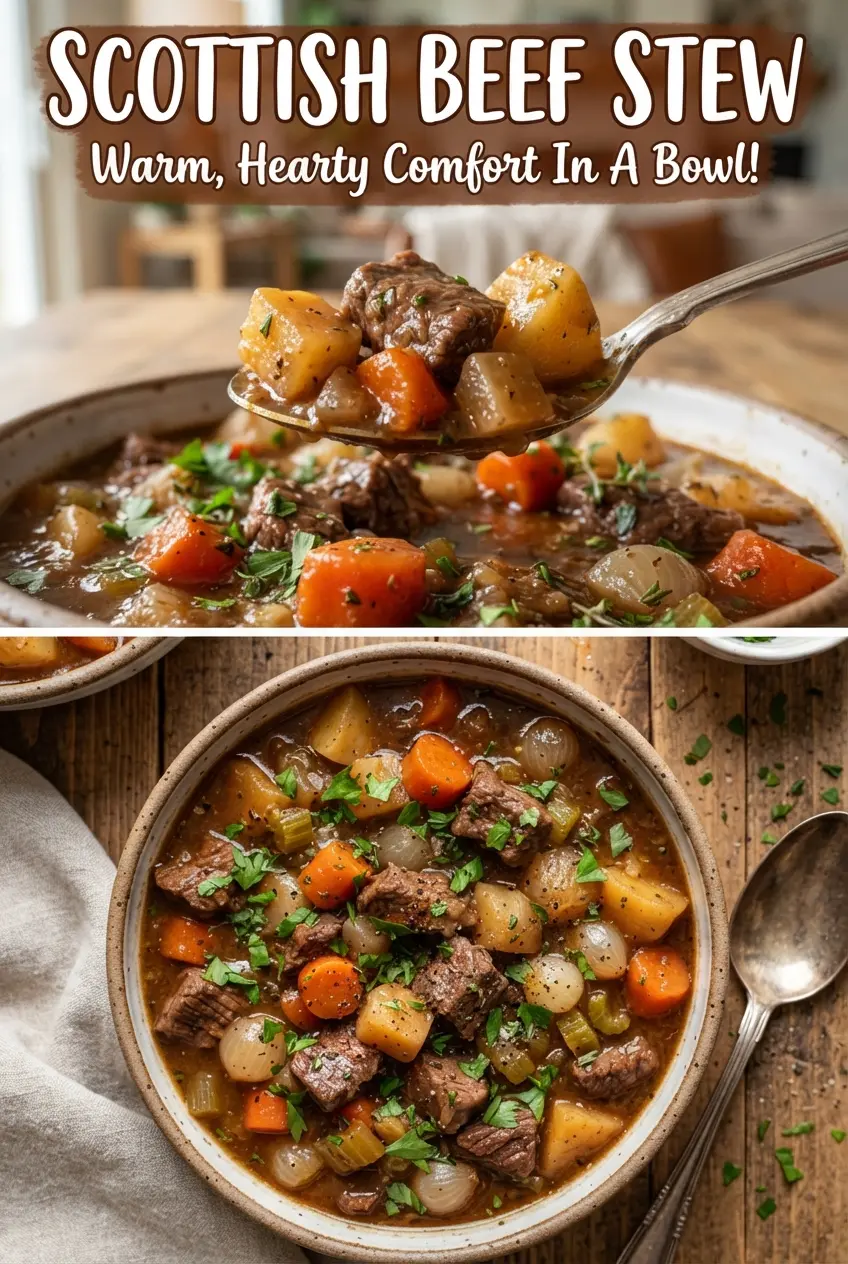
Scottish beef stew earns its place by turning a few plain ingredients into a bowl that eats like a full meal. The broth cooks down into a deep, glossy gravy that clings to the beef and barley, while the turnip and carrots keep their shape just enough to give the stew some bite. It’s the kind of pot that tastes even better after it sits for a few minutes on the stove, when everything settles into the same rich, savory rhythm.
What makes this version work is the layering. Browning the beef in batches gives the stew its backbone, and the flour on the meat helps thicken the broth without turning it pasty. The ale goes in early to lift the browned bits from the pan, then the barley joins later so it softens without going mushy. That timing matters more than anything else here.
Below you’ll find the details that keep the stew hearty instead of muddy, plus a few practical swaps if you need to work with what’s in the pantry.
The barley stayed tender without falling apart, and the broth thickened into the kind of gravy that coats the spoon. I served it with oatcakes and there wasn’t a drop left.
Save this Scottish beef stew for the kind of dinner that needs a rich gravy, tender barley, and one steady pot.
The Browning Step That Gives This Stew Its Depth
The biggest mistake with beef stew is crowding the pan and rushing the sear. If the beef goes in all at once, it steams, the flour turns gummy, and the broth never gets that dark, beefy base. Browning in batches takes a few extra minutes, but those browned bits on the bottom are where the flavor starts.
The ale matters here because it loosens those bits without making the stew taste flat. Once the liquid goes in, scrape the pan thoroughly and let it simmer for a minute before adding the broth. That quick pause gives the sharp edge of the ale time to soften and keeps the finished stew from tasting harsh.
What Each Ingredient Is Actually Doing In This Pot
- Beef chuck — This cut has enough fat and connective tissue to turn spoon-tender during the long simmer. A lean stew beef will work in a pinch, but it won’t give you the same silky texture or rich broth.
- Pearl barley — Barley is what makes this stew feel distinctly Scottish and gives the broth body as it cooks. Rinse it first so the surface starch doesn’t cloud the pot more than necessary, then add it late so it stays pleasantly chewy.
- Scottish ale or extra beef broth — The ale adds maltiness and helps build complexity, but if you skip it, use the same amount of broth and a small splash of Worcestershire for depth. A dark ale works best; a very bitter one can overpower the stew.
- Turnip or swede — This brings an earthy sweetness that stands up to the beef. Swede holds its shape a little better, while turnip gives a sharper edge. Cut it into even cubes so it softens at the same pace as the carrots.
- Leeks and onions — Together they make the base taste fuller than onions alone. Slice the leeks well and rinse out any grit from between the layers before they go in the pan, or the stew will end up with a sandy texture.
Building The Pot In The Right Order
Coating And Browning The Beef
Toss the beef with salt, pepper, and flour until every piece is lightly dusted, then brown it in the butter and oil in batches. You want a deep brown crust, not a pale gray exterior, so leave the pieces alone long enough to release from the pan on their own. If the pan looks dry, a little more oil helps; if the flour starts to scorch, lower the heat before the next batch goes in.
Softening The Leeks And Onions
Once the beef is out, cook the onions and leeks in the same pot until they go soft and translucent with a little color at the edges. Stir often enough to keep the butter from browning too hard, but not so much that nothing picks up any color. If the bottom looks too dark before the vegetables soften, splash in a spoonful of broth to lift the fond.
Simmering Until The Beef Gives In
Add the ale and scrape the pot clean, then pour in the broth, Worcestershire sauce, thyme, and beef. Keep the simmer low and steady; a hard boil tightens the meat and clouds the broth. After about 90 minutes, the beef should be close to tender but not falling apart yet, which is the right moment for the barley and vegetables.
Finishing With Barley, Turnip, And Carrots
Stir in the barley, turnip, and carrots and simmer until the barley is tender and the beef breaks apart with a spoon. The liquid should thicken on its own as the barley cooks, but if it still seems thin at the end, give it another few minutes uncovered. Taste only after the stew has finished reducing a little; salt changes fast once the broth concentrates.
How To Adapt This Stew For Your Pantry And Preferences
Gluten-Free Version Without The Floury Finish
Skip the flour on the beef and brown it plain, then thicken the stew at the end with a small cornstarch slurry if needed. The texture will be a little lighter and the broth won’t have quite the same rustic body, but the flavor stays deep if you still sear the beef well.
No Ale, Just Broth
Use another cup of beef broth in place of the ale and add an extra teaspoon of Worcestershire sauce for depth. You’ll lose the malty edge, but the stew will still taste rich and rounded if you scrape the pan well after browning.
Make It Ahead For The Next Day
This stew tastes even better after a night in the fridge because the barley and vegetables settle into the broth. Reheat it gently over low heat with a splash of broth or water if it’s thickened too much; a hard boil can make the beef stringy and the barley too soft.
Storage And Reheating
- Refrigerator: Store covered for up to 4 days. The barley will keep soaking up broth, so expect a thicker stew on day two.
- Freezer: It freezes well for up to 3 months, though the barley softens a bit after thawing. Cool it completely first and freeze in portions for easier reheating.
- Reheating: Warm it slowly on the stove over low heat, stirring now and then and adding a splash of broth if needed. Don’t boil it hard or the beef can dry out and the barley can turn pasty.
Answers To The Questions Worth Asking
Scottish Beef Stew
Ingredients
Equipment
Method
- Season the beef cubes with salt and black pepper, then toss with the all-purpose flour until coated. Heat a Dutch oven over medium-high heat and add the butter plus vegetable oil.
- Brown the beef in batches, cooking each batch until deep golden on the outside, about 5 to 7 minutes total per batch. Move browned beef to a plate as each batch finishes so the pot stays hot.
- Add the chopped onions and sliced leeks to the Dutch oven and cook for 6 minutes until soft. Scrape up any browned bits from the bottom during cooking.
- Pour in the Scottish ale (or extra beef broth) and scrape the bottom of the pot to loosen the fond. Bring the liquid to a gentle simmer, keeping it bubbling at the edges.
- Add the beef broth, Worcestershire sauce, dried thyme, and the browned beef back into the Dutch oven. Stir to combine and ensure the beef is mostly covered.
- Cover and simmer at a steady simmer for 1 1/2 hours, about 90 minutes. The beef should be noticeably tender when pierced and the gravy should start to thicken.
- Stir in the rinsed pearl barley, cubed turnip or swede, and sliced carrots. Make sure the barley is submerged so it cooks evenly.
- Simmer uncovered at a gentle simmer for 45 to 60 minutes until the barley and beef are tender. Watch the consistency and stir occasionally so nothing sticks.
- Taste and season to adjust with more salt and black pepper as needed. Top with chopped fresh parsley right before serving for a fresh green finish.


