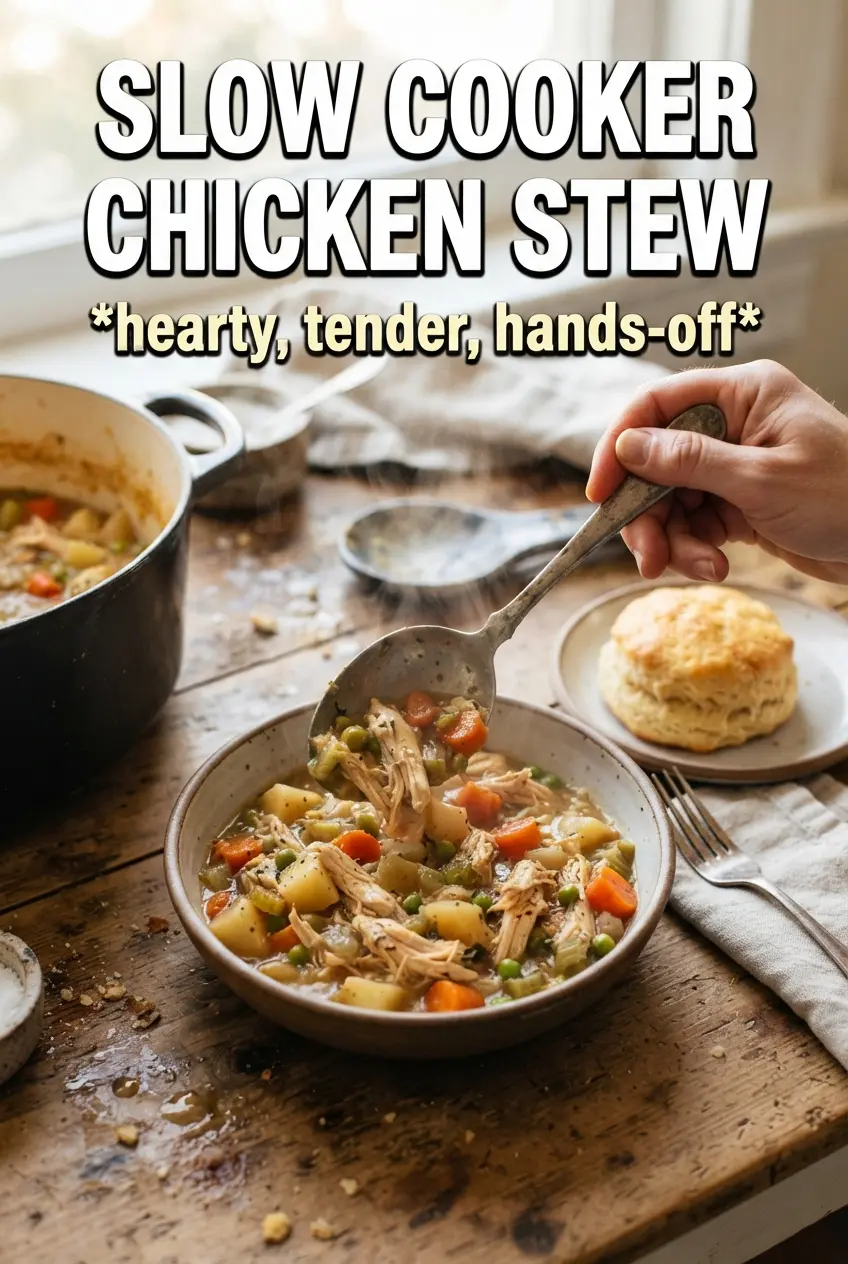
Slow cooker chicken stew lands in that sweet spot between comforting and practical: tender chicken, soft vegetables, and a gravy that turns thick and spoonable without any babysitting at the stove. The slow cooker does the work, but the order of the ingredients matters more than people think. Put the vegetables on the bottom, keep the chicken on top, and finish with a quick cornstarch slurry at the end, and you get a stew that tastes rich instead of watery.
Bone-in thighs are the right cut here because they stay juicy through a long cook and add more flavor to the broth than lean breast meat ever could. Cream of chicken soup gives the gravy body, while tomato paste deepens it just enough to keep the flavor from reading flat. The rosemary and thyme work like a backbone, not a garnish, so don’t skip them if you want the stew to taste like more than cooked chicken in sauce.
Below, I’m walking through the part that really matters: how to keep the vegetables from turning mushy, how to thicken the broth without clumps, and the swaps that still give you a proper stew when you need to work around what’s in the pantry.
The gravy thickened up right at the end and the chicken shredded into the stew instead of drying out. I served it with crusty bread and my husband went back for a second bowl before I sat down.
Slow cooker chicken stew with thick gravy, tender thighs, and hearty vegetables belongs in your Pinterest dinner rotation.
The Trick to a Stew That Thickens Instead of Turning Brothy
The most common slow cooker mistake with chicken stew is adding everything, walking away, and expecting the liquid to magically behave like gravy. It won’t. The broth needs a thickening step at the end because the slow cooker traps moisture instead of reducing it the way a pot on the stove does. That’s why this recipe uses a cornstarch slurry after the chicken comes out — it turns the cooking liquid silky without giving it a starchy, cloudy taste.
Another detail that matters here is the placement of the vegetables. Potatoes, carrots, celery, and onion go on the bottom so they’re surrounded by liquid and can soften evenly. The chicken sits on top where it can cook gently and stay intact until shredding time. If you bury the chicken under the vegetables, it can overcook before the stew base has any structure.
- Bone-in chicken thighs — These hold up to the long cook and bring more depth to the broth than boneless thighs. You can use boneless thighs, but the stew will taste a little lighter and the meat won’t be quite as rich.
- Cream of chicken soup — This is the shortcut that gives the stew a built-in creamy base. If you swap it for plain broth, you’ll need extra fat and thickening or the finished stew will taste thin.
- Tomato paste — It doesn’t make the stew taste like tomato; it deepens the savory note and keeps the gravy from tasting one-dimensional. Cook it into the broth mixture as written so it dissolves evenly.
- Cornstarch slurry — Mix it with cold water first. If you dump dry cornstarch straight into hot stew, you’ll get little lumps that never fully break down.
What Each Ingredient Is Doing in the Pot

- Chicken broth — This is the liquid that carries the seasoning. Use a broth you’d actually drink; a weak broth makes the whole stew taste flat.
- Potatoes — Baby potatoes keep their shape better than large russets and give you chunkier pieces in the bowl. Halve them so they cook through at the same pace as the carrots.
- Carrots and celery — Thick carrot rounds and sliced celery hold enough structure to survive six hours without turning to paste. Cut them too small and they’ll disappear into the gravy.
- Thyme, rosemary, and bay leaf — This is the herb base that gives the stew its classic chicken-stew smell and taste. Fresh thyme is lovely, but dried works fine here because the long cook gives it time to open up.
- Fresh parsley — Stirring in parsley at the end wakes up the whole bowl. It’s not just garnish; it keeps the stew from tasting heavy.
Building the Stew So the Chicken Stays Tender
Laying Down the Vegetable Base
Start with the potatoes, carrots, celery, and onion in the bottom of the slow cooker. That bed of vegetables protects them from getting scorched on the edges and lets them cook in the broth instead of steaming above it. If you chop the onion too large, it stays sharp and uneven; diced is the right size because it melts into the gravy by the end.
Seasoning the Broth Before It Cooks
Stir the broth, cream of chicken soup, tomato paste, garlic, thyme, rosemary, and bay leaf together over the vegetables, then nestle the chicken thighs on top. The tomato paste needs to be dispersed well or you’ll get streaks of concentrated flavor instead of a balanced stew. Keep the chicken above the vegetables so it cooks gently and doesn’t dry out from sitting directly on the hotter bottom layer.
Knowing When the Chicken Is Ready
Cook on Low for 6 to 8 hours until the chicken is falling-apart tender. If you can lift a thigh and it resists, give it more time; stew chicken should shred easily, not slice like a roast. Once it’s ready, pull the chicken out, discard the skin and bones, and shred the meat while it’s still warm. That’s easier than trying to shred it after it cools and tightens up.
Thickening Without Clumps
Remove the bay leaf, then stir in the cornstarch slurry and cook on High for about 20 minutes. The stew should shift from loose to glossy and spoon-coating. If it still looks thin after 20 minutes, give it a little longer on High rather than adding more slurry right away; over-thickening can turn the gravy gluey once it cools.
Make It Gluten-Free Without Losing the Creamy Body
Use a gluten-free cream of chicken soup and check that your broth is gluten-free as well. The cornstarch thickener is already naturally gluten-free, so the texture stays the same as long as the soup swap is a true substitute and not a thinner broth-based version.
Boneless Thighs for a Slightly Faster Pot
Boneless thighs work if that’s what you have, and they’ll shred cleanly, but they cook a little faster and bring less richness to the broth. Start checking them around the 5-hour mark on Low so they don’t go stringy.
A Dairy-Free Version That Still Eats Like Stew
Use a dairy-free cream-style soup substitute or a thickened broth made with unsweetened oat milk and a little extra cornstarch. The result won’t taste exactly like the original, but it keeps the same body and comfort-food feel without the dairy.
Storage and Reheating
- Refrigerator: Keeps for 4 days in a sealed container. The gravy will thicken more as it chills.
- Freezer: Freezes well for up to 3 months, though the potatoes can soften a little after thawing. Cool it completely before freezing for the best texture.
- Reheating: Reheat gently on the stove or in the microwave with a splash of broth if needed. Don’t boil it hard or the chicken can tighten up and the gravy can turn too thick.
Answers to the Questions Worth Asking
Slow Cooker Chicken Stew
Ingredients
Equipment
Method
- Add the baby potatoes, carrots, celery, and onion to the bottom of the slow cooker, spreading them into an even layer so they cook through. You should see a full layer of vegetables across the base.
- Nestle the bone-in chicken thighs on top of the vegetables and tuck garlic around and between the pieces. Arrange them so most surfaces are in contact with the mixture below.
- Pour in the chicken broth and stir in the cream of chicken soup, tomato paste, dried thyme, dried rosemary, and bay leaf until the liquid looks evenly combined. The herbs should be visibly speckled throughout.
- Cover and cook on Low for 6-8 hours, or on High for 3-4 hours, until the chicken thighs are very tender and easily pull apart. The stew should be bubbling gently, with the vegetables looking softened.
- Remove the chicken thighs from the slow cooker, discarding the skin and bones, then shred the meat. The shredded chicken should look fibrous and fall-apart.
- Remove the bay leaf from the stew and discard it. You should no longer see the bay leaf floating in the liquid.
- Stir the cornstarch slurry (cornstarch mixed with water) into the hot stew and cook on High for 20 minutes to thicken. Watch for the gravy to turn glossy and coat a spoon.
- Return the shredded chicken to the slow cooker and season with salt and pepper to taste. Taste carefully: the flavors should be balanced and the gravy should cling to the chicken.
- Garnish with fresh parsley before serving. The top should show bright green flecks for contrast.


