Slow Cooker Guinness Beef Stew lands with that deep, spoon-coating broth that only happens when beef, stout, and time all work together. The beef turns soft enough to pull apart with a fork, the potatoes hold their shape, and the carrots soak up the dark, savory gravy without turning to mush. It’s the kind of stew that tastes like it cooked all day because it did.
The key is building flavor before the slow cooker ever gets involved. Browning the beef gives you the fond that turns the broth from flat to rich, and cooking the tomato paste for a minute or two keeps it from tasting raw. Guinness brings bitterness and depth, but the brown sugar and Worcestershire keep it balanced instead of harsh. The flour on the beef helps the sauce thicken naturally as it cooks, so you end up with a stew that clings to the spoon instead of sitting watery in the bowl.
Below, I’ve included the small things that keep the texture right, plus a few easy swaps if you need to work with what’s already in your kitchen.
The gravy got beautifully thick in the slow cooker, and the beef was fall-apart tender without me having to touch it. Even the potatoes held up, which never happens for me in stew.
Save this Slow Cooker Guinness Beef Stew for the nights when you want dark, rich gravy and fork-tender beef without babysitting a pot.
The Reason the Beef Stays Tender Instead of Turning Stringy
Slow cooker stew can go wrong when the beef goes in raw and the pot never gets a proper base. Chuck has enough connective tissue to turn silky over long, low heat, but it still needs that first browning step. Skip it and the stew still cooks, but it tastes flatter and the beef can come out more boiled than braised.
The flour coating matters here too. It doesn’t just help thicken the broth; it gives the seared beef a dry surface so it browns instead of steaming. That’s the difference between a stew that tastes deep and one that tastes like it was dumped into a pot and left alone.
- Chuck roast — This cut is the right one for a long slow cook because the connective tissue breaks down instead of drying out. Leaner beef gets firm and chalky before the stew is done.
- Guinness stout — The stout adds roastiness and a faint bitterness that gives the gravy its backbone. A lighter beer won’t give the same dark, malty depth.
- Tomato paste — Cooking it in the pan for a couple minutes caramelizes the edges and removes the raw tinny taste. Don’t add it straight to the slow cooker unless you want the flavor to stay sharp.
- Baby potatoes — They hold their shape better than cut Russets. If you only have larger potatoes, cut them into big chunks so they don’t collapse into the broth.
What Each Ingredient Is Doing in the Pot
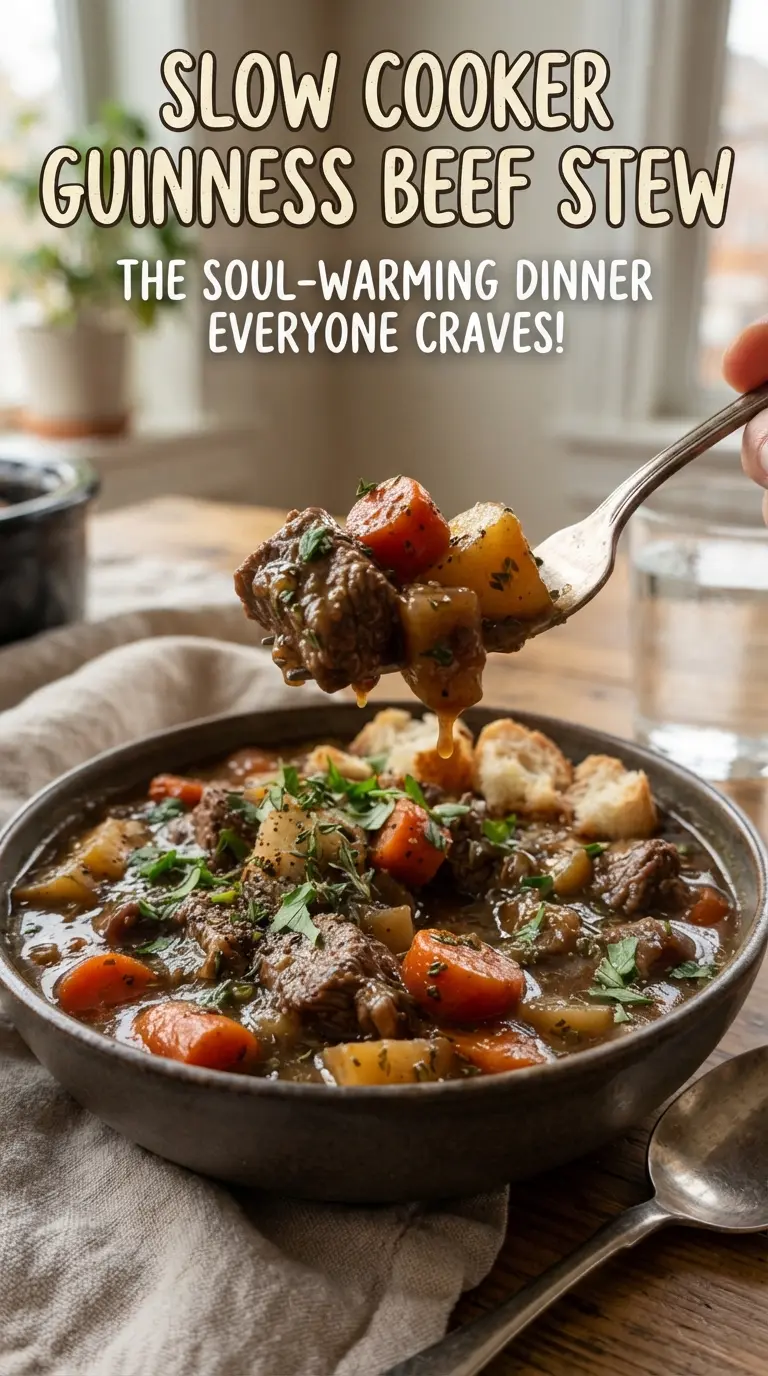
- Beef chuck — This is the cut that turns spoon-tender after hours of low heat. Trim only large hard pieces of fat; a little marbling helps keep the stew rich.
- All-purpose flour — It lightly coats the beef and thickens the cooking liquid as the stew simmers. If you need gluten-free, use a 1:1 gluten-free flour blend with similar results.
- Guinness stout — It gives the stew its deep color and roasted edge. Let it simmer in the pan for a minute or two so the sharp alcohol notes cook off before it goes into the slow cooker.
- Beef broth — This stretches the stout into a proper gravy and keeps the stew from tasting overly bitter. Use a low-sodium broth if you want more control over the final seasoning.
- Brown sugar — Just a tablespoon smooths out the stout and Worcestershire so the stew tastes rounded instead of bracing. Don’t skip it unless you’re intentionally chasing a more bitter profile.
- Carrots and baby potatoes — They turn the stew into a full meal and absorb the broth’s flavor. Add them in the same stage as the liquid so they cook gently and keep their shape.
Building the Stew So the Flavor Doesn’t Go Flat
Coating and Browning the Beef
Throw the beef in flour, salt, and pepper until every piece has a thin, dusty coating, then brown it in hot oil in batches. You want a dark crust on the outside, not gray steamed meat, so don’t crowd the pan. If the pan looks dry, add a touch more oil before the next batch. That browning is where the stew starts tasting like stew.
Making the Pan Taste Like Something
Cook the onion, garlic, and tomato paste in the same skillet you used for the beef. The onion should soften and the tomato paste should darken slightly and smell sweet, not raw. If the bottom of the pan has dark stuck-on bits, that’s good; the Guinness will lift them and turn them into part of the gravy. Add the stout and scrape until the pan looks clean.
Letting the Slow Cooker Do the Heavy Lifting
Once the beef, liquid, herbs, carrots, and potatoes are in the slow cooker, leave the lid on and keep it on LOW for the full eight hours. High heat can make the beef tighten before the collagen has time to melt. By the end, the beef should break apart with a fork and the potatoes should be tender at the edges but still intact. Season at the end, not the beginning, because the broth reduces and concentrates as it cooks.
How to Adapt This Stew Without Losing the Depth
Gluten-Free Version
Use a gluten-free all-purpose flour blend to coat the beef and thicken the stew. The texture stays close to the original, but don’t use a starch-heavy blend that clumps in the pan; a balanced cup-for-cup blend works best.
No Alcohol Version
Replace the Guinness with extra beef broth plus 1 to 2 teaspoons of balsamic vinegar. You’ll lose the stout’s roasted malt flavor, but the vinegar brings back some of the dark, savory edge that keeps the stew from tasting one-note.
Add More Vegetables
Mushrooms, parsnips, or celery fit in well here. Add them with the carrots and potatoes so they soften without dissolving; mushrooms bring extra umami, while parsnips add a gentle sweetness that works with the stout.
Storage and Reheating
- Refrigerator: Store for up to 4 days. The stew gets even richer overnight, and the broth will thicken as it chills.
- Freezer: It freezes well for up to 3 months. Cool it completely first, then freeze in portions so the potatoes don’t get crushed when you thaw it.
- Reheating: Warm it gently on the stove over medium-low heat or in the microwave at half power. Hard boiling can break down the potatoes and make the beef stringy.
Answers to the Questions Worth Asking
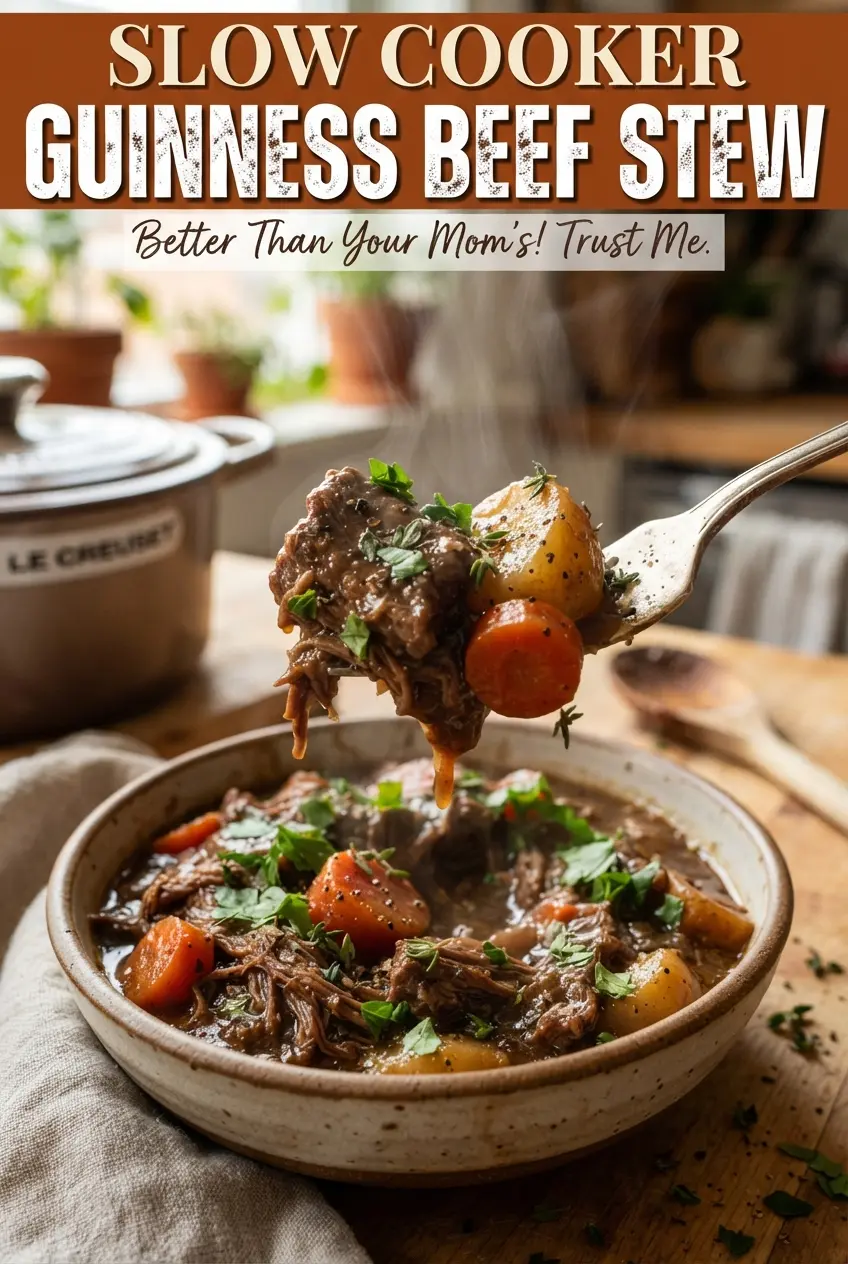
Slow Cooker Guinness Beef Stew
Ingredients
Equipment
Method
- Toss beef with flour, salt, and black pepper until coated; transfer to a hot skillet with the vegetable oil and brown, turning as needed, until deeply colored. Visual cue: the beef should have browned edges and a floury crust.
- Transfer the browned beef to the slow cooker. Visual cue: scrape any stuck browned bits into the cooker with the ladle so they don’t waste flavor.
- Cook onion, garlic, and tomato paste in the same skillet over medium heat for 3 minutes. Visual cue: the mixture should look glossy and smell fragrant, not burned.
- Pour in Guinness stout and scrape the bottom of the pan; simmer for 2 minutes. Visual cue: bubbling should loosen browned fond into the liquid.
- Pour the stout mixture into the slow cooker over the beef. Visual cue: the surface will darken and start to steam slightly from the hot pan mixture.
- Add beef broth, Worcestershire sauce, brown sugar, dried thyme, carrots, and baby potatoes to the slow cooker, stirring gently to distribute. Visual cue: carrots and potatoes should be mostly submerged.
- Cover and cook on LOW for 8 hours, until the beef is very tender. Visual cue: carrots should be soft when pressed and the beef should shred with a fork.
- Season to taste with additional salt and black pepper as needed. Visual cue: taste the broth and adjust until the flavor balances.
- Garnish with chopped fresh parsley before serving. Visual cue: bright green flecks on top contrast the dark stew.


