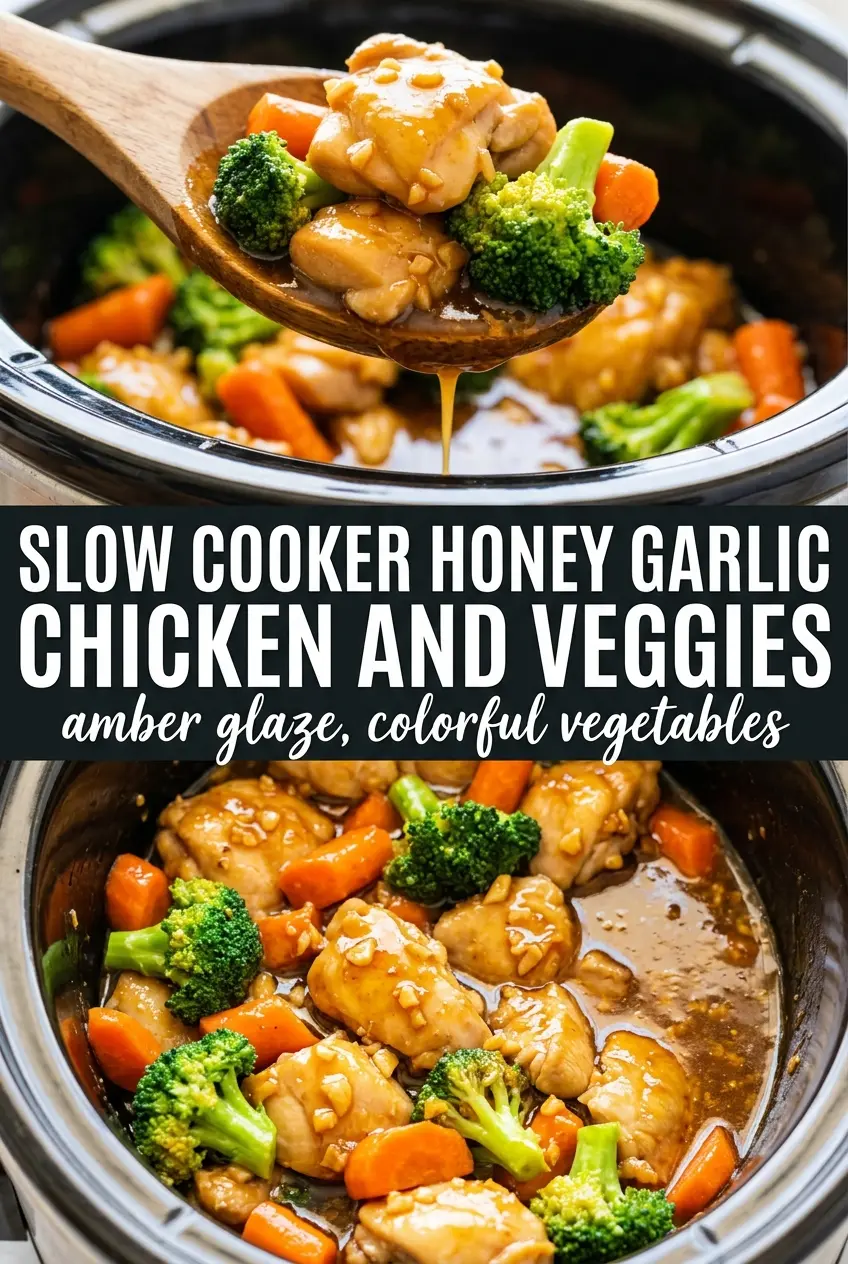
Tender chicken, glossy honey-garlic sauce, and vegetables that still have a little bite in them make this the kind of slow cooker dinner that gets cleared out fast. The sauce clings to every piece instead of pooling watery at the bottom, and the broccoli goes in late enough to stay bright instead of collapsing into mush. It tastes like you worked on it, even though the slow cooker did most of the heavy lifting.
What makes this version work is the timing. The chicken starts first so it has time to soak up the sauce, then the carrots and green beans go in partway through because they can handle the heat, and the broccoli waits until the end so it stays tender-crisp. The cornstarch slurry goes in only after the vegetables are cooked, which is what gives you a real glaze instead of a thin, sticky broth.
Below, I’ve laid out the timing that keeps the vegetables from overcooking, plus a few swaps that still keep the dinner balanced and weeknight-friendly.
The sauce thickened up beautifully at the end and the vegetables stayed crisp instead of turning soft. I liked that the broccoli went in later — it kept its color and didn’t get soggy.
Save this slow cooker honey garlic chicken and veggies for a complete dinner with glossy sauce and tender-crisp vegetables.
The Timing That Keeps the Chicken Juicy and the Vegetables Separate
The biggest mistake in slow cooker chicken and vegetables is treating everything like it needs the same amount of time. Chicken thighs can take long, gentle heat and stay moist. Broccoli cannot. If it goes in at the beginning, it gives up its color and turns soft in a way that makes the whole dish feel heavy.
The other trap is adding the thickener too early. Cornstarch needs heat near the end to activate properly, and if it sits in the slow cooker for hours it can thin back out or turn a little dull. Holding back part of the sauce until the end keeps the chicken glossy and gives the vegetables something clean and lightly sweet to grab onto.
- Chicken thighs — Boneless thighs stay tender in a slow cooker better than breasts. Breasts can work, but they dry out faster and need less time, which makes the vegetable timing harder to manage.
- Broccoli — Fresh broccoli florets hold their shape best. Frozen broccoli softens too much here and tends to water down the final sauce.
- Carrots and green beans — These can handle the middle stretch of cooking without falling apart. Baby carrots are fine, but if yours are thick, cut them in half so they cook at the same pace as the beans.
- Honey and soy sauce — This is the backbone of the dish. Honey gives body and shine, while soy sauce brings the salty depth that keeps the sauce from tasting flat.
What Each Ingredient Is Actually Doing in the Crockpot

Chicken thighs are the safest choice for this recipe because the slow cooker works them gently and they stay juicy. If you use chicken breasts, reduce the time and check early; they’ll go from tender to stringy if they sit too long.
Rice vinegar keeps the honey from feeling heavy. You don’t taste it as vinegar, but you’d notice if it were missing because the sauce would land flat and one-note. Garlic is worth using fresh here. Jarred garlic can work in a pinch, but fresh gives the sauce the sharp edge that carries through the sweetness.
Cornstarch is the part that turns the juices into a sauce. Mix it with cold water first so it dissolves completely, then add it when the slow cooker is already hot. That’s how you avoid little white lumps and get a smooth glaze.
Building the Sauce in Stages So It Stays Glossy
Whisking the Base
Start by mixing the honey, soy sauce, garlic, olive oil, rice vinegar, and red pepper flakes until the honey loosens and disappears into the liquid. It should look like a smooth, amber sauce, not separate streaks of oil and honey. If the honey is cold and thick, warm it for a few seconds first so it blends without clinging to the whisk.
Giving the Chicken a Head Start
Lay the chicken in the slow cooker and pour in only half the sauce. That first layer seasons the meat while it cooks and keeps the finished sauce from getting watered down too early. If you dump everything in at once, the vegetables end up overcooking before the sauce has a chance to reduce and cling.
Adding the Vegetables at the Right Moment
Carrots and green beans go in after the chicken has had a few hours to soften and soak up flavor. They need enough time to cook through, but not so much that they lose their shape. Broccoli waits for the last stretch because it turns tender quickly; if it starts looking dull green and soft around the edges, it has gone too far.
Finishing With the Thickened Sauce
Mix the remaining sauce with the cornstarch and stir it back in, then let the slow cooker run on High until the liquid turns glossy and lightly coats the chicken and vegetables. You’re looking for a sauce that moves slowly when you spoon it, not a puddle at the bottom. If it still looks thin, give it a few more minutes with the lid on; lifting the lid too often steals the heat it needs to thicken.
Three Ways to Make This Slow Cooker Dinner Fit What You’ve Got
Make it gluten-free without changing the texture
Swap the soy sauce for tamari or a certified gluten-free soy sauce. The sauce will still thicken and glaze the chicken the same way, and the flavor stays deep and savory. Keep the rest of the recipe as written.
Use chicken breasts if that’s what you have
Chicken breasts will work, but they need less time than thighs and dry out more easily. Check them early and pull the dish as soon as the thickest part is no longer pink. You’ll lose a little richness, but the honey-garlic sauce still keeps the meat tender.
Add more vegetables without thinning the sauce
Bell peppers, snap peas, or sliced zucchini can go in near the end with the broccoli. Keep the pieces on the larger side so they don’t collapse before the sauce thickens. If you add extra watery vegetables, let the finished dish sit on High for a few extra minutes so the glaze tightens back up.
Storage and Reheating
- Refrigerator: Store leftovers for up to 4 days. The broccoli softens a little, but the sauce stays flavorful.
- Freezer: Freeze in airtight containers for up to 2 months. The chicken freezes well, but the vegetables will soften after thawing.
- Reheating: Warm gently on the stovetop or in the microwave with a splash of water if needed. Don’t blast it on high heat or the chicken can tighten up and the sauce can turn sticky before it loosens.