Slow cooker honey garlic chicken turns out with the kind of glossy, clingy sauce that coats every bite instead of pooling at the bottom of the plate. The chicken stays tender enough to shred with a fork, but it still holds onto enough shape that you can serve it whole over rice if that’s the look you want. The sweet-savory balance is familiar, but this version lands cleaner because the sauce gets thickened separately at the end instead of thinning out while the chicken cooks.
The trick is keeping the sauce base simple and letting the slow cooker do what it does best: gently soften the chicken without drying it out. Honey brings the sweetness, soy sauce adds depth and salt, and ketchup gives the sauce body plus a little acidity so it doesn’t taste flat. The cornstarch slurry goes in after cooking, which is what gives you that spoon-coating finish instead of a loose, watery glaze.
Below, I’m walking through the part that matters most — how to get a sauce that actually clings, not one that disappears into the insert. I’ve also included a few swaps and storage notes for the times when you want to work with what’s already in the pantry.
The sauce thickened up perfectly after I mixed in the cornstarch slurry, and the chicken stayed so tender I barely had to shred it. My kids kept asking for the sweet garlic sauce over rice.
Love a glossy, sweet-savory glaze? Save this slow cooker honey garlic chicken for an easy dinner with tender chicken thighs and a sauce that thickens beautifully.
The Sauce Won’t Stay Glossy If You Thicken It Too Early
The mistake that ruins this dish most often is adding the cornstarch before the chicken has finished cooking. Cornstarch needs a fairly hot liquid and a little time at the end to do its job; if it goes in too soon, it can turn the sauce dull, gummy, or uneven. By waiting until the chicken is tender, you keep the glaze smooth and give yourself a better read on how much thickening the sauce actually needs.
Chicken thighs are the right cut here because they stay succulent through a long, gentle cook. Breasts can work in a pinch, but they dry out faster and don’t give you the same forgiving texture once the sauce is reduced. If your sauce tastes thin at the end, it usually means it still needs the full 15 to 20 minutes after the slurry goes in, not a bigger pile of cornstarch at the start.
What Each Ingredient Is Actually Doing In This Dish

- Chicken thighs — Boneless, skinless thighs stay juicy in the slow cooker and hold up well to shredding. If you use chicken breasts, cut the cook time and check early so they don’t turn stringy.
- Honey — This gives the sauce its sticky finish and rounds out the salt from the soy sauce. There isn’t a clean substitute that behaves the same way, though maple syrup can work if you want a deeper, less floral sweetness.
- Soy sauce — This is the backbone of the savory side of the glaze. Low-sodium soy sauce is fine if that’s what you keep on hand; it just gives you a little more room to season at the end.
- Ketchup — It adds body, sweetness, and a mild tang that keeps the sauce from tasting one-note. Tomato paste won’t give the same balance unless you loosen it with a little extra honey and vinegar, which changes the dish more than most people expect.
- Garlic and dried herbs — Garlic is the main flavor you notice first, while basil and oregano add a subtle background note that keeps the sauce from tasting like plain sweet soy glaze. Fresh garlic works best, and dried herbs should be rubbed between your fingers before whisking them in so they wake up a bit.
- Cornstarch slurry — This is what turns the cooking liquid into a proper sauce. Always mix it with cold water first; if you dump dry cornstarch into the slow cooker, it clumps before it can dissolve.
Building The Glaze Without Curdling Or Clumping
Starting With The Chicken In The Insert
Lay the chicken thighs in a single layer if you can, even if they overlap a little. The slow cooker will trap enough moisture to handle it, but a more even layer helps everything cook at the same pace. Pouring the sauce over the top instead of stirring everything together right away keeps the chicken from tearing apart before it softens.
Whisking The Sauce Until It Looks Uniform
Mix the honey, soy sauce, ketchup, garlic, basil, oregano, red pepper flakes, and black pepper until the ketchup disappears into the liquid. The sauce should look smooth and a little thick before it goes into the cooker. If you see streaks of ketchup or pockets of honey, keep whisking; those pockets can burn on the edges before they dissolve into the sauce.
Cooking Until The Chicken Pulls Apart Easily
Cook on low for 4 to 5 hours or on high for 2 to 3 hours, then check for tenderness before anything else. The chicken should give easily when pressed with a fork and no longer look translucent in the thickest part. If it’s cooked through but still a little firm, give it more time; forcing the shred too early leaves you with tougher pieces than you want.
Thickening The Sauce At The End
Lift the chicken out, or push it to the side if you want to keep everything in the slow cooker, then whisk the cornstarch and cold water together until completely smooth. Stir that slurry into the hot sauce and cook on high for 15 to 20 minutes with the lid on slightly ajar if your cooker runs wet. The sauce should go from thin and shiny to thick enough to coat the back of a spoon; if it still runs like broth, it hasn’t had enough time.
Make It Spicier Without Throwing Off The Balance
Add a little more red pepper flakes, but do it in small increments. This sauce is sweet enough that heat reads sharper than you expect, and too much spice will crowd out the garlic and soy. A pinch or two is enough to give the glaze a little back-end warmth.
Swap In Chicken Breasts For A Leaner Finish
Use about the same weight, but start checking for doneness earlier because breasts dry out faster than thighs. The sauce still works, but the meat will be less forgiving and a little less rich. Slice rather than shred if you want to keep the texture moist.
Make It Gluten-Free Without Changing The Method
Use a gluten-free soy sauce or tamari in place of regular soy sauce. Everything else in the recipe already fits that adjustment, and the thickening step stays exactly the same because cornstarch is naturally gluten-free. The flavor stays close, with a slightly cleaner, less sharp salty note.
Storage And Reheating
- Refrigerator: Store leftovers in a sealed container for up to 4 days. The sauce will thicken as it chills, which is normal.
- Freezer: It freezes well for up to 2 months. Cool it completely first, then freeze in portions so the chicken and sauce reheat more evenly.
- Reheating: Warm it gently on the stove or in the microwave with a splash of water if needed. The biggest mistake is blasting it on high heat, which can dry out the chicken and make the glaze look tight instead of glossy.
Answers To The Questions Worth Asking
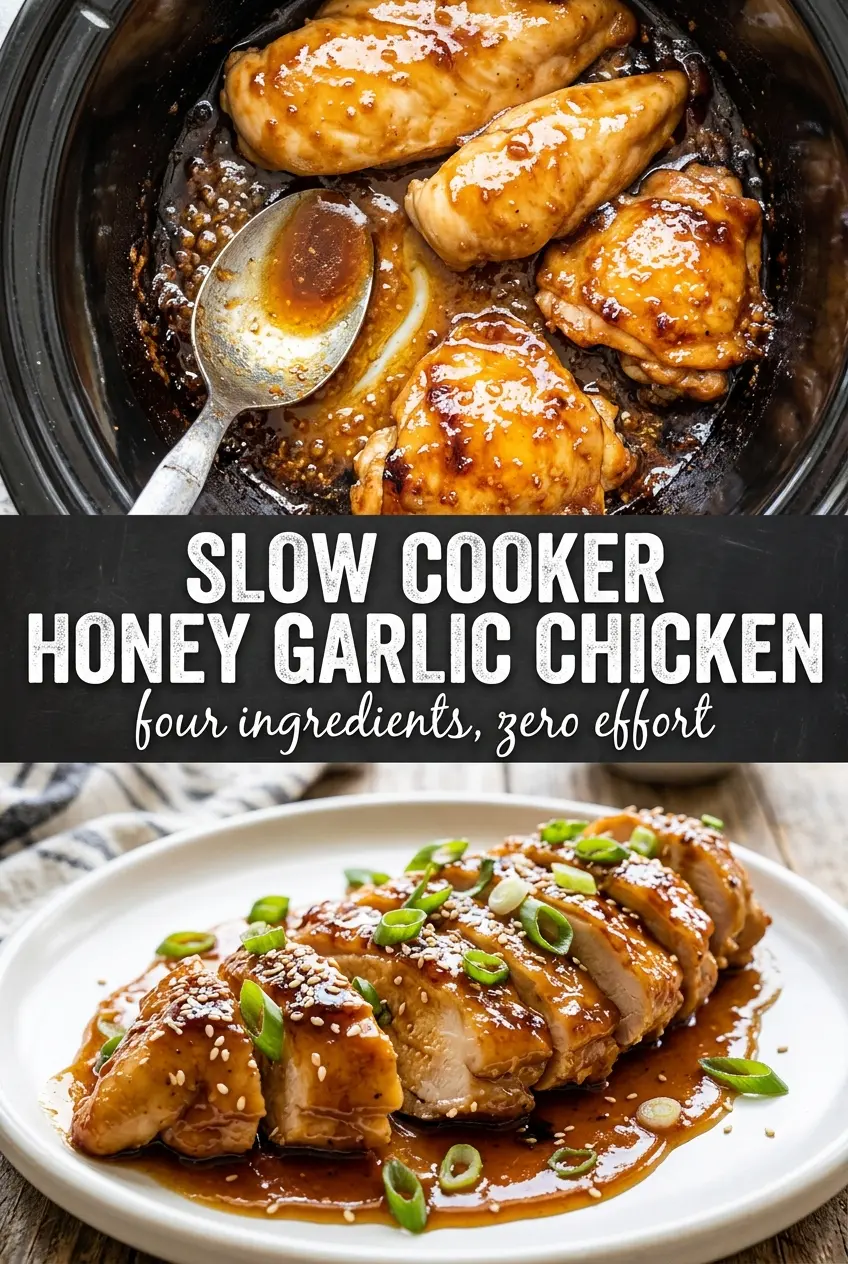
Slow Cooker Honey Garlic Chicken
Ingredients
Equipment
Method
- Place chicken thighs in the slow cooker in a single layer as much as possible.
- Whisk honey, soy sauce, ketchup, garlic, dried basil, dried oregano, red pepper flakes, and black pepper in a bowl until smooth and evenly combined.
- Pour the sauce over the chicken so the thighs are well coated.
- Cook on low for 4–5 hours or on high for 2–3 hours until chicken is cooked through and tender.
- Remove the chicken and shred it or keep it whole, then return attention to the sauce in the slow cooker.
- Whisk cornstarch and cold water together, then stir the slurry into the sauce.
- Cook on high for 15–20 minutes, stirring once if needed, until the sauce thickens to a glossy consistency.
- Return the chicken to the slow cooker and toss to coat in the thickened honey garlic sauce.
- Serve over rice, garnished with sesame seeds and green onions.


