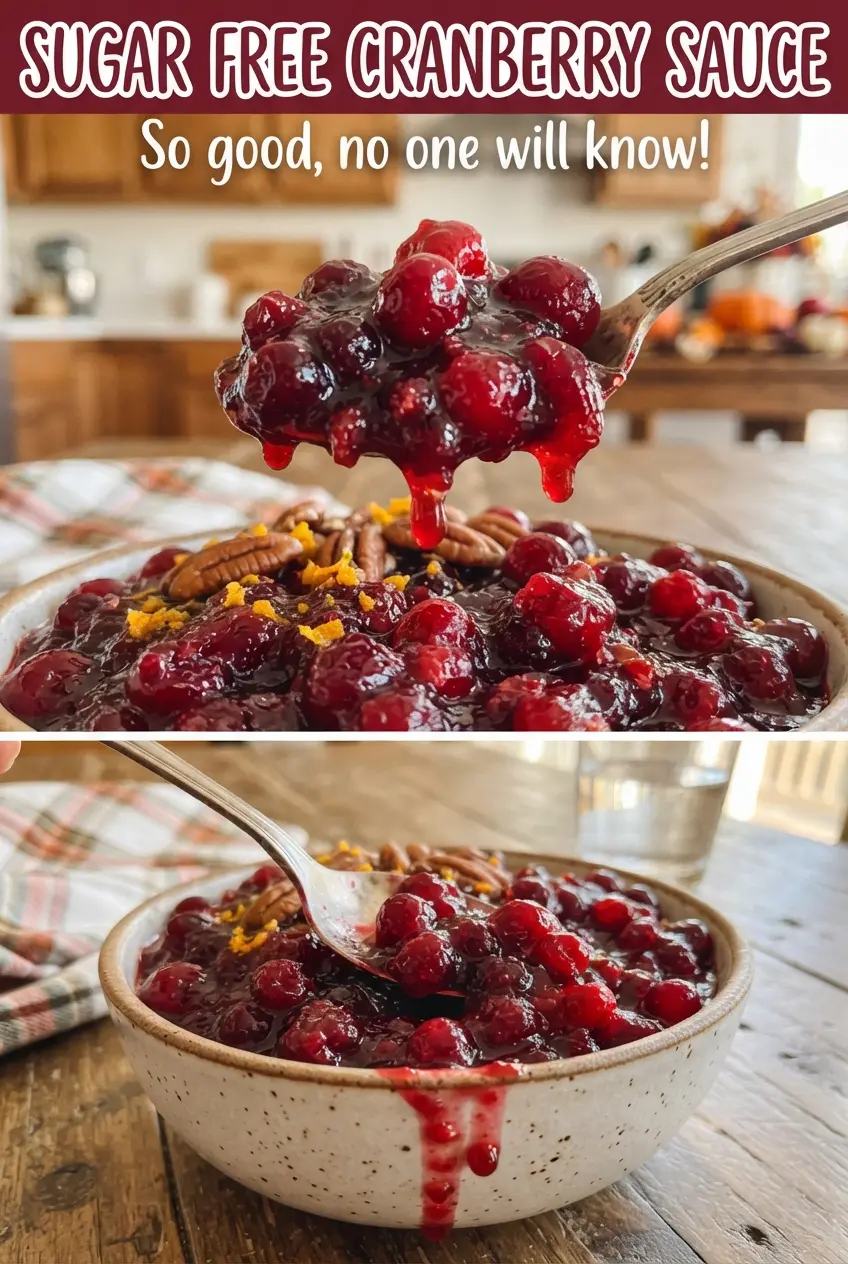
Glossy, tart cranberry sauce with whole burst berries is one of those sides that earns its place because it does exactly what it should: cuts through rich food, wakes up the plate, and tastes brighter than anything from a can. This sugar free version keeps that same sharp cranberry bite, but the sweetener gives it enough roundness to feel balanced instead of punishingly sour.
The trick is starting with the sweetener dissolved in water before the cranberries go in. That gives the berries a head start in a syrupy base, so they soften and pop evenly instead of staying tough at the edges while the liquid reduces around them. Orange zest goes in at the end on purpose; if you cook it too long, the citrus fades and you lose that fresh lift.
Below you’ll find the small details that matter most: how long to simmer for the texture you like, which sweeteners behave best, and how to adjust the final sweetness without turning the sauce muddy or flat.
The sauce thickened up beautifully and the orange zest at the end kept it from tasting flat. I served it chilled and it held that glossy texture all the way through dinner.
Keep this sugar free cranberry sauce handy for turkey, roast chicken, or holiday leftovers that need a bright, tart spoonful.
The Reason This Sauce Stays Bright Instead of Watery
Cranberry sauce looks simple, but the texture can go sideways fast. If you start with too much liquid or walk away before the berries burst, you end up with a thin sauce that tastes like sweetened juice instead of something spoonable. The cranberries need enough heat to split, release pectin, and thicken the pot naturally as they cook down.
What helps most here is resisting the urge to boil hard once the berries are in. A steady simmer gives you softer berries and a cleaner, glossier finish. If the sauce still looks loose when you pull it off the heat, that isn’t a problem; cranberry sauce thickens a lot as it cools, and chilling finishes the job.
- Fresh cranberries — These bring the tartness and the natural pectin that sets the sauce. Frozen cranberries work too; use them straight from the freezer and add a minute or two to the simmer.
- Monk fruit or allulose sweetener — This replaces sugar without the gritty aftertaste some blends leave behind. Allulose gives the closest texture to traditional cranberry sauce because it dissolves and cooks more like sugar.
- Orange zest — Added at the end, it gives the sauce a fresh citrus edge that keeps it from tasting one-note. Don’t swap in orange juice here; it adds extra liquid and softens the flavor too much.
- Cinnamon — Just enough to warm the sauce without making it taste like dessert. More than half a teaspoon starts to pull attention away from the cranberries.
Cooking the Cranberries Until They Burst the Right Way
Dissolving the Sweetener First
Bring the water and sweetener to a boil and stir until the liquid looks clear and the grains are gone. This matters because undissolved sweetener can leave a sandy texture at the bottom of the pan. Once it is fully dissolved, the cranberries cook into a smoother sauce instead of sitting in a coarse syrup.
Letting the Berries Pop Without Mashing Them
Add the cranberries, cinnamon, and salt, then keep the heat at a steady simmer. You should hear soft pops as the berries burst. Stir often enough to keep the bottom from catching, but not so aggressively that you crush every berry; a mix of whole berries and collapsed ones gives the sauce a better body.
Cooking Until It Looks a Little Too Loose
Cook for 10 to 12 minutes, until most of the berries have burst and the liquid looks glossy and slightly syrupy. If it seems thin in the pan, that usually means it’s on track. Pulling it too far is the common mistake here, because cranberry sauce can go from spoonable to jammy once it cools.
Finishing With Zest and Cooling Down
Take the pan off the heat and stir in the orange zest right away. Taste while it’s still warm and add a little more sweetener only if it needs it; cold cranberry sauce always tastes less sweet than warm sauce, so don’t overcorrect. Let it cool before chilling so the texture sets instead of turning cloudy from trapped steam.
How to Adjust It for Different Tables
Use allulose for the smoothest finish
Allulose behaves most like sugar here, so the sauce thickens and chills with the most familiar texture. It also rounds out the tartness without leaving a cooling aftertaste. If you want a sauce that feels closest to classic cranberry sauce, this is the best swap.
Go with monk fruit for a lighter sweetness
Monk fruit sweeteners vary more by brand, so taste after cooking and adjust carefully. Some blends can read a little sharper or more concentrated than sugar, which is why the final tasting step matters. The sauce will still set, but the flavor can be slightly brighter and less rounded than with allulose.
Make it dairy-free, gluten-free, and vegetarian
This recipe already fits all three without any extra changes, which is part of why it works so well for a holiday table. The texture comes entirely from the cranberries themselves, so there is no flour, butter, or dairy to work around. That also makes it easy to serve alongside a wide range of mains.
Add a little spice without covering the cranberries
A pinch of cloves or nutmeg can work, but keep it tiny. Cranberries are bold, and too much spice turns the sauce muddy instead of bright. If you want a warmer flavor, start with a very small pinch and taste after cooling.
Storage and Reheating
- Refrigerator: Store covered for up to 1 week. It thickens as it chills, so expect a firmer texture after day one.
- Freezer: It freezes well for up to 2 months. Pack it in a freezer-safe container with a little headspace, then thaw overnight in the fridge.
- Reheating: Serve it cold or warm it gently over low heat with a splash of water if needed. Don’t boil it again or the texture can turn sticky and overly jammy.
Questions I Get Asked About This Recipe
Sugar Free Cranberry Sauce
Ingredients
Equipment
Method
- Bring the water and granular monk fruit or allulose sweetener to a boil in a saucepan, stirring until fully dissolved, about 2-3 minutes. Keep it at a steady boil so the sweetener melts evenly.
- Add the fresh cranberries, ground cinnamon, and salt to the saucepan. Stir to coat the berries, then return to a gentle boil.
- Simmer for 10-12 minutes until the berries burst and the sauce thickens, stirring occasionally as it reduces. You should see burst berries and a syrupy consistency that clings to the spoon.
- Remove the saucepan from the heat and stir in the orange zest. Taste and add more sweetener only if needed for your preferred sweetness.
- Cool the cranberry sauce to room temperature, then chill before serving. Serve cold so it thickens into a spoonable, sliceable side.


