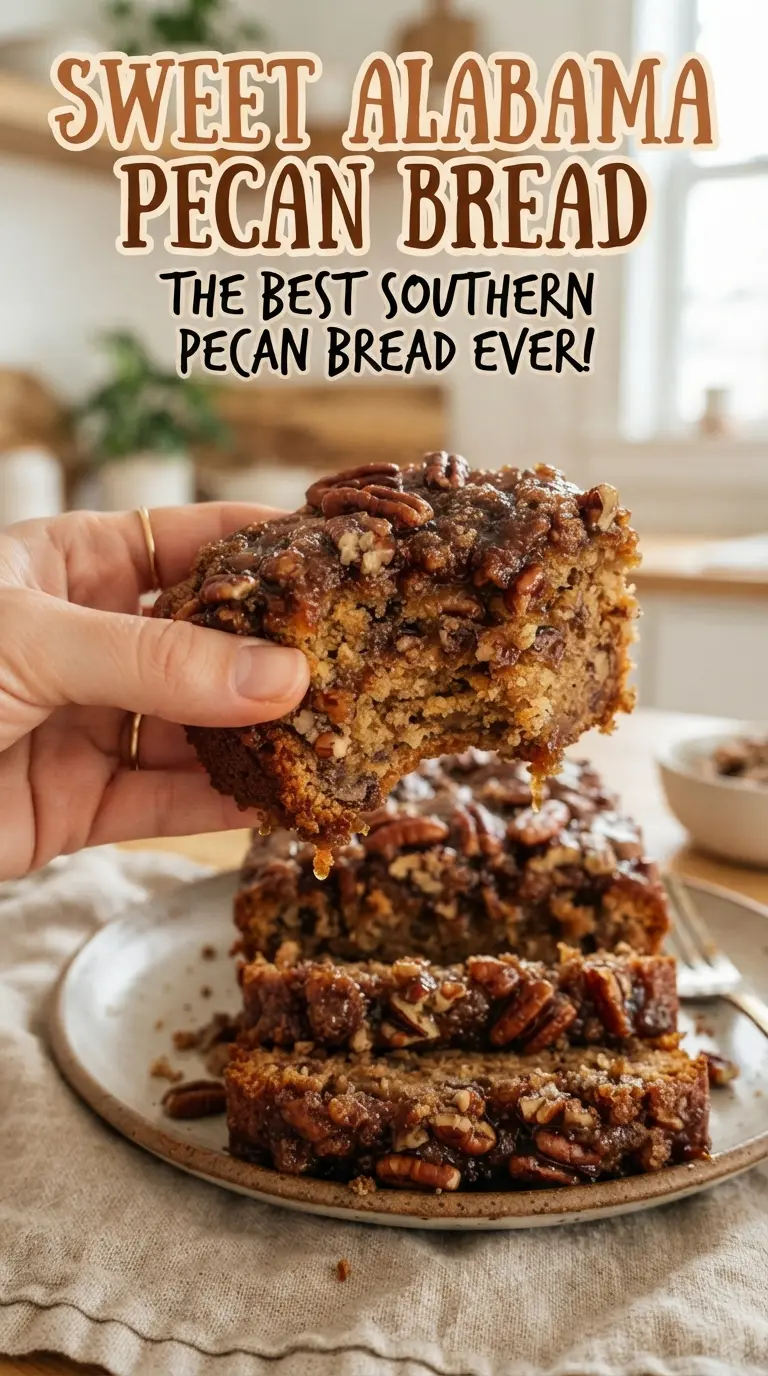
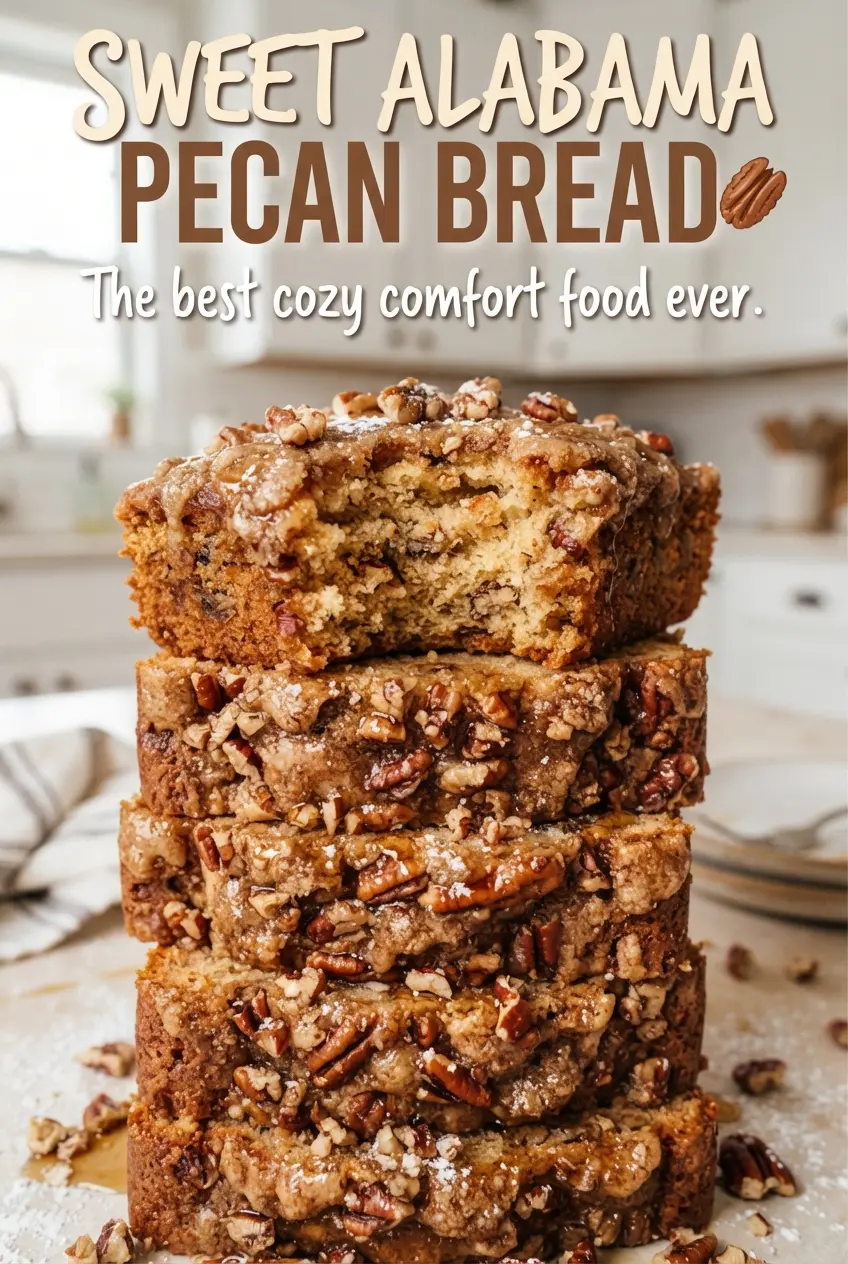
Sweet Alabama pecan bread bakes up with a crackly brown sugar top, a buttery crumb, and toasted pecans running through every slice. It lands somewhere between a quick bread and a coffee-shop loaf, which is exactly why it disappears fast once it hits the counter. The top gets a little caramelized in the oven, while the inside stays tender and moist without turning dense or cakey.
The texture comes from the balance of softened butter, buttermilk, and just enough leavening to lift the loaf without making it airy. Toasting the pecans first matters more than most people think; it wakes up their flavor and keeps the loaf from tasting flat. The brown sugar topping isn’t just for looks, either. It adds a thin, crunchy finish that plays against the soft crumb underneath.
Below, you’ll find the small details that keep this bread from sinking in the center or turning heavy, plus a few smart variations if you want to make it your own.
The loaf rose evenly, the pecans stayed on top, and the crumb was moist without being gummy. I sliced it while it was still warm and the brown sugar crust had the best little crunch.
Sweet Alabama pecan bread with its crackly brown sugar top is worth keeping close for brunch, snacking, or an afternoon slice with coffee.
The Small Mistake That Makes Pecan Bread Heavy
Quick breads like this one usually go wrong in one of two places: the batter gets overmixed, or the pecans go in raw and bland. Overmixing builds too much gluten, which gives you a tight, rubbery slice instead of that soft, tender crumb you want. The other problem is putting the loaf in the oven before the butter, eggs, and buttermilk have been folded together just enough to look uniform. You want the batter combined, not whipped.
The top layer matters too. Brown sugar and chopped toasted pecans create a crust that stays a little crisp after baking, but only if you scatter them evenly over the batter before it goes in the oven. If they clump in one spot, that area can sink while the rest of the loaf finishes cleanly. A lined pan also helps the bread release without tearing the crust you worked for.
What the Butter, Buttermilk, and Pecans Are Each Doing Here
- Butter — Softened butter traps air when you beat it with the brown sugar, which gives the loaf lift and a finer crumb. Cold butter won’t cream properly, so let it soften at room temperature until it gives slightly when pressed.
- Brown sugar — This brings moisture, deeper caramel notes, and that brown sugar topping that bakes into a delicate crust. Granulated sugar won’t give the same flavor or the same tender texture.
- Buttermilk — This is what keeps the loaf from tasting dry or flat. Its acidity helps tenderize the crumb and works with the baking soda for a better rise; if you don’t have it, use milk mixed with a little lemon juice or vinegar and let it sit for 5 minutes.
- Toasted pecans — Toasting them first is non-negotiable if you want the best flavor. Raw pecans can taste dusty in a loaf, while toasted ones bring warmth and crunch that hold up after baking.
- Cinnamon — Just a little goes a long way here. It doesn’t make the bread taste spiced; it makes the pecans and brown sugar taste fuller.
How to Keep the Crumb Tender and the Top Crackly
Building the Batter Without Overworking It
Start by creaming the butter and brown sugar until the mixture looks lighter and fluffy around the edges. That step matters because it creates the structure that supports the loaf as it rises. Add the eggs one at a time so the mixture stays smooth, then mix in the vanilla. When the flour goes in, alternate it with the buttermilk and stop as soon as the last streaks disappear. If you keep stirring after that, the loaf can bake up tough and a little tunneled inside.
Folding in the Pecans the Right Way
Add the chopped pecans after the batter is mixed, not before. That keeps them from getting broken up too much and helps them stay evenly distributed. The batter should be thick enough to hold them without letting them sink straight to the bottom. If your pecans are still warm from toasting, let them cool first so they don’t melt the butter in the batter and throw off the texture.
Knowing When the Loaf Is Actually Done
Look for a deep golden top, a dry center, and a toothpick that comes out clean or with only a few moist crumbs. The middle should spring back gently when touched, not wobble like raw batter. If the top browns too quickly before the center is set, lay a loose piece of foil over the loaf for the last 10 to 15 minutes. Let it sit in the pan for 15 minutes before lifting it out, because cutting too soon can make the crumb collapse.
Three Ways to Adjust This Loaf Without Ruining It
Dairy-Free Version
Use plant-based butter in place of the dairy butter and swap the buttermilk for unsweetened non-dairy milk mixed with 1 tablespoon lemon juice or vinegar. The loaf will still be tender, though the flavor loses a little of that classic tangy richness. Toasted pecans become even more important here because they carry more of the flavor on their own.
Gluten-Free Swap
A good 1:1 gluten-free baking blend can work here if it includes xanthan gum. The crumb will be a little more delicate and can crumble when warm, so let it cool fully before slicing. Don’t use almond flour on its own; it won’t give the same structure in a loaf like this.
Extra Pecan, Less Sweet
If you want more nuttiness and a little less sweetness, reduce the brown sugar topping slightly and add a few extra chopped toasted pecans on top. The loaf still bakes with the same texture, but the crust becomes more nut-forward and less candy-like. This is the version I reach for when I want it beside coffee instead of as a straight dessert.
Storage and Reheating
- Refrigerator: Store tightly wrapped for up to 5 days. The crumb stays moist, though the topping softens a little after the first day.
- Freezer: It freezes well. Wrap the cooled loaf or individual slices tightly in plastic, then foil, and freeze for up to 2 months.
- Reheating: Warm slices in a low oven or toaster oven until just heated through. Microwaving too long makes the crumb rubbery and softens the pecan top completely.
Questions I Get Asked About This Recipe
Sweet Alabama Pecan Bread
Ingredients
Equipment
Method
- Preheat oven to 350F, then grease and line a 9x5-inch loaf pan. Use a parchment sling so the loaf lifts out cleanly after baking.
- Whisk all-purpose flour, baking powder, baking soda, salt, and ground cinnamon in a bowl until evenly combined. The mixture should look uniform in color with no visible lumps.
- Beat butter, softened, and brown sugar, packed until fluffy. Stop and scrape the bowl so the sugar fully incorporates.
- Beat in large eggs one at a time, then mix in vanilla extract. The batter should turn glossy and smoother with each addition.
- Add dry ingredients alternately with buttermilk, mixing just until combined. The batter should look thick and cohesive without overmixing.
- Fold in 1 cup pecans, toasted and chopped, divided, then pour the batter into the prepared pan. Spread it evenly so the top bakes flat.
- Top with remaining pecans and 2 tablespoons brown sugar for topping. Finish with an even layer so the crust crackles as it bakes.
- Bake at 350F for 55-60 minutes, until a toothpick comes out clean. The loaf should be golden and feel set in the center.
- Cool for 15 minutes in the pan before slicing. Letting it rest briefly helps the crumb set and prevents crumbling when cut.


