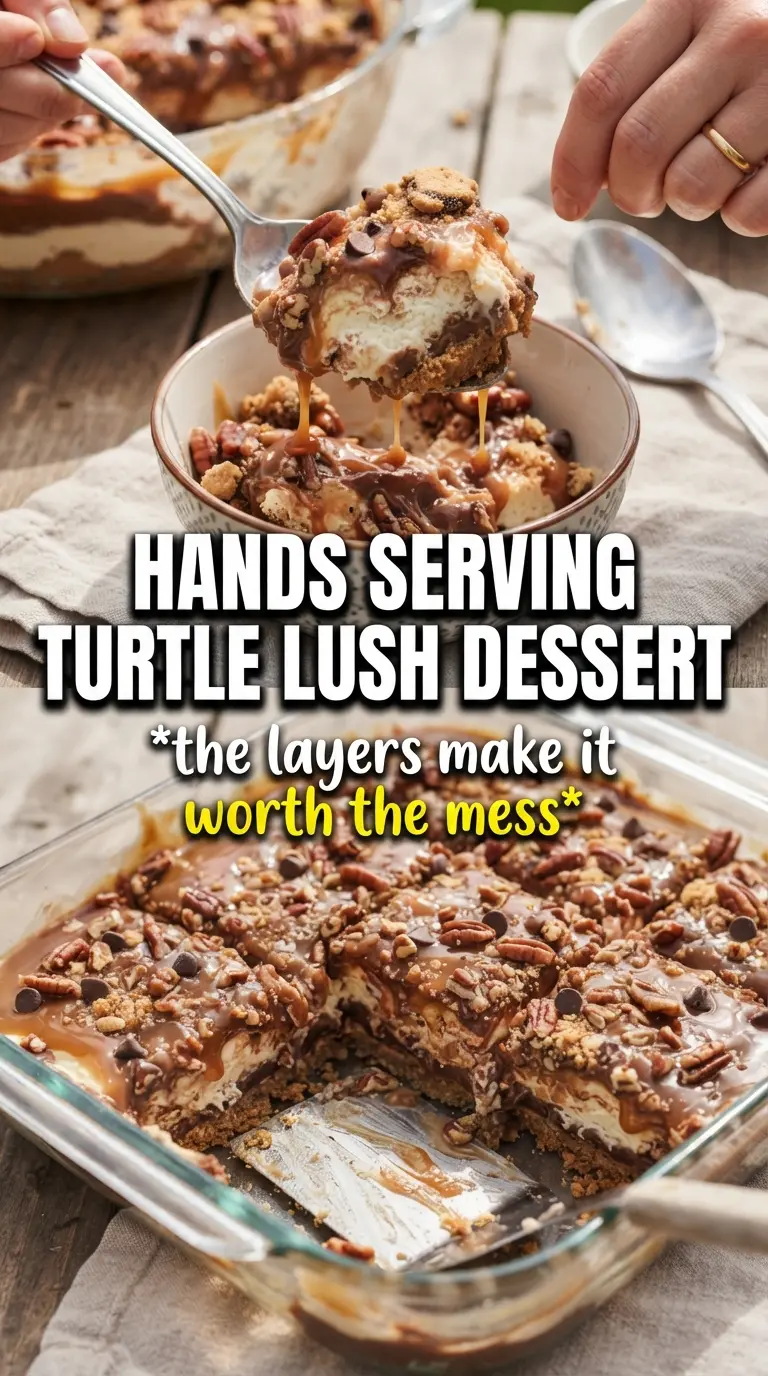
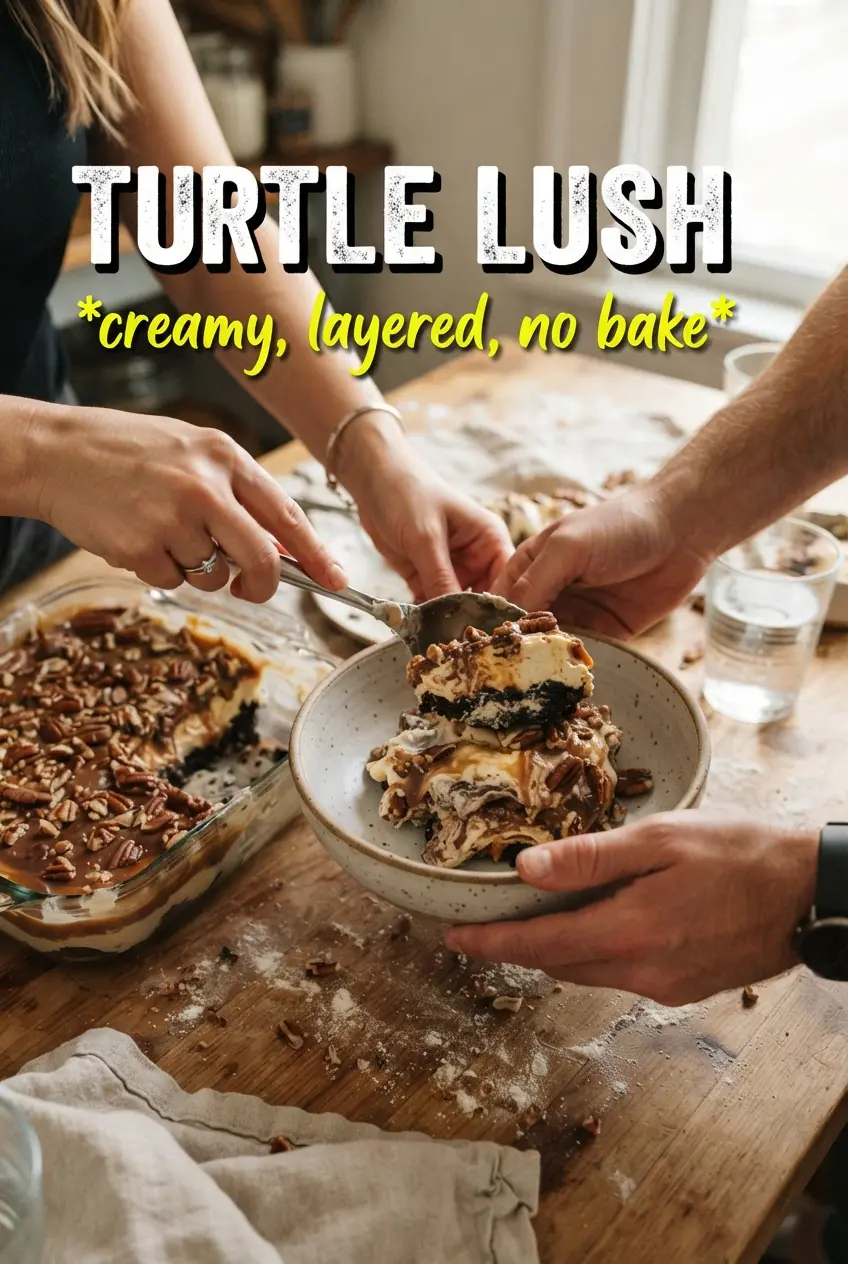
Layered desserts like Turtle Lush earn their place because every bite gives you contrast: a crisp pecan shortbread crust, a tangy cream cheese layer, thick chocolate pudding, and a cold whipped topping finish that holds up long enough to slice cleanly. The caramel and chocolate drizzle on top pull all of it into that classic turtle candy direction without making the dessert heavy or fussy.
The part that matters most is the order and the temperature. The crust has to cool all the way before the cream cheese layer goes on, or the filling softens and turns slippery. The pudding also needs to thicken before it gets spread, and the whole pan needs time in the fridge so the layers set into neat squares instead of a soft scoopable mess. That chill time is what gives Turtle Lush its clean edges and stacked look.
Below, I’m walking through the small details that keep each layer distinct, plus a few swaps that make this dessert easier to adapt for a crowd, a different crust, or a slightly less sweet finish.
The crust stayed crisp under the cream cheese layer, and the pudding set up enough to cut clean squares after chilling overnight. The caramel drizzle on top was the part everyone kept going back for.
Like this Turtle Lush? Save it for the nights when you want a chilled layered dessert with pecan shortbread, chocolate pudding, and caramel on top.
The Crust Has to Be Cool Before the Cream Layer Goes On
The crust in Turtle Lush is more than a base. It’s the one layer that gives the dessert structure and keeps the whole pan from eating like pudding in a dish. The butter-rich shortbread bakes up tender, but it only stays distinct if you let it cool completely before you spread on the cream cheese layer. If the crust is even a little warm, the filling softens and starts sliding around instead of sitting neatly in place.
The pecans matter here because they bring both flavor and texture. Chop them fine enough that the crust presses together, but not so fine that they disappear into the flour. You want little nutty bites in every square. If you’re tempted to skip the powdered sugar in the crust and use granulated sugar instead, don’t. Powdered sugar helps the crust bake into a tight, sandy shortbread that cuts cleanly after chilling.
What Each Layer Is Doing in This Dessert
- Butter — Cold butter is what gives the crust its shortbread texture. If it softens before mixing, the crust bakes denser and less crumbly. Cut it in straight from the fridge and stop mixing as soon as the dough looks like damp sand.
- Cream cheese — Full-fat cream cheese gives the middle layer its tang and helps it hold shape. Lower-fat versions can loosen once the dessert warms at the table. Beat it until completely smooth before adding anything else, or you’ll end up with little pockets that never disappear.
- Instant chocolate pudding — Instant pudding is what makes this dessert fast and stable. Cook-and-serve pudding won’t set the same way here and can turn the middle too soft. Whisk it just until thick, then spread it right away before it tightens too much in the bowl.
- Whipped topping — The whipped topping lightens both the cream cheese layer and the final topping. Fresh whipped cream can work, but it won’t hold as long in the fridge, especially if you’re making this ahead. Fold it gently so the filling stays airy instead of becoming pasty.
- Caramel sauce and toffee bits — These are the pieces that make the dessert taste like turtle candy instead of plain chocolate cream squares. Use a thick caramel sauce that drizzles rather than runs, and add the toffee bits just before serving if you want the top to stay crisp.
Building the Layers So They Set Cleanly
Pressing and Baking the Crust
Mix the flour, powdered sugar, cold butter, and chopped pecans until the mixture looks crumbly, then press it firmly into the pan. If you don’t pack it down enough, the crust will break apart when you slice the dessert later. Bake it until the edges look lightly golden and the surface is set, then let it cool all the way to room temperature before moving on.
Making the Cream Cheese Layer
Beat the cream cheese, powdered sugar, and vanilla until completely smooth before folding in the whipped topping. If the cream cheese is even a little cold and lumpy at this stage, those lumps stay in the final dessert. Spread this layer gently over the cooled crust so you don’t tear the surface underneath.
Setting the Chocolate Pudding
Whisk the instant pudding with cold milk until it thickens, then spread it over the cream layer without lingering. The biggest mistake here is waiting too long; instant pudding firms fast, and if it sits in the bowl it starts clumping instead of spreading. Use the back of a spoon or an offset spatula to nudge it into an even layer.
Finishing and Chilling
Top the pudding with whipped topping, then drizzle on the caramel and chocolate sauces. Scatter the pecans and toffee bits over the top so every square gets some crunch. Chill the pan for at least 4 hours, and longer if you want the cleanest cuts. If you slice too early, the layers smear instead of stacking.
How to Adapt Turtle Lush Without Losing the Texture
Gluten-Free Crust Swap
Use a 1:1 gluten-free flour blend in the crust, but keep the rest of the method the same. The texture will be a little more delicate and less shortbread-like, so press the crust firmly and chill it well before slicing. A blend with xanthan gum gives the cleanest result.
Dairy-Free Version
Use plant-based butter, dairy-free cream cheese, dairy-free whipped topping, and a milk substitute that works with instant pudding. The dessert will still chill into layers, but the tang in the middle layer will be milder and the top may be a little softer. Choose a dairy-free caramel that stays thick, not syrupy.
More Nutty, Less Sweet
Toast the pecans before chopping them and cut back slightly on the caramel drizzle. Toasting deepens the flavor and makes the crust taste more like the turtle candy it’s modeled after, while a lighter drizzle keeps the dessert from turning cloying. This is the version I make when I want the pecans to stand out more than the sugar.
Storage and Reheating
- Refrigerator: Keep Turtle Lush covered in the fridge for up to 4 days. The crust stays best in the first 2 days, before the top layers start softening it.
- Freezer: It freezes, but the whipped topping and pudding layers can get a little grainy after thawing. If you do freeze it, wrap the pan well and thaw it in the refrigerator overnight.
- Reheating: Don’t reheat this dessert. Serve it cold from the refrigerator for the cleanest texture and the neatest layers.
Questions I Get Asked About Turtle Lush
Turtle Lush
Ingredients
Equipment
Method
- Press the pecan shortbread crust mixture firmly into the pan, then bake at 350°F for 15 minutes until set and lightly golden around the edges (visual cue: crust looks dry and firm, not glossy). Cool completely.
- Beat the cream cheese with powdered sugar and vanilla until smooth, then fold in the whipped topping (visual cue: no lumps remain). Spread the cream cheese layer evenly over the cooled crust.
- Whisk the instant chocolate pudding with the milk until thick, then spread it over the cream cheese layer (visual cue: pudding holds ridges briefly when you drag the whisk through it).
- Spread the remaining whipped topping over the pudding in an even layer (visual cue: surface becomes fluffy and level).
- Drizzle caramel sauce and chocolate sauce over the top, then scatter pecan halves and toffee bits (visual cue: a layered drizzle pattern with visible nuts and bits).
- Refrigerate for 4 hours until fully set, then cut into squares to serve (visual cue: clean slices that hold their layers).


