Rich beef stew needs time, but it also needs the right balance of browning, gentle simmering, and a finish that thickens without turning muddy. This Whole30 version gets all of that right. The beef turns fork-tender, the broth cooks down into a deep savory gravy, and the sweet potatoes hold their shape just enough to keep each bowl hearty without falling apart.
The key is starting with a hard sear on the beef in batches. If the pan is crowded, the meat steams and the stew loses the deep flavor that makes it worth the wait. Tomato paste cooks briefly with the onion and garlic to give the broth more body, while arrowroot goes in at the end so the stew thickens cleanly without the floury taste or grainy texture you can get from rushing the finish.
Below, you’ll find the timing that keeps the vegetables from going soft, plus a few smart swaps if you need to work with what you already have in the kitchen.
The stew thickened up beautifully at the end, and the sweet potatoes held their shape instead of turning to mush. I simmered it the full time and the beef was falling apart with a spoon.
Save this Whole30 beef stew for the night you want tender beef, sweet potatoes, and a thick gravy without any dairy or flour.
The Sear That Gives This Stew Its Deepest Flavor
The biggest mistake with beef stew is rushing the browning or trying to do too much at once. When the beef hits a crowded pot, it gives off liquid and steams instead of forming the dark crust that turns the broth from flat to rich. Take the time to brown the meat in batches and leave it alone until it releases easily from the pan. That fond on the bottom is what gives the stew its backbone.
The other place people lose flavor is at the start of the simmer. Once the broth goes in, scrape up every browned bit before it has a chance to scorch. From there, keep the heat low enough that you see a lazy bubble now and then, not a hard boil. Boiling will tighten the beef before it softens.
What Each Ingredient Is Doing in the Pot
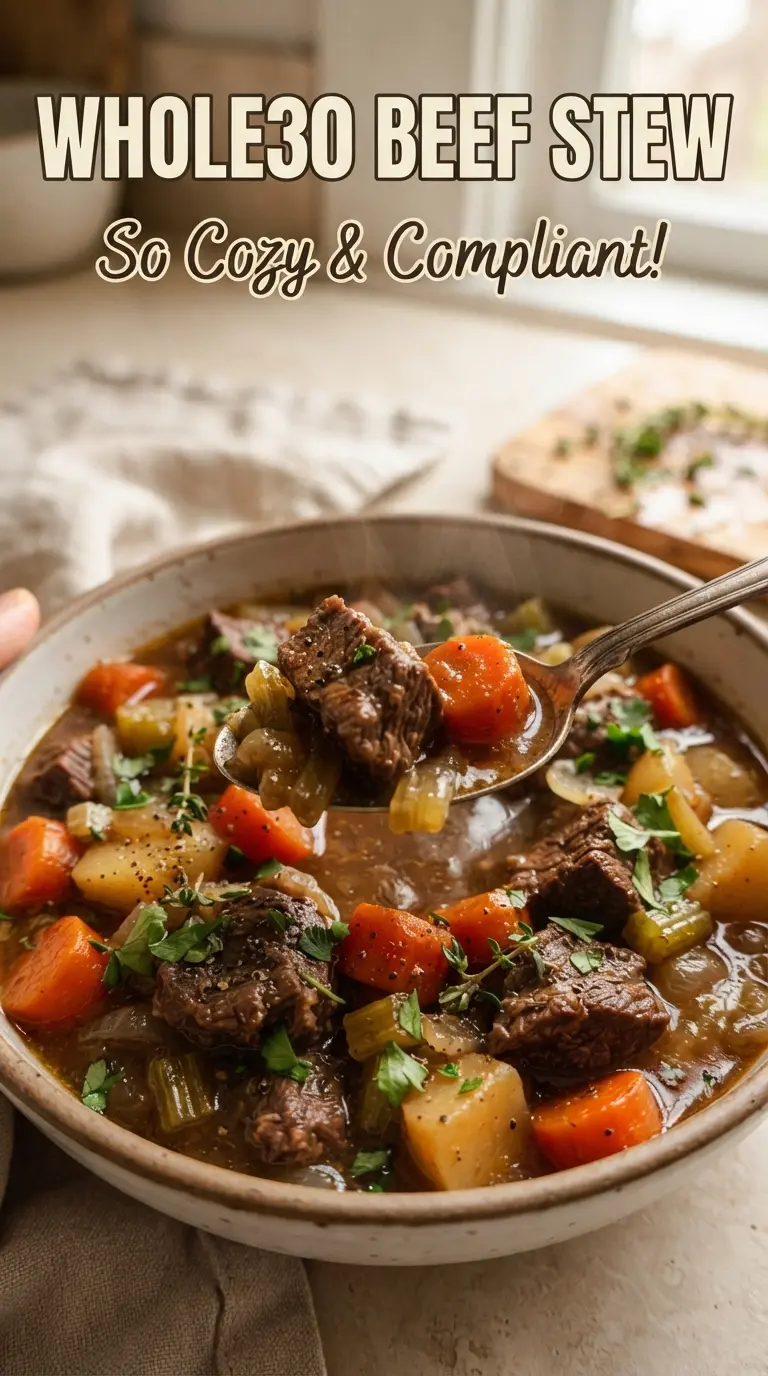
- Beef chuck — This cut has enough connective tissue to turn silky and tender over a long simmer. Leaner stew meat will work, but it won’t give you the same rich, spoon-tender result.
- Avocado oil or ghee — Both handle the high heat needed for browning. If you use ghee, you get a little more flavor; if you use avocado oil, the stew stays fully dairy-free.
- Tomato paste — This is one of the quiet flavor builders in the pot. Cooking it for a minute with the onion and garlic removes the raw edge and deepens the broth.
- Bone broth — Use one you actually like the taste of, because it becomes the base of the stew. A bland broth stays bland no matter how long you simmer it.
- Coconut aminos and Worcestershire — These add the salty-sweet, fermented depth that makes the gravy taste round instead of thin. If you don’t have compliant Worcestershire, balsamic vinegar gives you a similar dark tang.
- Arrowroot slurry — This thickens the stew at the end without clouds of starch or a gummy texture. Stir it in only after the vegetables are tender and give it a couple of minutes to activate.
Building the Stew So the Vegetables Stay Intact
Brown the beef in real batches
Season the beef first, then sear it in hot fat until each side has a dark brown crust. Don’t pile all the cubes in at once; you want the pan hot enough that the meat sizzles the moment it lands. If pieces stick at first, leave them alone for another minute or two and they’ll release on their own when the crust forms.
Cook the aromatics before the liquid goes in
Add the onion to the same pot and cook until softened, then stir in the garlic and tomato paste for just a minute. The paste should darken slightly and smell sweeter, not raw. That short cook keeps the tomato from tasting sharp in the finished stew.
Let the simmer do the heavy lifting
Once the broth, seasonings, and beef are in the pot, cover it and keep the heat low. You’re looking for a gentle simmer, not a boil that rattles the lid. After about an hour and a half, the meat should be starting to soften enough that a fork slides in with some resistance.
Add the vegetables when the beef is almost there
Sweet potato, carrots, and mushrooms all need less time than the beef, so they go in later. If you add them too early, the sweet potatoes collapse and the mushrooms disappear into the broth. After 40 to 45 minutes, the carrots should be tender, the mushrooms plump, and the sweet potatoes cooked through but still holding their shape.
Finish with arrowroot at the end
Stir the arrowroot slurry in after the vegetables are tender, then simmer for just a couple of minutes until the gravy thickens. Arrowroot loses its power if it cooks too long, so don’t keep the stew boiling after it goes in. Pull the bay leaf before serving and give the pot a final taste for salt.
How to Adapt This Stew Without Losing the Whole30 Feel
Make it dairy-free and still rich
This stew is already dairy-free if you use avocado oil instead of ghee. The broth still turns plenty rich from the browned beef, tomato paste, and slow reduction, so you won’t miss the butteriness of a cream-based stew.
Swap the sweet potato for turnips or parsnips
Turnips keep the stew a little lighter and less sweet, while parsnips bring a softer, earthier sweetness. Either one works on the same timeline, but parsnips can break down faster, so check them a few minutes early.
Use balsamic when you don’t have compliant Worcestershire
A tablespoon of balsamic gives the stew the same dark, rounded edge without adding sweetness that stands out. It won’t taste identical, but it does a good job of replacing the tang and depth Worcestershire brings to the broth.
Storage and Reheating
- Refrigerator: Store in an airtight container for up to 4 days. The stew thickens as it chills, and the flavors get even deeper overnight.
- Freezer: It freezes well for up to 3 months. Cool it completely first, then portion it into freezer-safe containers and leave a little space for expansion.
- Reheating: Warm it gently on the stove over low heat, stirring now and then. If it looks too thick, add a splash of broth, not water, so the sauce keeps its savory body. Avoid boiling it hard or the beef can toughen.
Answers to the Questions Worth Asking
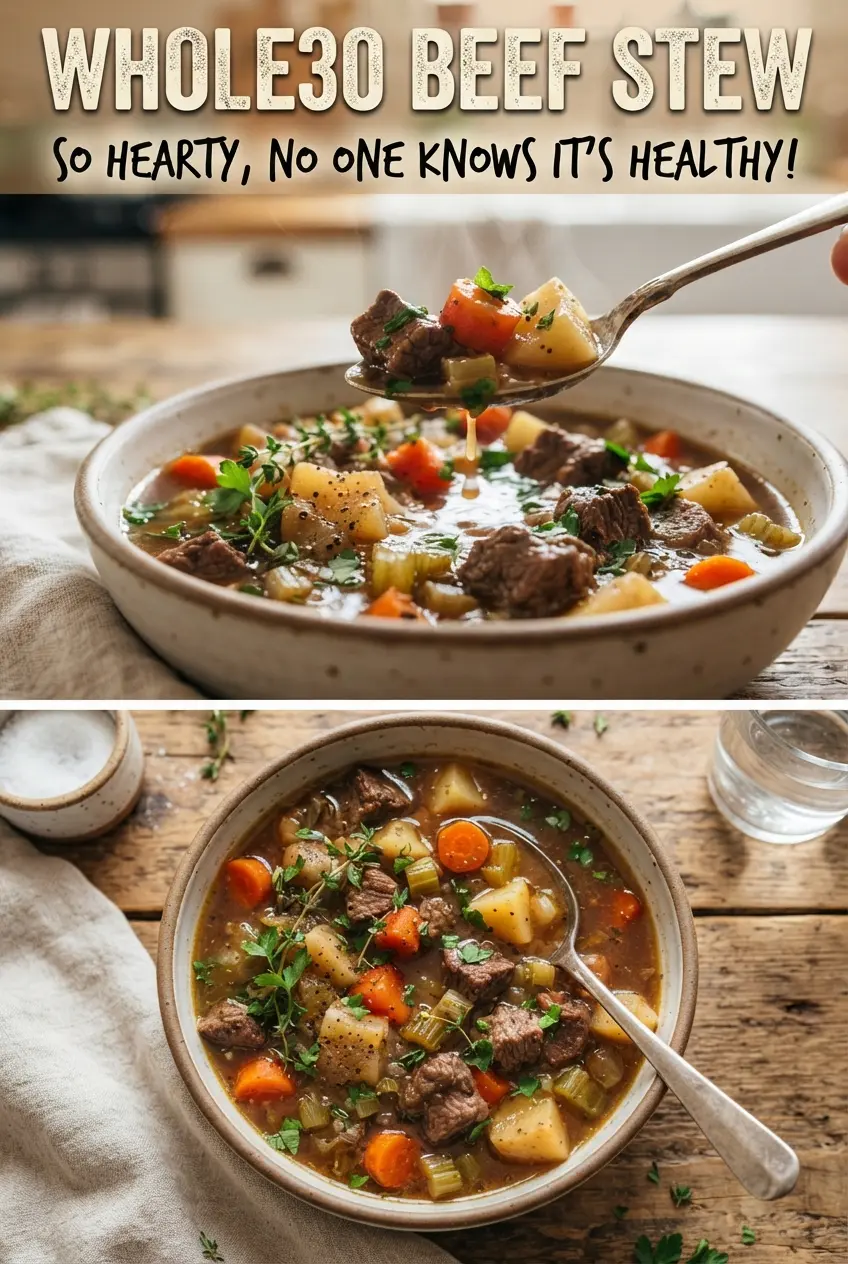
Whole30 Beef Stew
Ingredients
Equipment
Method
- Season the beef chuck cubes with salt and black pepper, then pat lightly so the surface browns. Heat a Dutch oven with the avocado oil or ghee until hot, then brown the beef in batches for 3-4 minutes per side, working in batches to keep the pan from steaming.
- Reduce the heat to medium after browning, scraping up browned bits from the bottom as you go. Continue until all beef is browned, then set it aside on a plate while you sauté the aromatics.
- Add the diced onion to the Dutch oven and cook for 4 minutes, stirring until softened. Add the minced garlic and tomato paste and cook for 1 minute, until fragrant and darker in color.
- Pour in the beef bone broth, then stir in coconut aminos, compliant Worcestershire sauce or balsamic vinegar, dried thyme, and bay leaf. Add the browned beef back in, bring to a simmer, cover, and simmer for 1 1/2 hours, until the meat is very tender (visual cue: steady gentle bubbles under the lid).
- Add the cubed sweet potato, sliced carrots, and quartered cremini mushrooms to the stew. Cover and simmer for 40-45 minutes until the vegetables are tender (visual cue: a fork slides in easily).
- Stir arrowroot powder with water in a small bowl until smooth, then drizzle it into the simmering stew while stirring. Simmer for 2 minutes to thicken, keeping it at a gentle simmer (visual cue: the gravy coats the back of a spoon).
- Remove the bay leaf, then serve hot. Taste and adjust seasoning if needed, and finish with fresh thyme if desired.


